
Konkuk University, Seoul · October 5–7, 2016

Natural Science Farming Symposium 2016

A day of talks in Seoul, then two days on the farms. 23 talks, three languages. Master Cho's students from ten countries showed what natural farming did on their fields, from Afghan potatoes to Hawaiian macadamias. Every talk is translated, checked line by line, and boiled down to what was tested and what happened.

Read what it all adds up to →

Also on the record: Hilo 2015

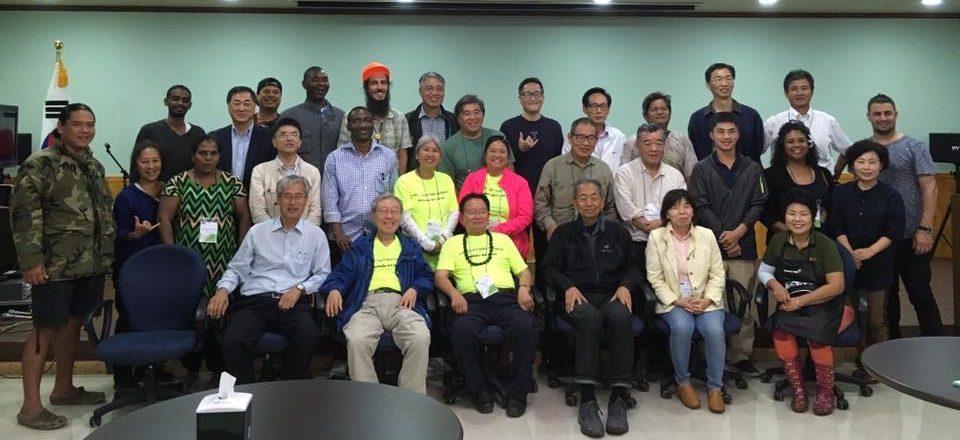
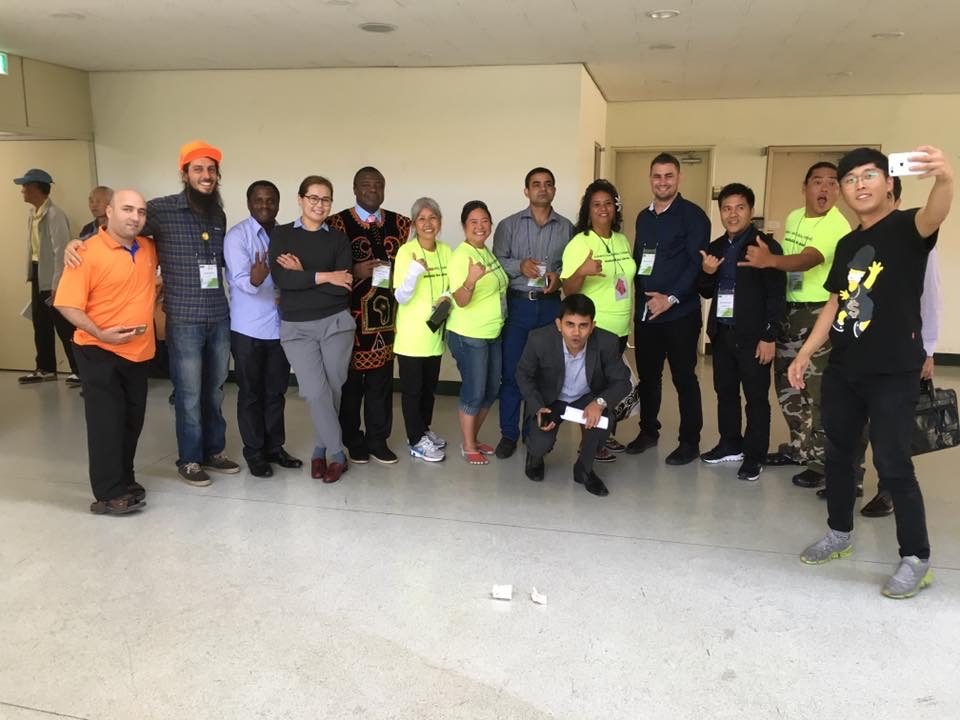
The whole group on the evening of October 6, before Master Cho's lecture. He sits front row, center, in yellow with a dark lei.
Topics microbes soil economics pigs poultry rice history corn food scale disease feed health minerals protectors reproduction

What came out of it

The short version. The full findings have the numbers, the doubts, and what to test next.

The program

Morning: farmers from Hawaiʻi, Taiwan and Japan

Chris Trump ·United States (Hawaiʻi) ·14 min

800 Acres of Macadamia on KNF for $21 an Acre a Year

Chris Trump, who farms 800 acres of macadamia nuts in Hawaiʻi with his family, reports six years of feeding the whole orchard with natural farming only. He says the full program, labor included, costs $21 per acre per year, and that 98% of diseased trees recovered. He also explains why he moved from huge solid Microbes (IMO4) piles to a sprayed liquid Microbes (liquid IMO) program after a storm hit a 50-ton pile.

Found Whole nutrition program costs $21 per acre per year

disease economics macadamia microbes orchard scale

Joe McGinn ·United States (Hawaiʻi) ·25 min

100 Pigs, No Bought Feed: Oʻahu's Natural Farming Network

Joe McGinn tells how a natural farming support network grew on Oʻahu in the five years after he trained with Dr. Hoon Park and Master Cho in 2011: shared classes, hands-on input making, a 2013 Hawaiʻi symposium, and whole families on the farm. His own farm keeps about 100 pigs, two dozen chickens and six goats on no bought feed, using brewery spent grain treated with natural farming inputs. He also names the hard parts: few trainees keep farming, there is not yet enough product for market, and classes don't pay for themselves.

Found About 100 pigs, two dozen chickens and half a dozen goats on no bought feed

community economics feed history microbes pigs

Drake Weinert ·United States (Hawaiʻi) ·9 min

A $130-a-Year Website Reached 56,000 Users Without Ads

Drake Weinert reported eight years of running NaturalFarmingHawaii.net, a one-person WordPress blog that cost about $130 a year and was never advertised. Google Analytics showed 56,456 users, 95,858 sessions and 237,176 page views since 2010, with most visitors arriving through web search and very few from social media. The odorless pig page, Cho's learning materials and how-to-apply guides drew the most views.

Found 56,456 users since 2010

education history internet outreach pigs

Juju C. S. Wang ·Taiwan ·14 min

Lotus Trusts and Sparrow Rice: Natural Farming as a Movement

Juju Wang, a professor at National Tsing Hua University, argued that natural farming in Taiwan should be run as a social movement and spread through 'social design': projects that make taking part easy and fun. He showed examples, including a two-acre lotus farm kept by 287 trustees who pay about US$100 a year, rice brands built around sparrows and the endangered leopard cat, school gardens, two university farmers' markets, and vegetable bouquets at graduation. He gave no figures on how much these projects changed farm incomes or land use.

Found Lotus farm trust: 287 trustees pay NT$3,000 (about US$100) a year

economics education markets rice social movement wildlife

Teruhiko Sawamura ·Japan ·23 min Spoken in Japanese

Kumamoto Grower: Wild-Grass Compost Cut Tomato Wilt

Teruhiko Sawamura grows organic greenhouse tomatoes in Shiranui, Kumamoto, using natural farming he learned from Master Cho. He builds soil with riverbank reeds and grasses aged three years into low-nitrogen compost, plus home-made bokashi made on a clay floor, and sprays a home-made plant extract with brown rice vinegar and seawater. He reports much less bacterial wilt, organic tomatoes shipped in the scarce autumn season from ten years of his own saved seed, and support from the Kumamoto governor after the 2016 earthquake. It is a farm report with photos; no trial data were shown.

Found Bacterial wilt of tomato dropped a great deal

cleanser disease economics food minerals rice

Morning: the Paju field trials, and questions

Lee Eun-ha ·South Korea ·13 min Spoken in Korean

They Called It Crazy to Feed Chickens Soil Microbes

A Korean missionary tells how he learned natural farming from Master Cho, failed for two or three years in the Philippines, and was called crazy for culturing feed for chickens and pigs with soil microbes. He shows two feed systems: green feed his team can now make the same way all year, and a layered, fermented corn feed with lactic acid bacteria and Microbes (IMO). He gave no numbers. A trial of feed ratios for hens and eggs was still running, with data being prepared.

Found The natural farming method did better than the local method in his side-by-side test

feed health microbes pigs poultry protectors

Ahmad Jawid Zamany ·Afghanistan ·14 min

Natural-Farmed Tomatoes Fruited a Week Sooner, Yielded More

A one-season tomato trial (cv. Sunglove) in Paju compared Natural Science Farming, organic and conventional plots. The natural plots started slower but ended with taller plants, more leaves, longer roots, first harvest about a week earlier and the highest marketable yield: 3.80 kg per plant against 3.42 organic and 3.12 conventional. They also scored lower for blossom end rot and insect damage and higher for taste and appearance.

Found Highest marketable yield: 3.80 kg/plant vs 3.42 organic and 3.12 conventional

fruit quality microbes pests tomato yield

Ahmad Jawid Zamany ·Afghanistan ·6 min

Natural Eggplant: More Fruit, Fewer Insects, Keeps Longer

The companion to the speaker's tomato trial: eggplant (cv. Black Horse) in Paju under Natural Science Farming, organic and conventional systems, same design. The natural plots gave the most marketable fruit, 4.08 kg per plant against 3.56 organic and 3.1 conventional, had far fewer insects, and their fruit took longer to spoil and scored higher for taste and Brix. One season, small plots.

Found Most marketable fruit: 4.08 kg/plant vs 3.56 organic and 3.1 conventional

eggplant fruit quality microbes pests shelf life yield

Baryalai Malekzada ·Afghanistan ·17 min

Reproduction (WCA) on the Soil Lifted Potato Yield 63%

A potato trial at Paju, March to July 2016, grown with natural farming solutions throughout, tested ten ways of giving Reproduction (water-soluble calcium, WCA): on the soil, on the leaves, or both, at three strengths. The strongest soil dose gave the top yield, 40.7 t/ha against 25.03 for no calcium, and the heaviest tubers. Calcium on the leaves alone did little for yield; soil and leaf together built the most foliage.

Found Strongest soil dose (T4) gave the top yield: 40.7 t/ha vs 25.03 with no calcium

microbes phosphorus potato reproduction soil yield

Zacheous Kazibwe ·Uganda ·8 min

Farm-Made Microbes Beat Commercial EM on Peanuts

A one-season peanut trial at Konkuk's Paju test farm compared solid Microbes (IMO4), liquid Microbes (IMO4 in water), commercial EM and a water-only control. Both IMO treatments gave more pods, heavier seed, far more root nodules and higher soil microbe counts. Solid IMO4 gave the top yield, 2,816 kg/ha, against 1,904.6 for EM and 1,674.8 for the control.

Found Solid IMO4 gave the highest yield, 2,816 kg/ha

legumes microbes peanut soil yield

Morning presenters, with questions from the floor ·22 min

Q&A: From 50-Ton IMO Piles to Strong Calcium on Potatoes

A short Q&A after the ten morning talks. Chris Trump explained how he moved from 50-ton piles of Microbes (IMO) to small IMO3 batches brewed into liquid IMO; a Hawaiʻi taro grower described IMO4 in flooded fields; the Konkuk students explained their trial designs, how liquid IMO was made for the peanut trial, where the tomato trial's phosphorus came from, and why the potato trial used water-soluble calcium six to nine times stronger than the usual 1:1000. Several questions went unanswered for lack of time or because the presenter had left.

Found Chris Trump has made about 70–75 tons of IMO over three years, not every year

microbes potato reproduction scale soil taro

Afternoon: rice, soy, and Korea's own counties

Richard Kwame Denteh ·Ghana ·12 min

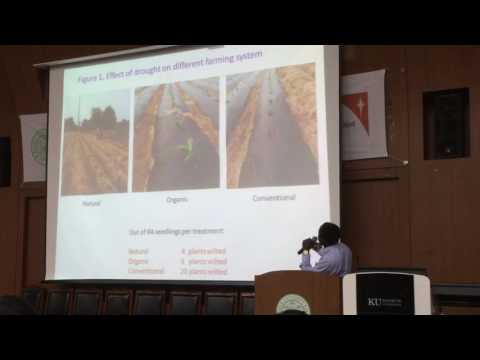
Natural-Farmed Maize Out-Yielded Chemical, 4.8 vs 4.1 t/ha

A one-season maize trial at Konkuk's Paju research centre compared natural farming, organic and conventional (chemical) systems side by side. The natural plots had the longest, heaviest ears and the highest yield: 4.8 t/ha dry grain against 4.3 for organic and 4.1 for conventional. After a one-week drought just after germination, 20 of 84 conventional seedlings wilted, against 4 natural and 3 organic.

Found Dry grain yield 4.8 t/ha natural vs 4.3 organic and 4.1 conventional

corn drought food fuel medicine structure

Julius B. Sugue ·Philippines ·15 min

Rice Root Volume Nearly Tripled with Fuel (FAA) at 1:500

A one-season paddy rice trial at Paju gave Fuel (FAA) at three strengths, 1:2000, 1:1000 and 1:500, on top of a full natural farming spray program, against a no-FAA control. The 1:500 plots had the most tillers, the longest roots, nearly three times the control's root volume and the most panicles per hill (23.6 vs 18.4). Filled grains per panicle and 1,000-grain weight did not differ, and no grain yield per area was reported.

Found Root volume at flowering 180 cc with FAA 1:500 vs 65 cc in the control

food fuel medicine microbes reproduction rice

Lemnsah Andrew Banboye ·Cameroon ·10 min

Water Pepper Rivaled a Chemical Spray on Rice Grasshoppers

Two one-season rice trials tested boiled plant extracts as insect sprays. On Konkuk's natural farming paddy in Paju, water pepper, tobacco leaf and neem sprays cut pest counts to a fraction of the unsprayed plots while dragonflies stayed; in the lab, water pepper and tobacco killed every grasshopper within two days. On a conventional farm in Yeoju, water pepper extract held grasshoppers and stink bugs about as low as the chemical cypermethrin, but not stem borers.

Found Lab: water pepper and tobacco killed all grasshoppers within 2 days

beneficial insects insecticide neem pests protectors rice

Yoo Nam-gyu ·South Korea ·6 min

Natural-Farmed Soybeans Bloomed and Ripened Sooner

A short photo report from a 2016 soybean plot at Konkuk, grown side by side with natural farming and conventional farming. Conventional weeds were killed with herbicide at 50 days; the natural farming weeds were pulled by hand. The natural farming plot bloomed three days earlier (July 19 vs July 22) and was yellowing toward harvest at 90 days while the conventional plot was still green. No yield or other numbers were shown.

Found Natural farming plot bloomed July 19, conventional July 22

legumes soil soybean weeds

Son Sung-kyu ·South Korea ·10 min

Mindanao Rice Farmers Took Up Cho's Method, Now Export Rice

A Korean pastor who served in the Philippines from 1991 to 2013 contrasts chemical and natural farming on two slides of paired words, then shows a pig pen and a duck-and-chicken coop. He says farmers used to chemicals are the hardest to change, even after some 60 conferences. He ends with a Mindanao NGO report: he brought Master Cho in for a three-day seminar, the group spent a year testing natural farming on rice, and he says the farmers now export brown rice.

Found Farmers already used to chemical farming were hard to convert, even after almost 60 conferences

economics history pigs poultry rice soil

Cho Kyung-hoon ·South Korea ·17 min Spoken in Korean

One Korean County Took Natural Farming Rice From 23 to 200 ha

A county extension officer from Gokseong tells how his office moved from organic farming that failed to natural farming under Master Cho, starting in 2009. Natural farming rice in the county grew from 23 ha in 2009 to 200 ha in 2015–2016, with 250 ha expected next. The rest is a photo tour of crops and livestock with field stories, spoken figures and few controlled comparisons.

Found Natural farming rice grew from 23 ha in 2009 to 200 ha in 2015 and 2016

economics health horticulture pigs poultry rice

Cho Han-kyu ·South Korea ·23 min Spoken in Korean

Cho at 82: Natural Farming Is Love, Not a Technique

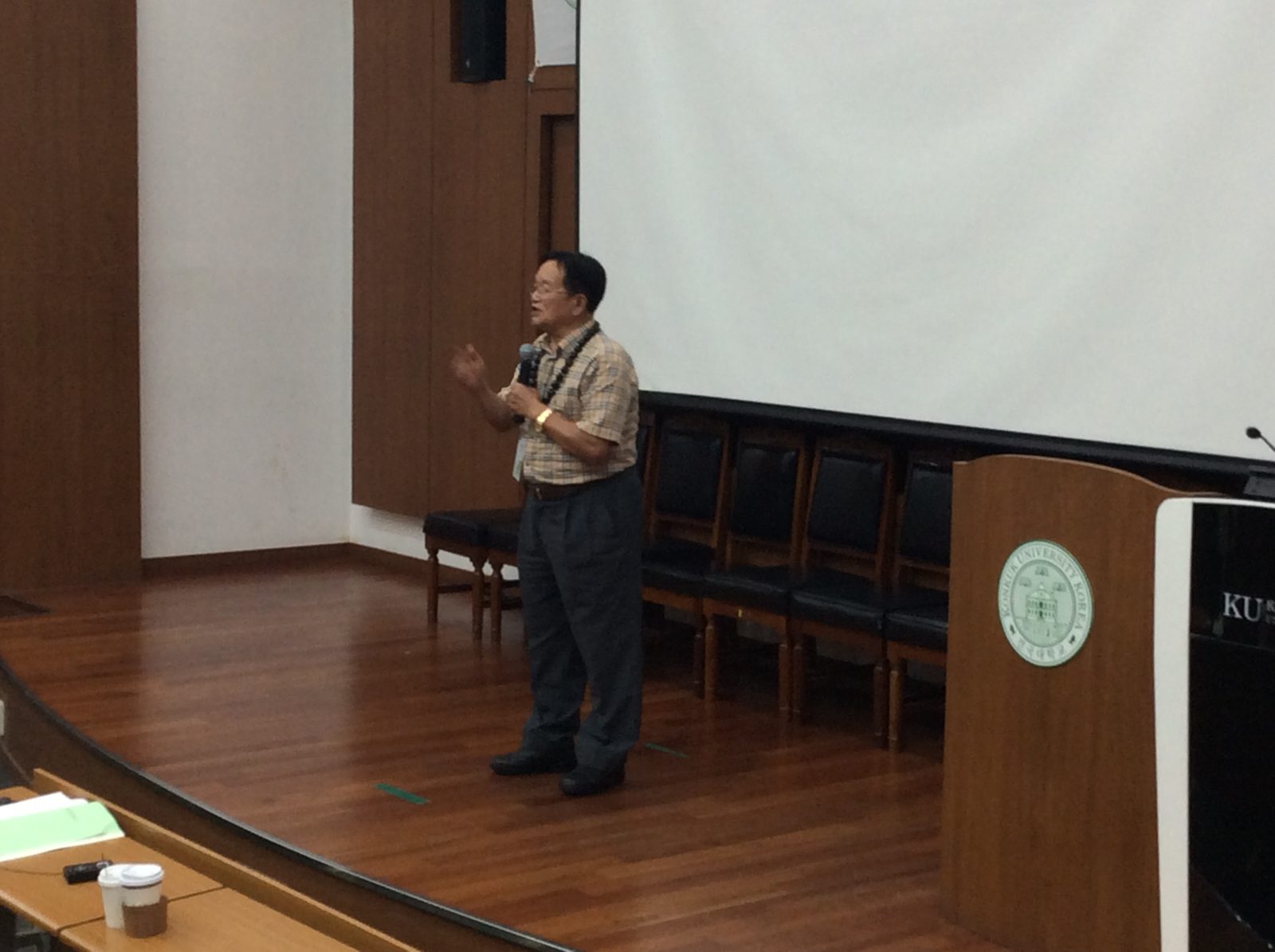
Master Cho, 82, speaks without slides near the end of the first day. Despite the uploader's title, this is not a history lecture. His point is that natural farming is a movement of love, not a technique, and he makes it with stories: turning Kona lava into 3 cm of soil in six months with corn and microbes, Hawaiʻi's vanished egg farms, a 1,200-hectare project in China, and a spring made with bananas in Africa. He also corrects the students on Microbes (IMO4): mix in soil from the field the IMO4 will go to.

Found He has farmed since age 14 and is now 82

corn history microbes minerals poultry scale

Afternoon: development and health

Chang-pyo Lee ·South Korea ·26 min

Neorganic Rice: Same Yield, Higher Price, Up to 3x Profit

Chang-pyo Lee of World Vision Korea reports on 'Neorganic' farming (natural farming plus no-till, mulch and compost) in World Vision projects in Vietnam, Sri Lanka and Ethiopia. In Vietnam, rice yielded the same as conventional at lower input cost, and a higher selling price gave two to three times the net profit; chicken and herbs also earned more, while lettuce, broccoli and pigs fed no protein earned less. Ethiopian seed potatoes yielded more at all three cooperatives, and Sri Lankan families gained food access and diet diversity, though their yields were not significantly different from non-participants.

Found Vietnam rice: same yield, 11,000 vs 6,500 VND/kg, 2.3–3.3 times the net profit

economics microbes pigs potato poultry rice

Jegatheesary Gunasingam ·Sri Lanka ·20 min

Sri Lanka: Classes Alone Failed, Small Groups Worked

A World Vision Sri Lanka staff member reports on a 2013–2015 project, funded by World Vision Korea and KOICA, that brought natural farming (which she calls 'neo-organic') to 600 farm families in Vaharai, a war-affected coastal division. After a year of training only a handful of farmers had taken it up; small groups, close follow-up and training the government agriculture instructors turned it around. The final evaluation shows wide use of homemade fertilizers and pesticides, more home gardens and water access, and weekly chemical-free vegetable markets, but no yields, costs or incomes.

Found After one year of training, only a few farmers had adopted; both transcripts heard 'only two'

economics health microbes soil training vegetables

Kim Eun-ja ·South Korea ·21 min Spoken in Korean

Native Corn Fed by Growth Stage: Up to Ten Ears on a Stalk

A farmer who runs a natural farming test farm in Paju fed Korean native corn by growth stage. She made her own Microbes-based fertilizers ("IMO5") for nitrogen, phosphorus and potassium and gave them at the times Master Cho teaches. Her seed came from a variety that, she was told, sets one ear per stalk, two at most. Her video shows a plant counted to ten ears, and she says most of the ten filled. This is a first-season farm report with no control, no yields and no dilutions.

Found One plant was counted to ten ears on video

corn microbes native seed nutrient cycle phosphorus pollination

Se-Chul Chun ·South Korea ·25 min

Feeding the Good Bacteria Cut Pepper Root Rot to 6%

A Konkuk plant pathologist, new to natural farming, reviews biological control of soil-borne disease and shows his own work: bacteria coated on rice seed against seedling rot, and bacteria against Phytophthora root rot of pepper, both working better when given a sugar the bacteria can use and the pathogen cannot. He then gives first, unreplicated microbe counts from the Paju natural farming soils and from each IMO step: counts fell about tenfold from IMO1 to IMO4 and the fungi shifted from Aspergillus to Rhizopus. He draws no conclusion about natural farming yet.

Found Pepper root rot: 81% with the pathogen alone, 22% with bacterium KJIR5, 6% with KJIR5 plus arabinose

biological control disease microbes pepper research rice

David Wong ·United States (Hawaiʻi) ·21 min

No Antibiotics, No Vaccines: A Pig Farmer on Food and Health

A Hawaiʻi pig farmer who started with nine piglets in 2012 says his farm uses no antibiotics, vaccines, hormones or steroids and came through two local disease outbreaks without trouble. He then argues, with news clippings and US disease graphs, that drugs in livestock and chemicals in food harm human health, and closes by telling the room he has cancer and is treating it with food alone.

Found Pigs raised since 2012 with no antibiotics, vaccines, hormones or steroids, 'doing quite well'

antibiotics disease health history livestock pigs

Closing

Kim Doo-hwan, with Master Cho Han-kyu and Dr. Hoon Park ·South Korea ·19 min

Cho Closes the First Symposium: 'The Seed Is Planted'

The closing of the symposium. Prof. Kim Doo-hwan sums up the day's 23 talks: foreign graduate students who first met natural farming in March 2016 studied it at Konkuk, practiced it on the Paju farm, ran trials and presented them. He calls on everyone to spread it worldwide and hopes for a second and third symposium. Master Cho promises to back the movement with the years he has left: 'This is the beginning. The seed has been planted.' A Taiwanese Atayal couple sings, and the day ends with a slogan for love shouted in many languages.

Found 23 presentations were given at the symposium

education history scale

The field trips

Field trip, October 6: Gokseong and Muju

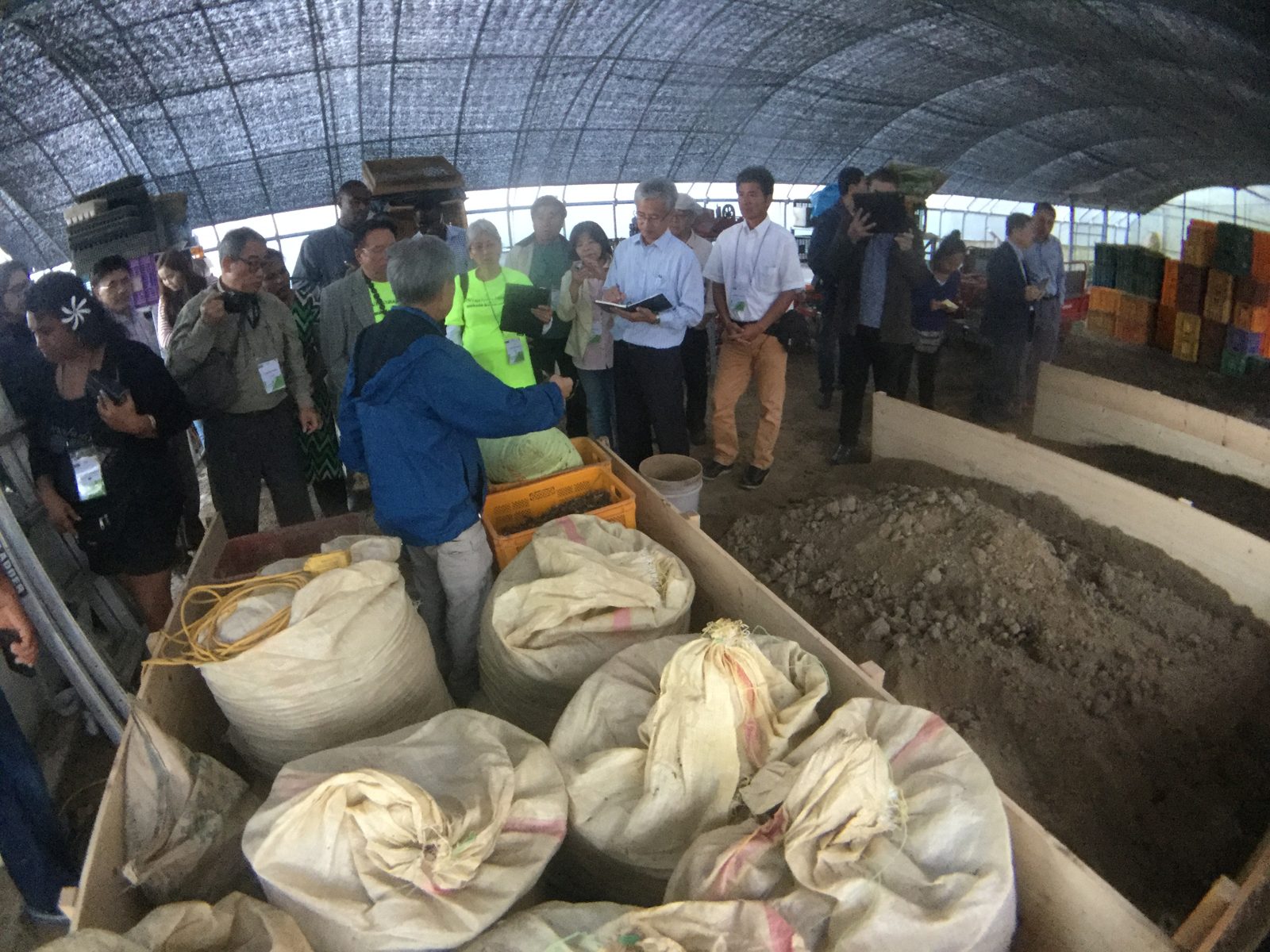
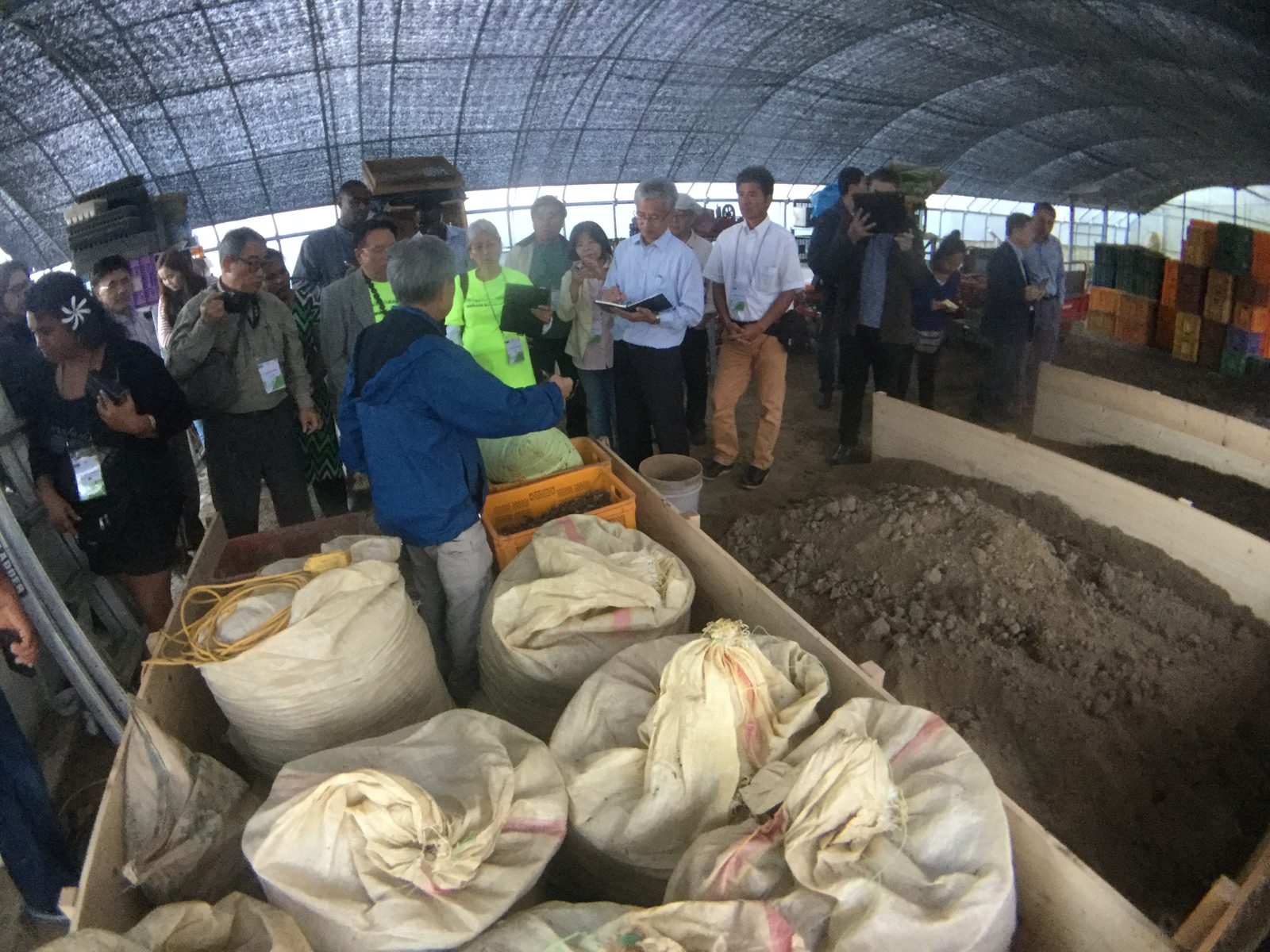
A bus south to Gokseong County, whose extension center runs natural farming for the whole county (talk 17), and a quail farm building new barns. At dusk, Lee Eun-ha's farm beside his church in Muju (talk 6). After dinner, Master Cho taught for an hour and a half.

Field trip Gokseong County center staff, interpreted into English by Dr. Hoon Park ·South Korea ·8 min

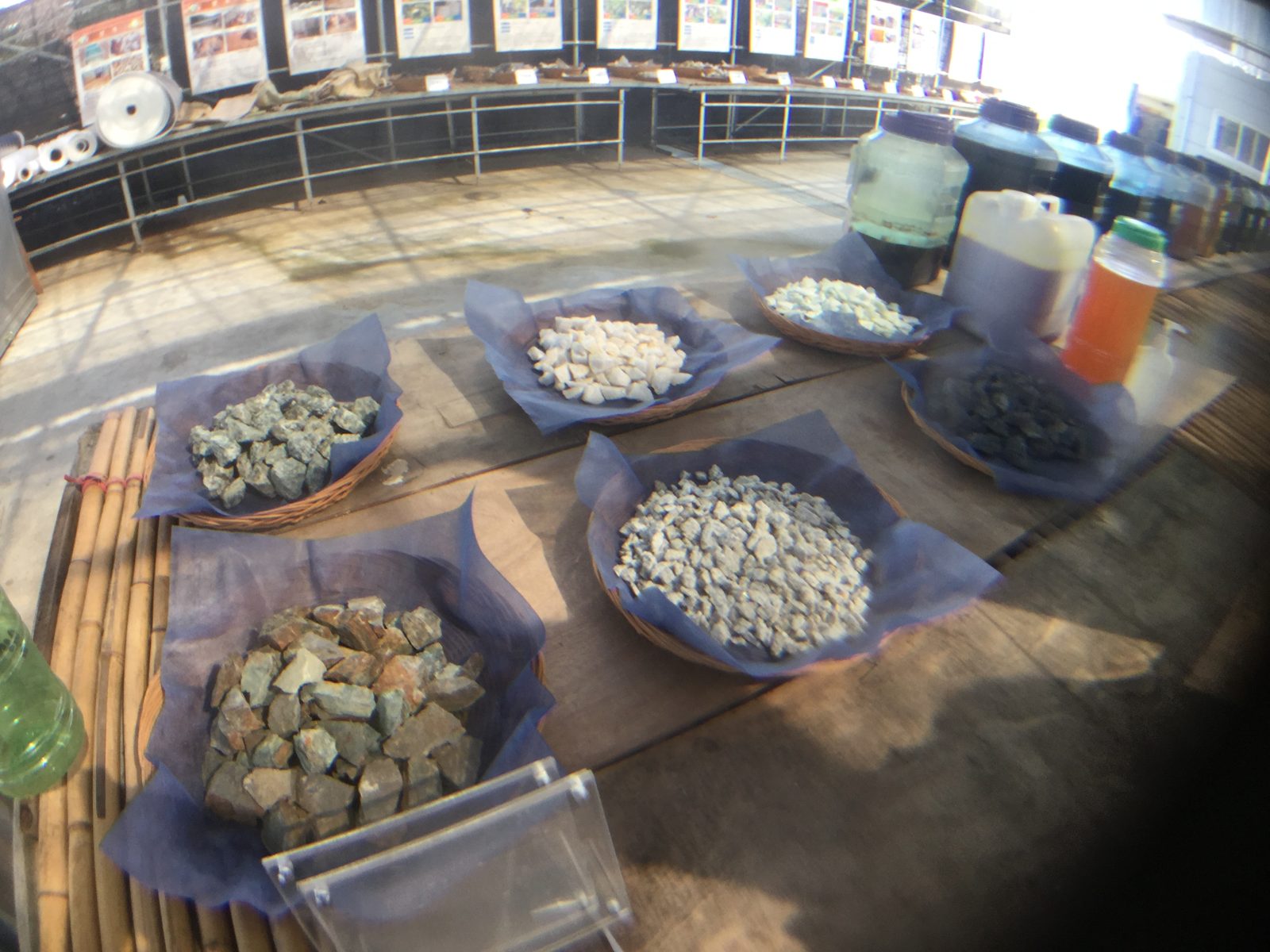
Five Kinds of Stone and a Drop: Gokseong's Mineral Water

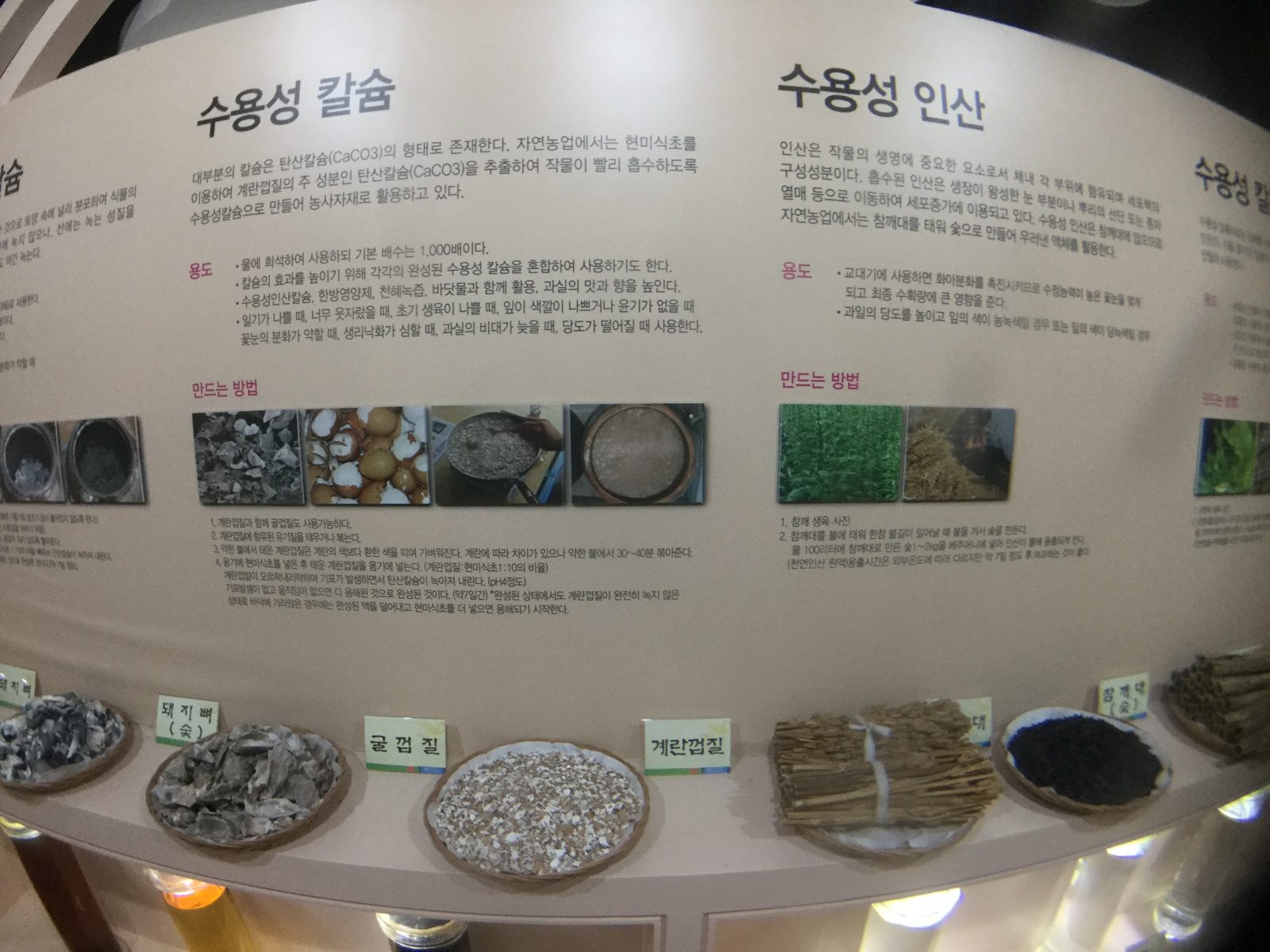
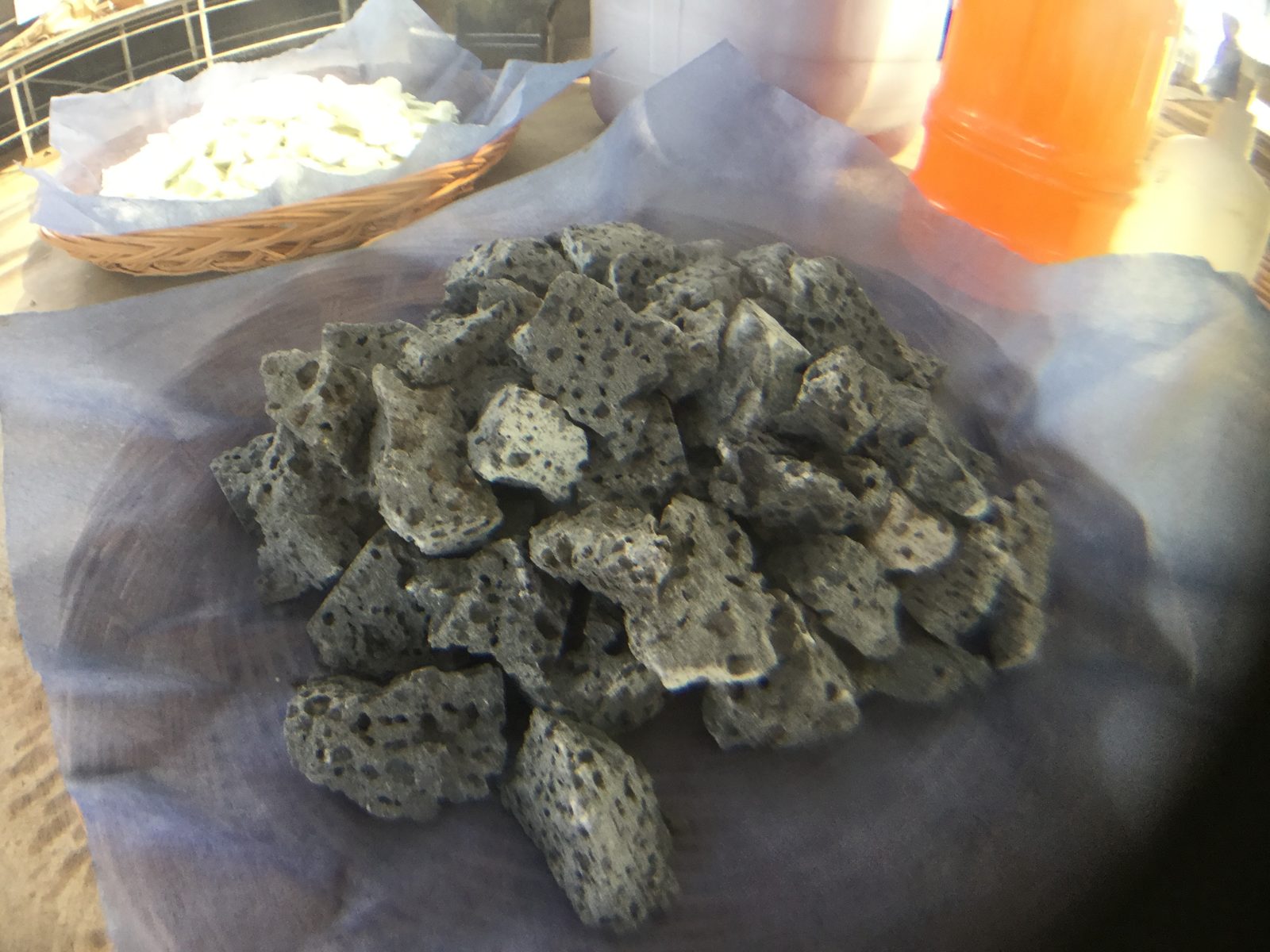
The group's first stop in Gokseong was the county's own natural farming center. Staff showed a mineral-water system: water is pumped up and dropped onto five kinds of stone in a tank, which the guide says adds minerals and oxygen, and a small bag of Microbes (IMO4) adds microbes too. Outside, the county's return-to-farm support center and the start date of its natural farming teaching, 2009, were explained.

Found Water dropped onto stone picks up minerals and oxygen

extension gokseong microbes minerals water

Field trip Dr. Hoon Park (interpreting), with Master Cho Han-kyu and the farm's owner, named as Mr. Lee Chang-hyun ·South Korea ·28 min

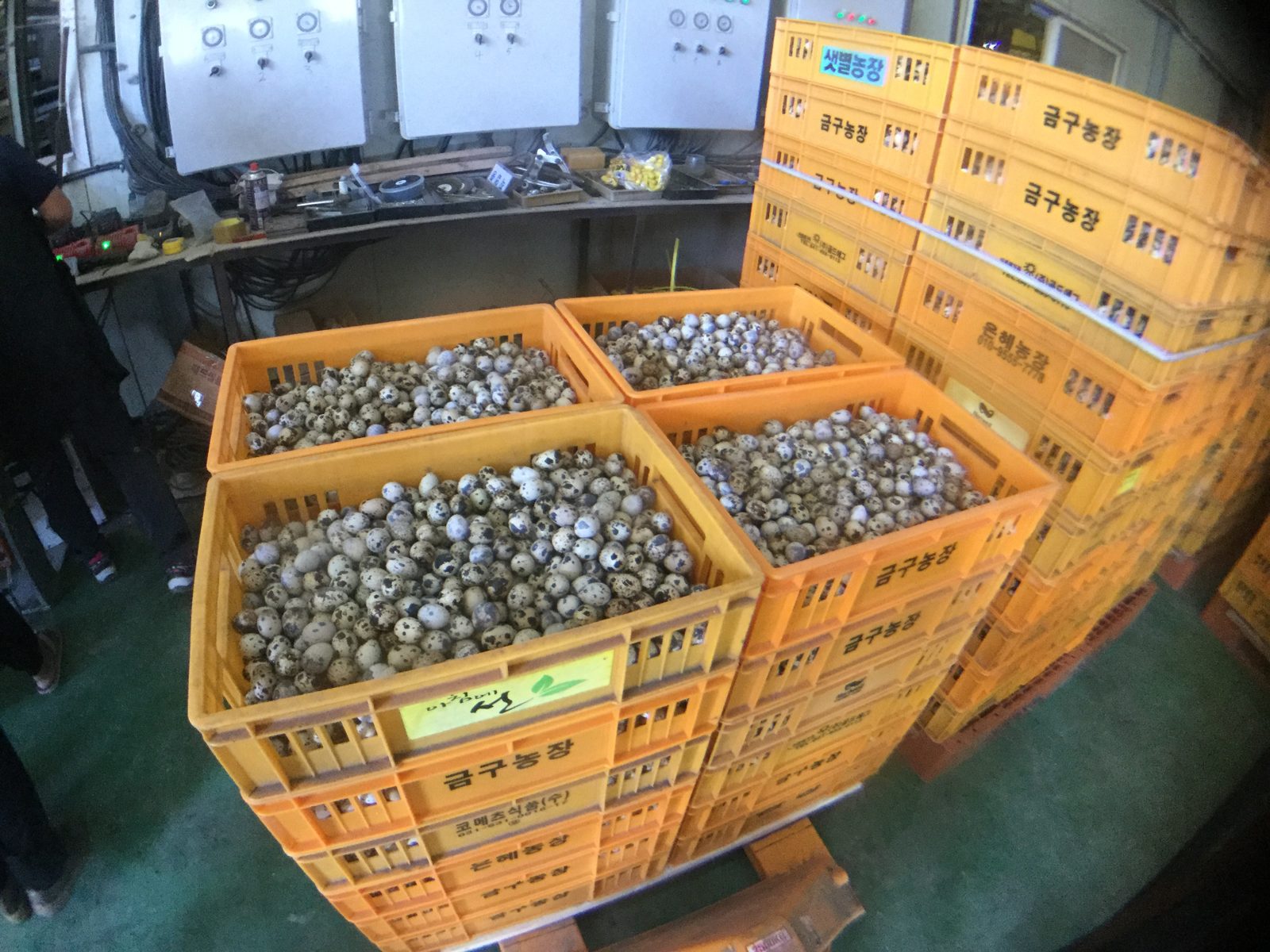
Quail Waste Becomes Feed at Gokseong's New Model Farm

A large quail egg farm in Gokseong was building, with the county, a model farm for pigs, hens and cows beside its quail houses. Dr. Hoon Park interpreted as the hosts and Master Cho explained the deep sawdust floor (soil, salt, sea water), a ventilation roof from Cho's research center, and a feed plan built on the farm's own waste: about 8 tons of quail manure a day. The visit ended at the owner's seven-year-old ginseng, grown under shade with Microbes (IMO).

Found Natural ventilation keeps the pens from getting too hot

cattle feed ginseng microbes pigs poultry

Field trip Lee Eun-ha (host), with Master Cho Han-kyu (interpreted by Dr. Hoon Park) ·South Korea ·44 min Spoken in Korean

Hens Eat Fermented Cow Dung on a Pastor's Muju Farm

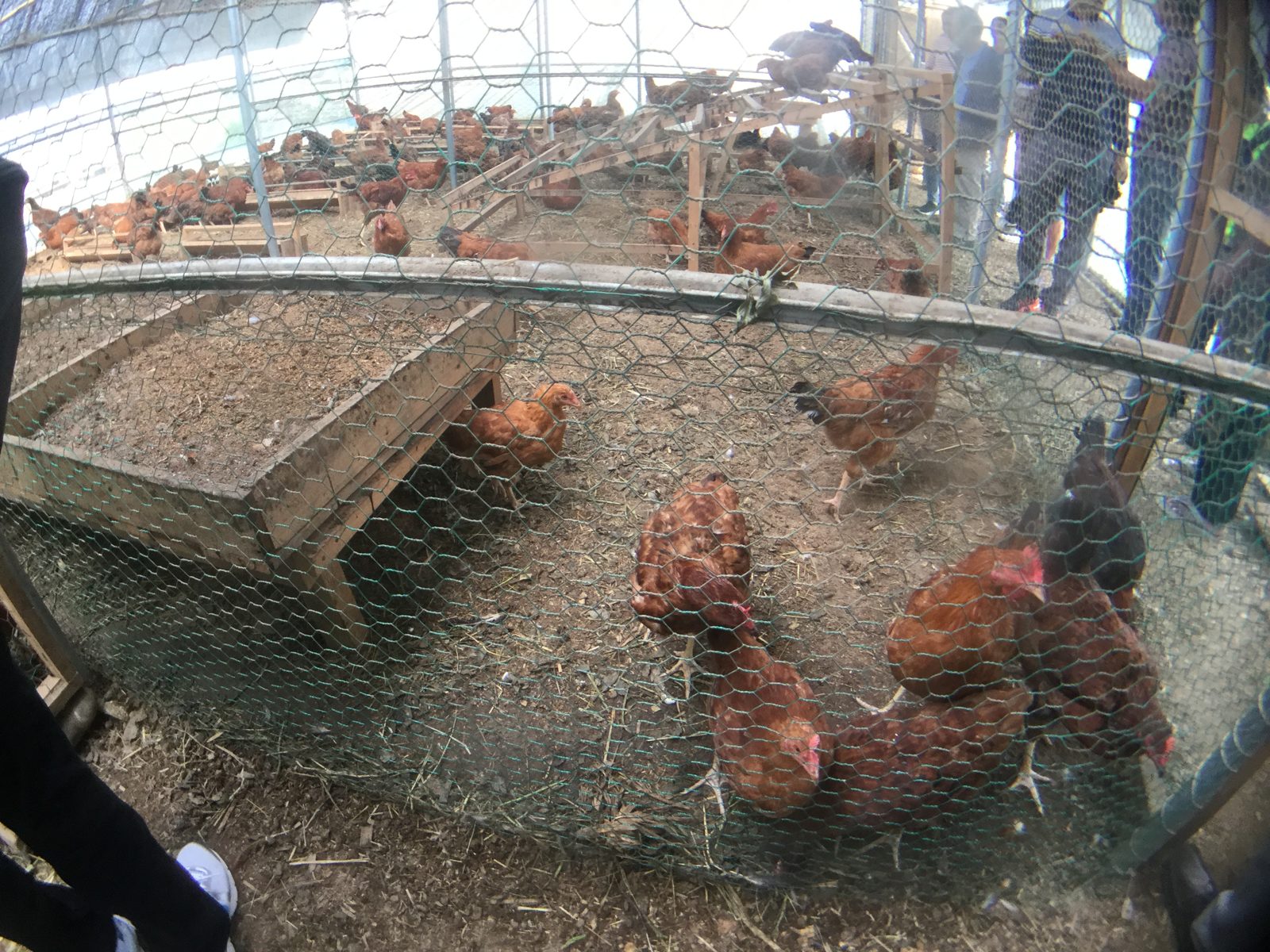
On the evening of October 6, 2016, the group visited a small hen farm next to a country church, run by Lee Eun-ha, the former missionary to the Philippines who spoke on the first day. Master Cho calls it the first place in the world to feed fermented cow dung to hens, inside a closed loop where the farm makes its own feed and fertilizer. The hosts showed chopped green corn stalk fermented for feed, a BMW water tank, IMO4 mixed with a tiller, a feed mixer and fermenting trough, hens on a bare-earth IMO4 floor with no smell, a chili field with soft soil, and a makgeolli insect trap. Laying was about 60% while feed ratios were still being tested.

Found Laying rate about 60%, aiming for 65 to 70%

cow dung economics feed food microbes poultry

Field trip Master Cho Han-kyu (interpreted by Dr. Hoon Park) ·South Korea ·85 min Spoken in Korean

One IMO4, Three IMO5s: Match the Plant's Stage

After the farm visits of October 6, 2016, Master Cho Han-kyu gave the field-trip group an evening lecture, interpreted by Dr. Hoon Park, on one idea: IMO5 is not one recipe. The IMO4 base stays the same, and what goes in depends on the crop's stage: fish protein for early growth, calcium phosphate from charred bone for the changeover, calcium from charred shell for maturing. He worked it through with corn (calcium phosphate about a week before the changeover, day 58 of 180), then covered seawater at 1:30, a vinegar, LAB and yeast tonic, and an alcohol, mugwort and dropwort recovery mix with doses for pigs.

Found Corn, sugarcane and rice, the grass family, carry about 15–16 leaf layers

corn food microbes minerals nutritive cycle pigs

Field trip, October 7: the Paju practice field

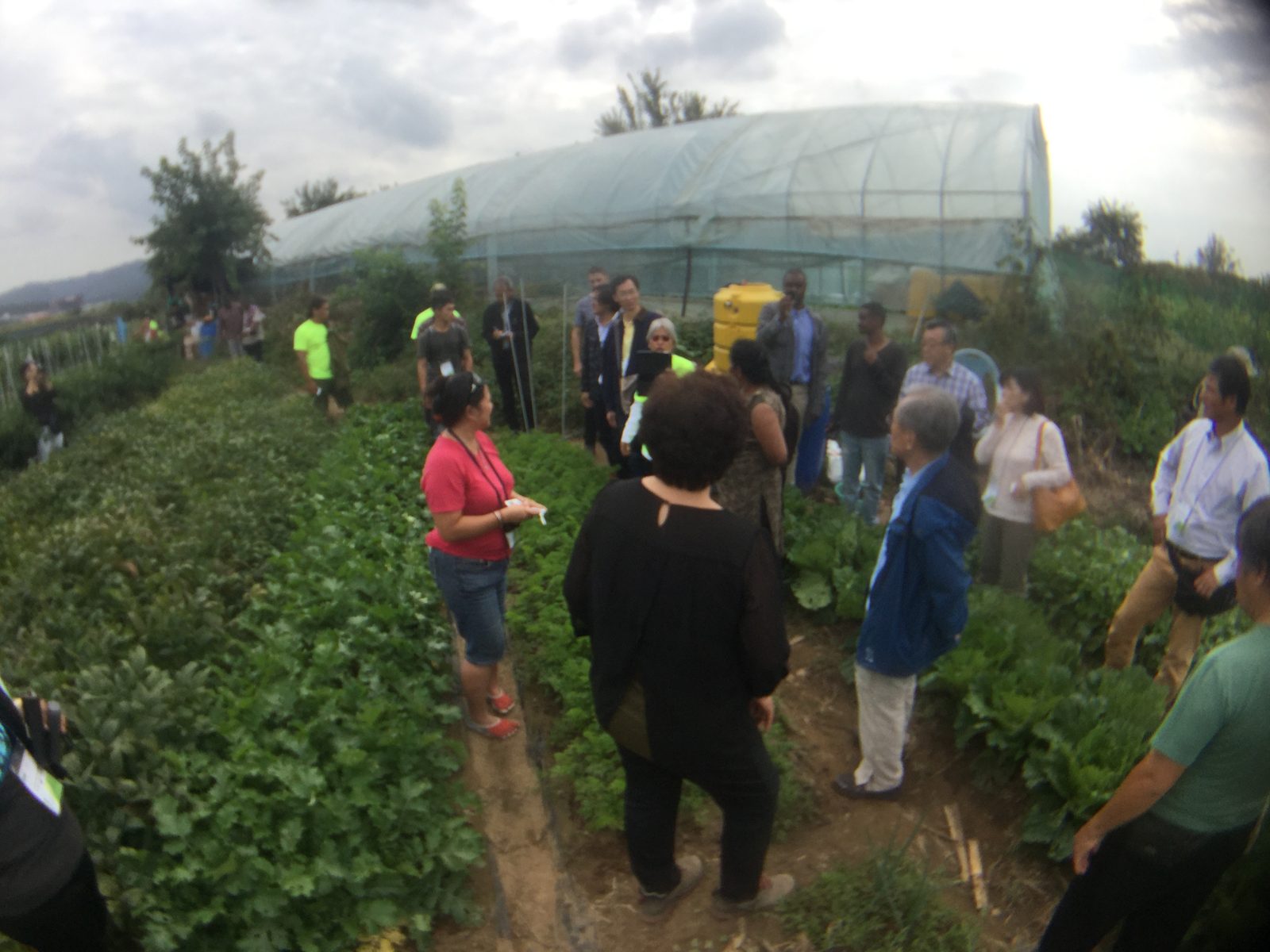
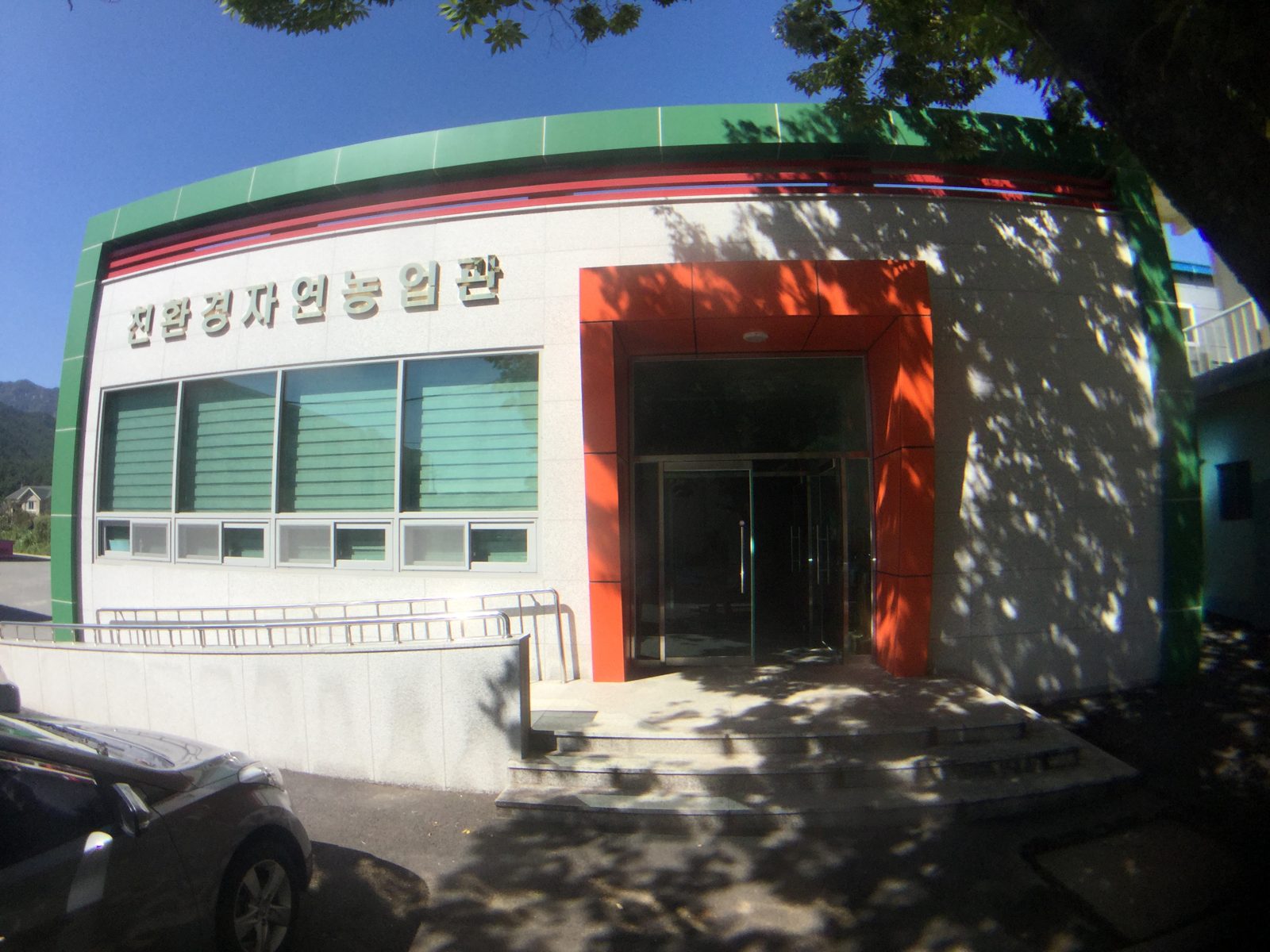
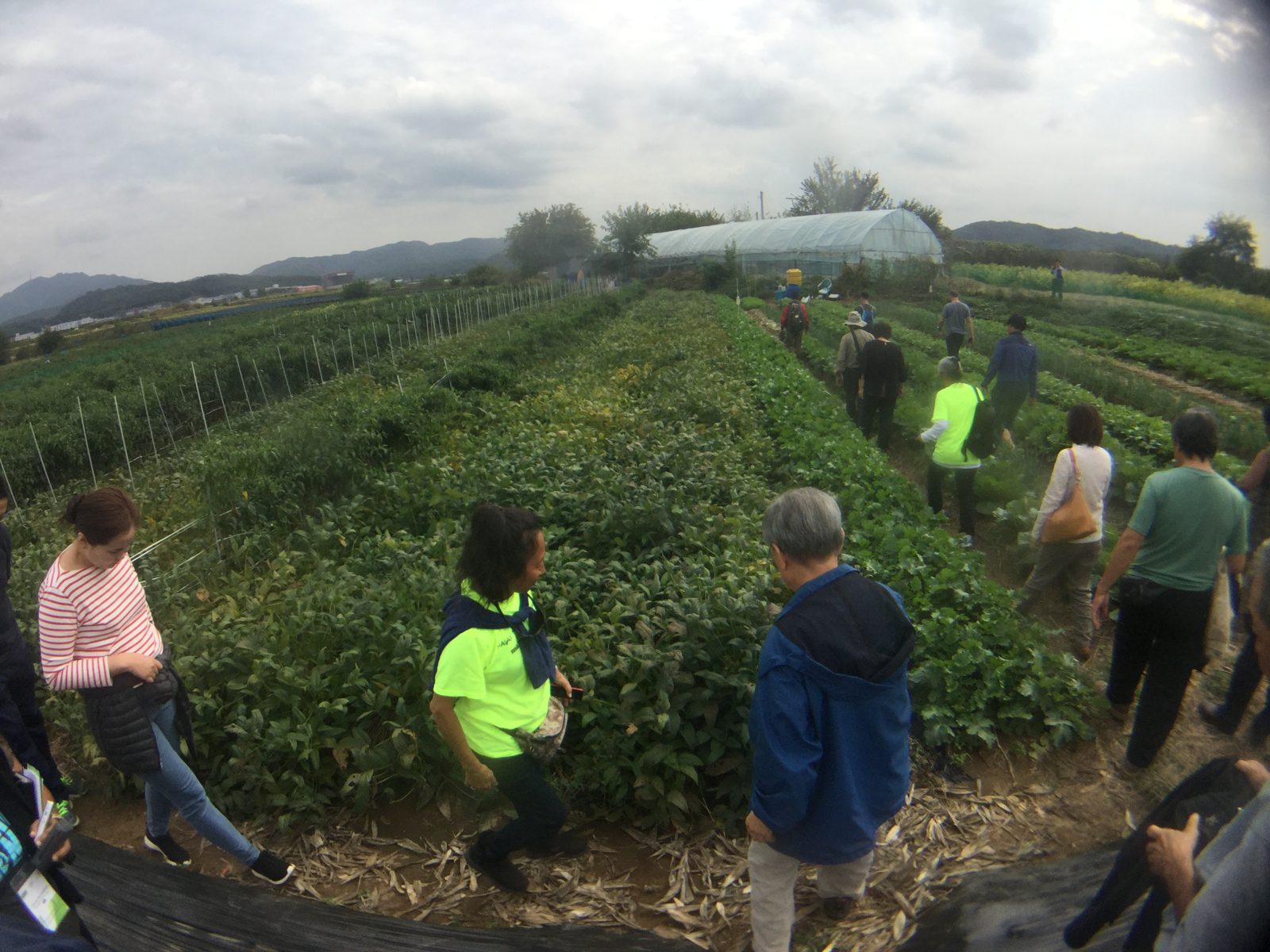
Konkuk's practice field in Paju, where the students' trials grew. Ahmad Jawid Zamany walked the group through his three tomato systems, and Kim Eun-ja showed her IMO5 beds and the corn from her talk.

Field trip Kim Eun-ja (interpreted into English by Dr. Hoon Park) and Ahmad Jawid Zamany ·South Korea ·54 min

Build the Soil First: A Chemical Field's First Natural Year

The trip's last farm: Konkuk's natural farming practice field in Paju, where the students' trials from the talks grew. Ahmad Jawid Zamany showed his tomato, eggplant and pepper plots under three systems; in October the natural rows were still flowering and fruiting while the others had nearly stopped. Kim Eun-ja then walked the group through her first natural year on ground farmed with chemicals for decades: careful soil groundwork, her own Microbes fertilizers (IMO5), crop residue returned to the field, and the tomatoes she over-fed with nitrogen.

Found Natural tomato, eggplant and pepper rows still flowering and fruiting in October; organic and conventional had almost stopped

corn ginger microbes pepper poultry soil

Scenes from the week

About this record

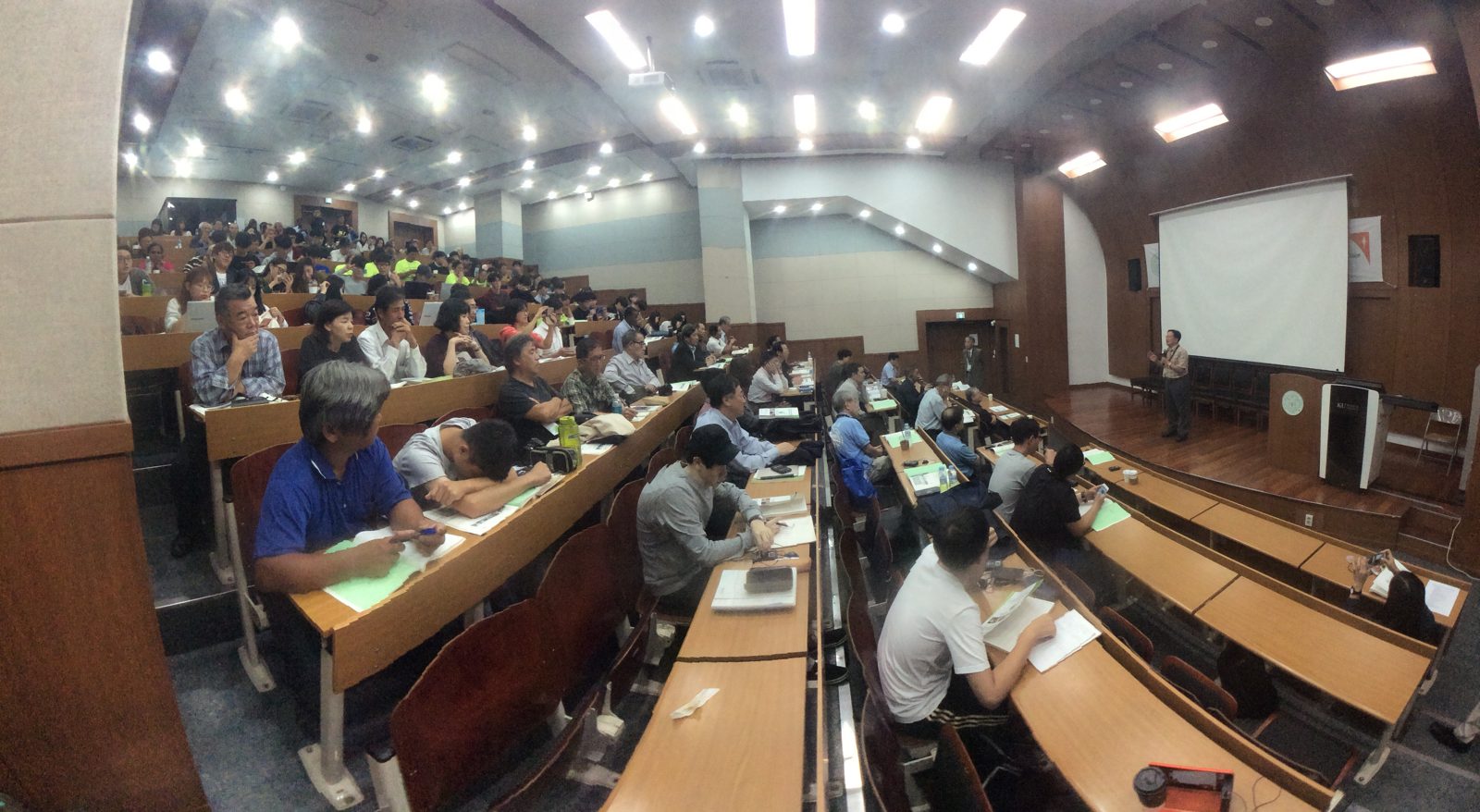
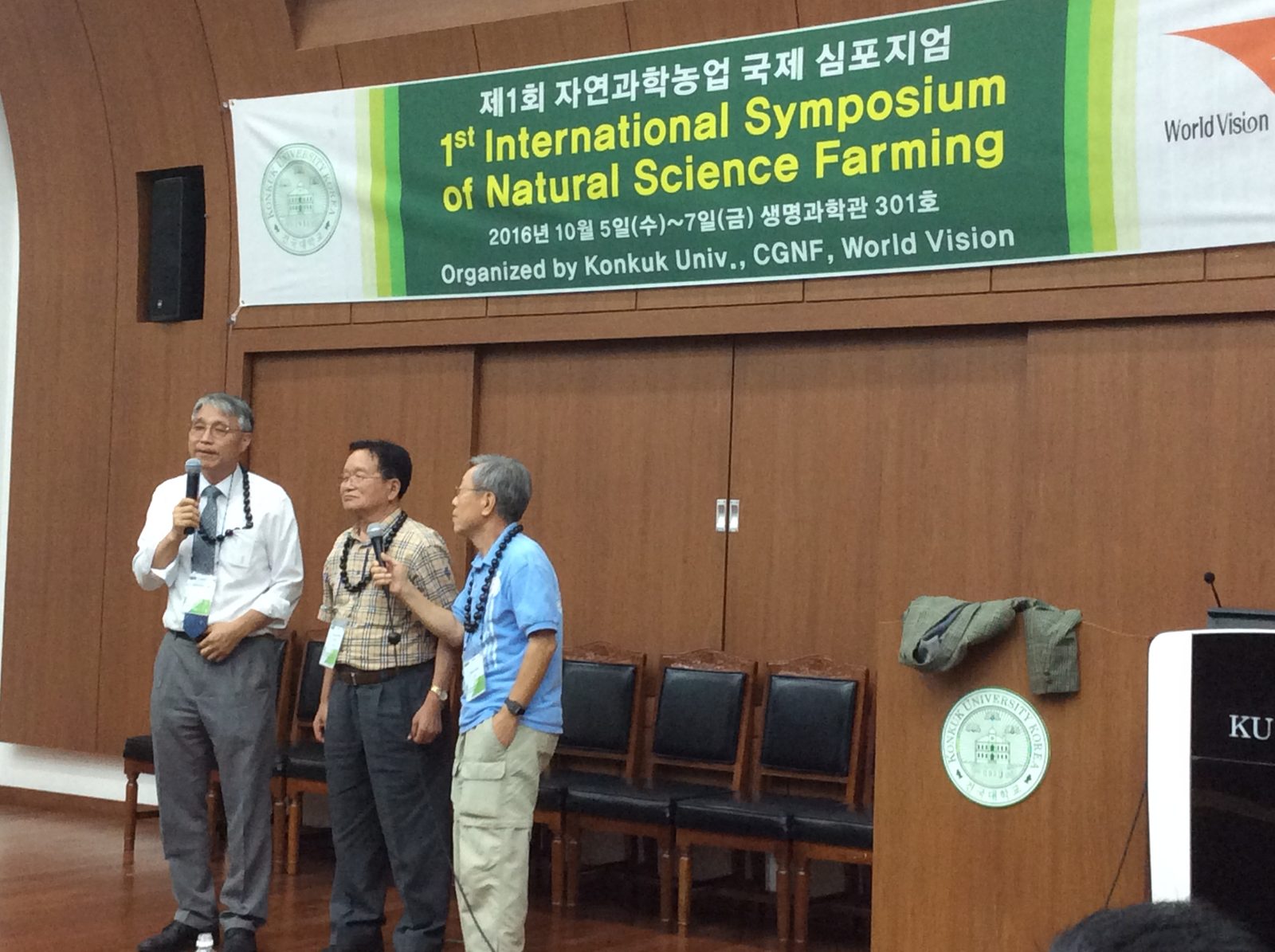
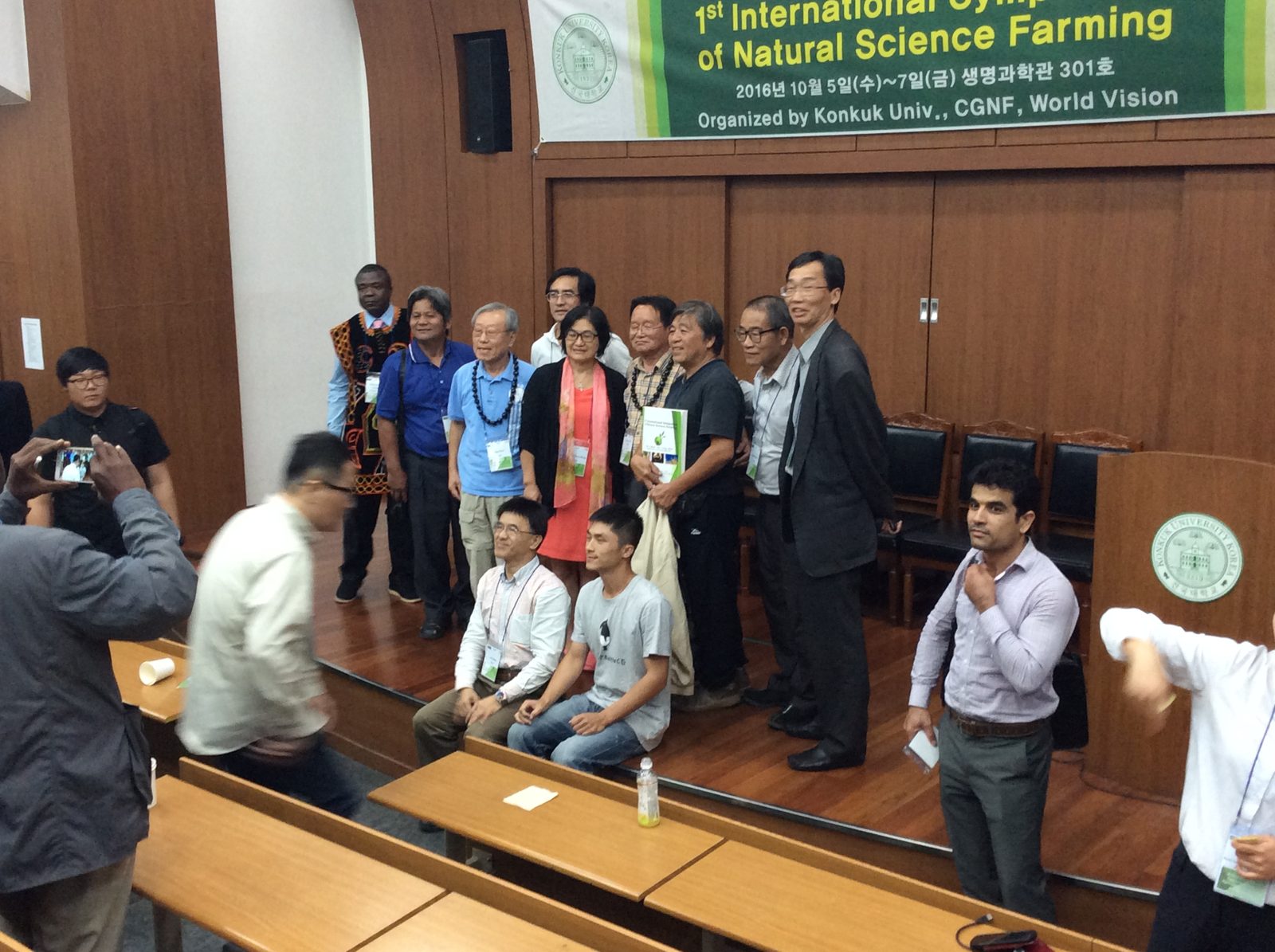
In October 2016, Konkuk University, CGNF (Cho Global Natural Farming) and World Vision held the first International Symposium of Natural Science Farming at Konkuk's Life Science Building in Seoul. Master Cho Han-kyu was in the room. So were his students: Korean farmers and professors, a group from Hawaiʻi, and master's students from Afghanistan, Ghana, Uganda, the Philippines and other countries who had spent the season running natural farming trials on Konkuk's test farm in Paju. Talks came in Korean, English, Japanese and Chinese. The audience heard each other through headset interpreters.

Dr. Drake Weinert filmed every talk. The videos have been public since 2016, but most of what was said in Korean never reached English readers, and nobody had pulled the numbers off the slides. This archive does that.

How each talk was checked

  • Two independent transcripts. Each talk was transcribed from the published video with Whisper large-v3, and separately from the original iPhone recording by a second pipeline that detects the language line by line. The two were lined up by matching the audio itself.
  • Line-by-line reconciliation. Where the two disagreed, a reviewer worked out what was actually said from context, the slides and the subject. Korean, Japanese and Chinese lines were translated and kept beside the English, so anyone who reads the language can check the translation.
  • The slides. Every talk was scanned frame by frame for slides. Tables and charts were read off the screen, so the results carry the speaker's own numbers.
  • Next to Master Cho. Each finding was compared with Master Cho's books and seminars in the Pure KNF library, and marked where it agrees, goes further or differs.

Every talk page lists the corrections that changed meaning, and the lines we could not confirm. Scans of the printed slide handouts will be added when they're digitized. If you were there, or you read Korean and spot a mistake, tell us.