Konkuk University, Seoul · October 5–7, 2016

Natural Science Farming Symposium 2016

A day of talks in Seoul, then two days on the farms. 23 talks, three languages. Master Cho's students from ten countries showed what natural farming did on their fields, from Afghan potatoes to Hawaiian macadamias. Every talk is translated, checked line by line, and boiled down to what was tested and what happened.

Read what it all adds up to →

Also on the record: Hilo 2015

Topics microbes soil economics pigs poultry rice history corn food scale disease feed health minerals protectors reproduction Clear

2 talks on “fuel”

Richard Kwame Denteh ·Ghana ·12 min

Natural-Farmed Maize Out-Yielded Chemical, 4.8 vs 4.1 t/ha

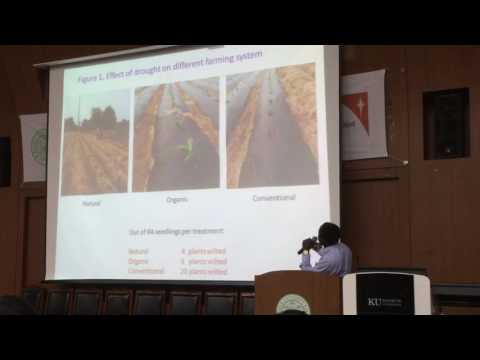
A one-season maize trial at Konkuk's Paju research centre compared natural farming, organic and conventional (chemical) systems side by side. The natural plots had the longest, heaviest ears and the highest yield: 4.8 t/ha dry grain against 4.3 for organic and 4.1 for conventional. After a one-week drought just after germination, 20 of 84 conventional seedlings wilted, against 4 natural and 3 organic.

Found Dry grain yield 4.8 t/ha natural vs 4.3 organic and 4.1 conventional

corn drought food fuel medicine structure

Julius B. Sugue ·Philippines ·15 min

Rice Root Volume Nearly Tripled with Fuel (FAA) at 1:500

A one-season paddy rice trial at Paju gave Fuel (FAA) at three strengths, 1:2000, 1:1000 and 1:500, on top of a full natural farming spray program, against a no-FAA control. The 1:500 plots had the most tillers, the longest roots, nearly three times the control's root volume and the most panicles per hill (23.6 vs 18.4). Filled grains per panicle and 1,000-grain weight did not differ, and no grain yield per area was reported.

Found Root volume at flowering 180 cc with FAA 1:500 vs 65 cc in the control

food fuel medicine microbes reproduction rice