Komohana Research and Extension Center, Hilo, Hawaiʻi · October 1–3, 2015

Natural Farming Symposium 2015

A day of talks and hands-on skill shares in Hilo, a day of panels, then farm tours and a film. 25 recordings: nine talks including Drake Weinert's keynote, six demonstrations on the lawn, eight panels, a short ceremony and hallway interviews. Every one is checked line by line and boiled down to what was made, what was measured and what was only told.

Read what it all adds up to →

Also on the record: Konkuk 2016

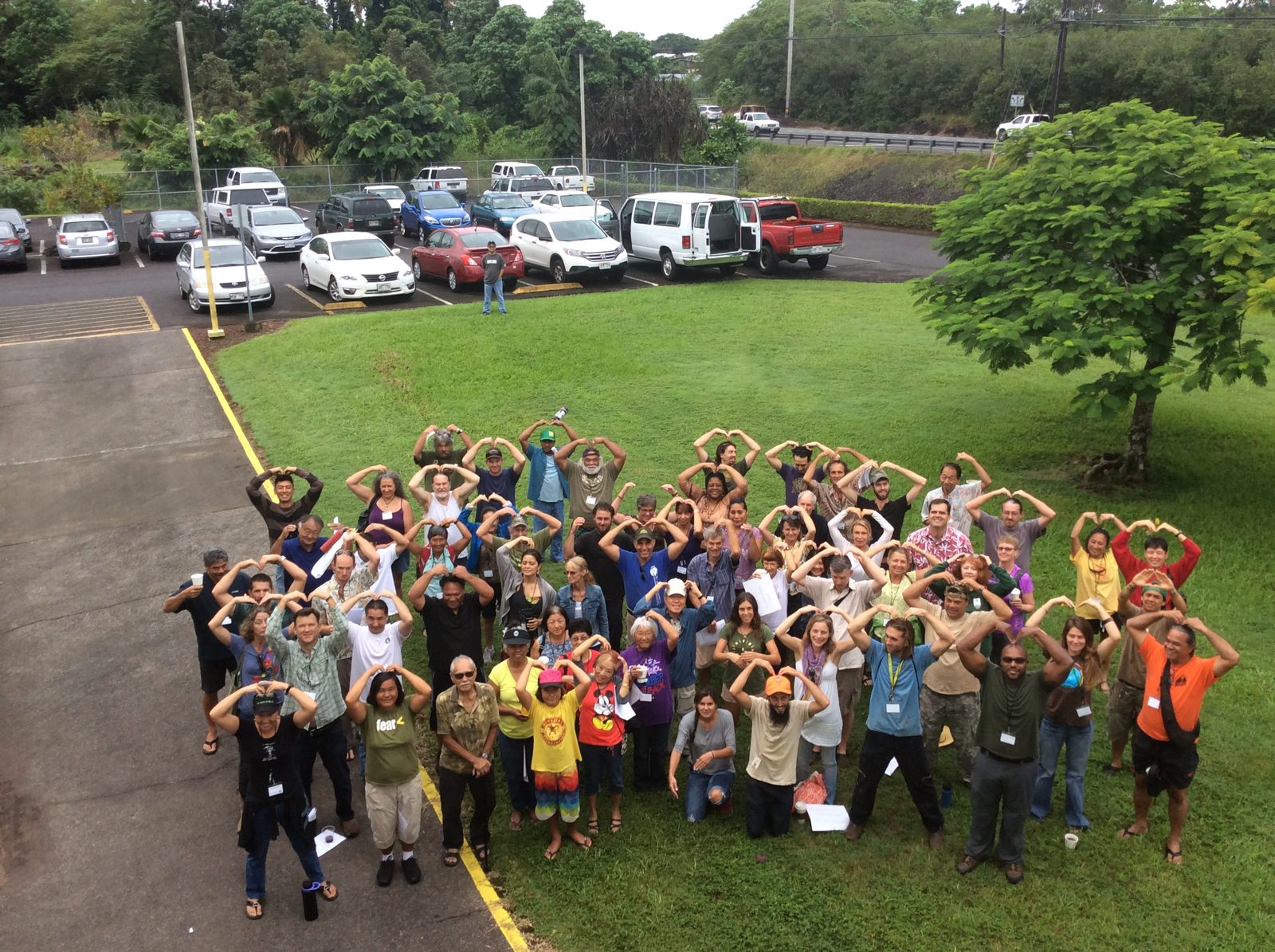
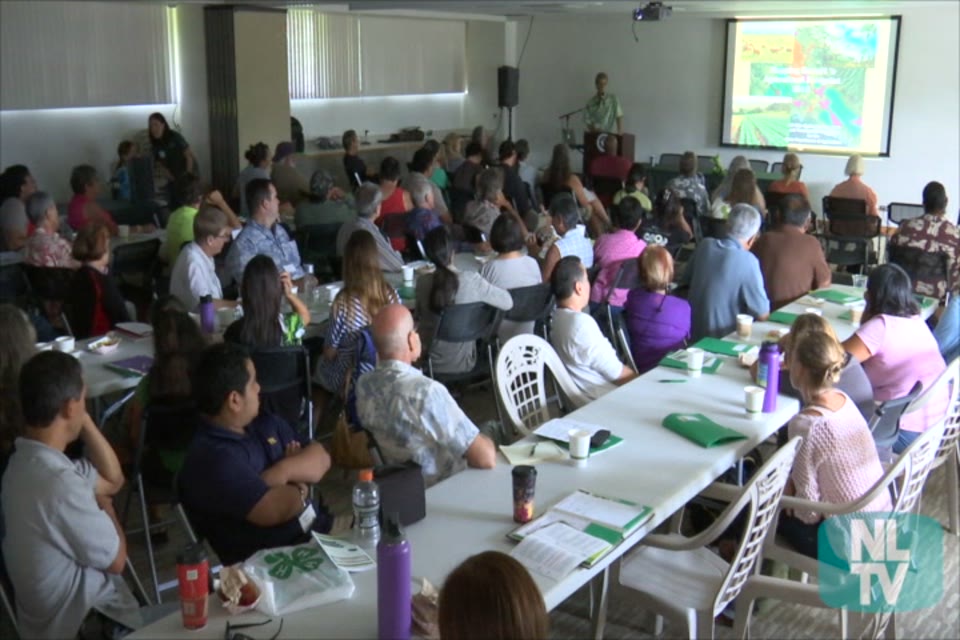
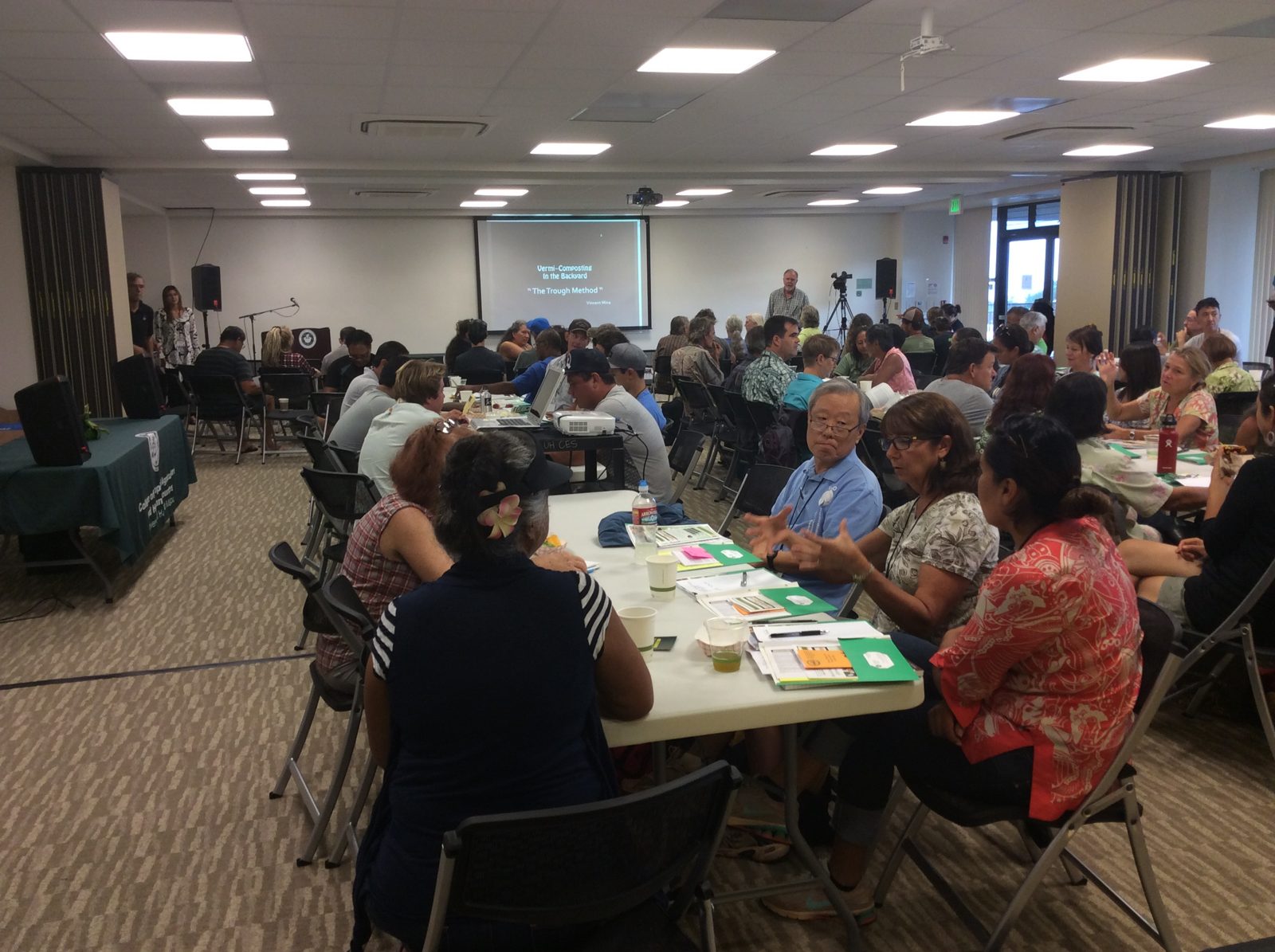
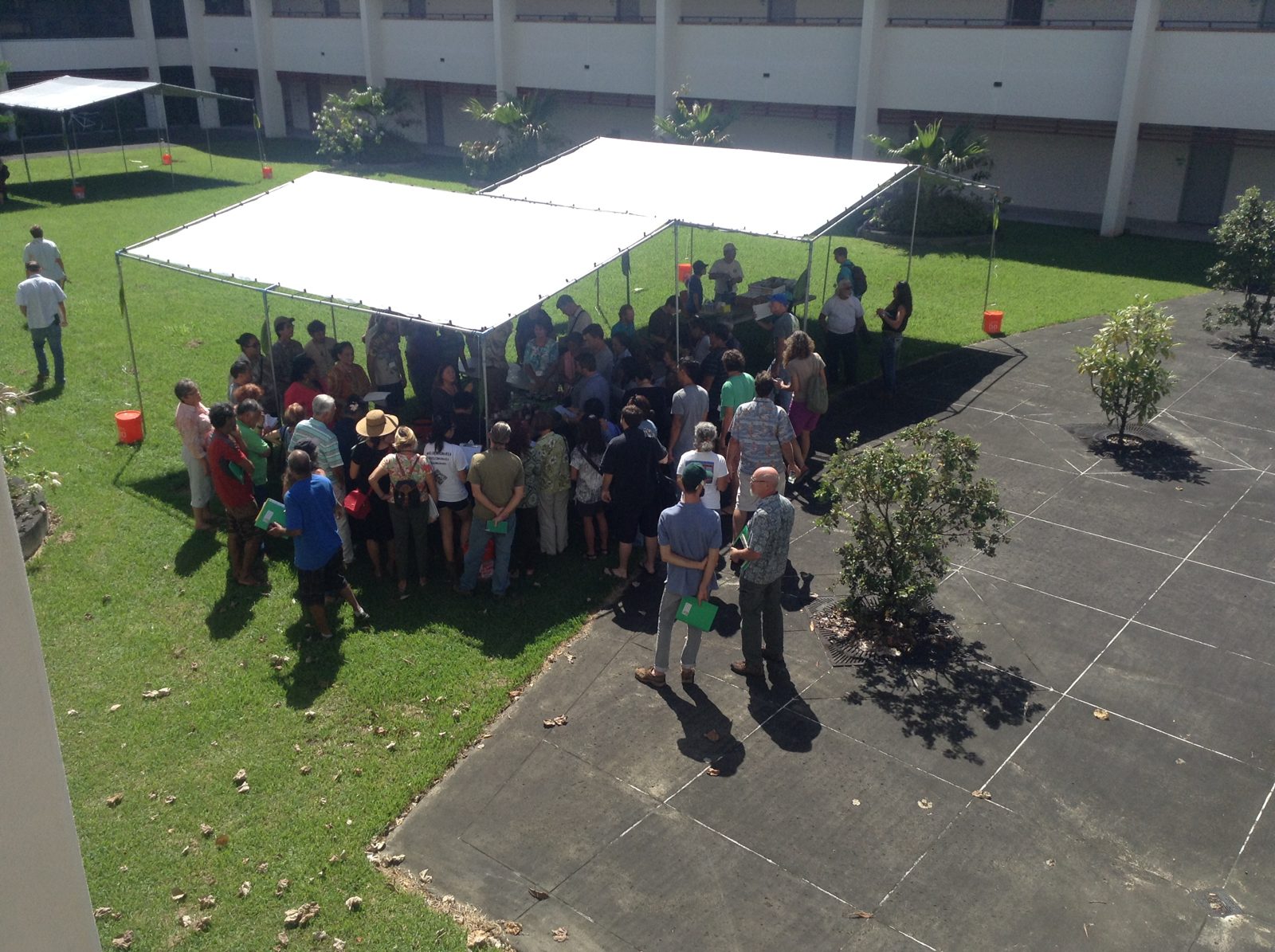
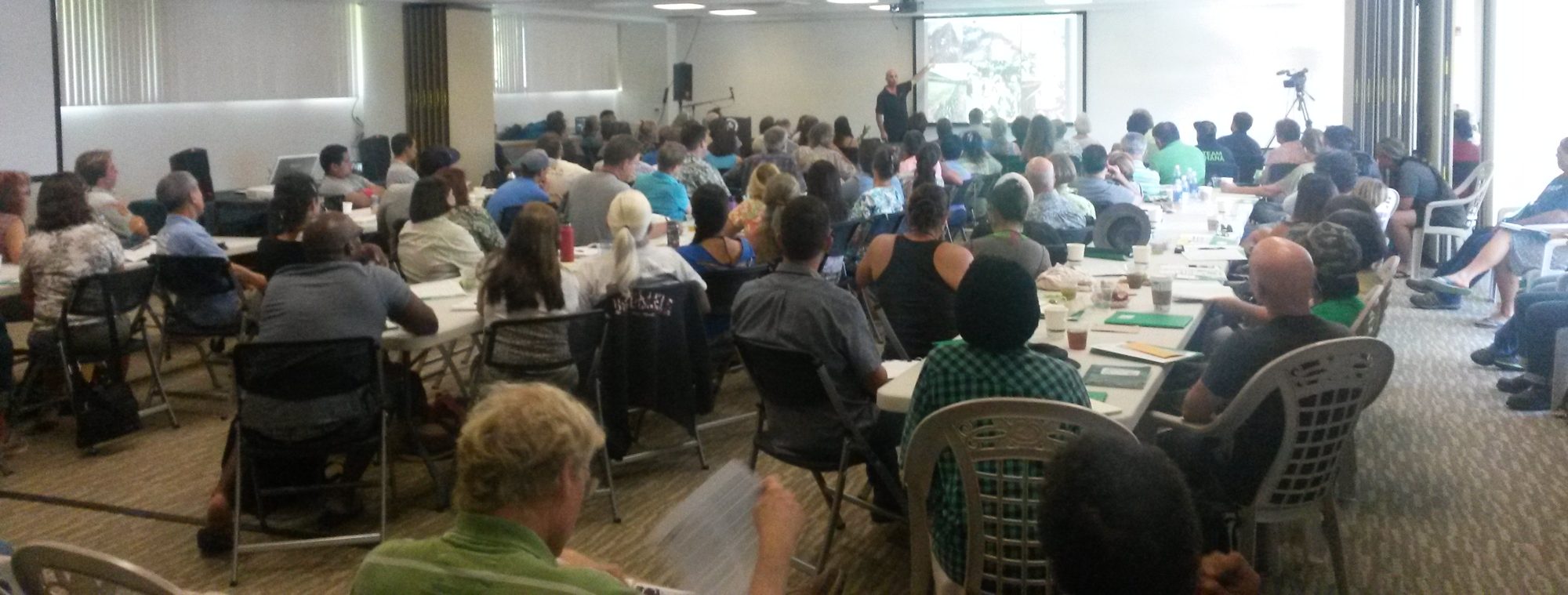
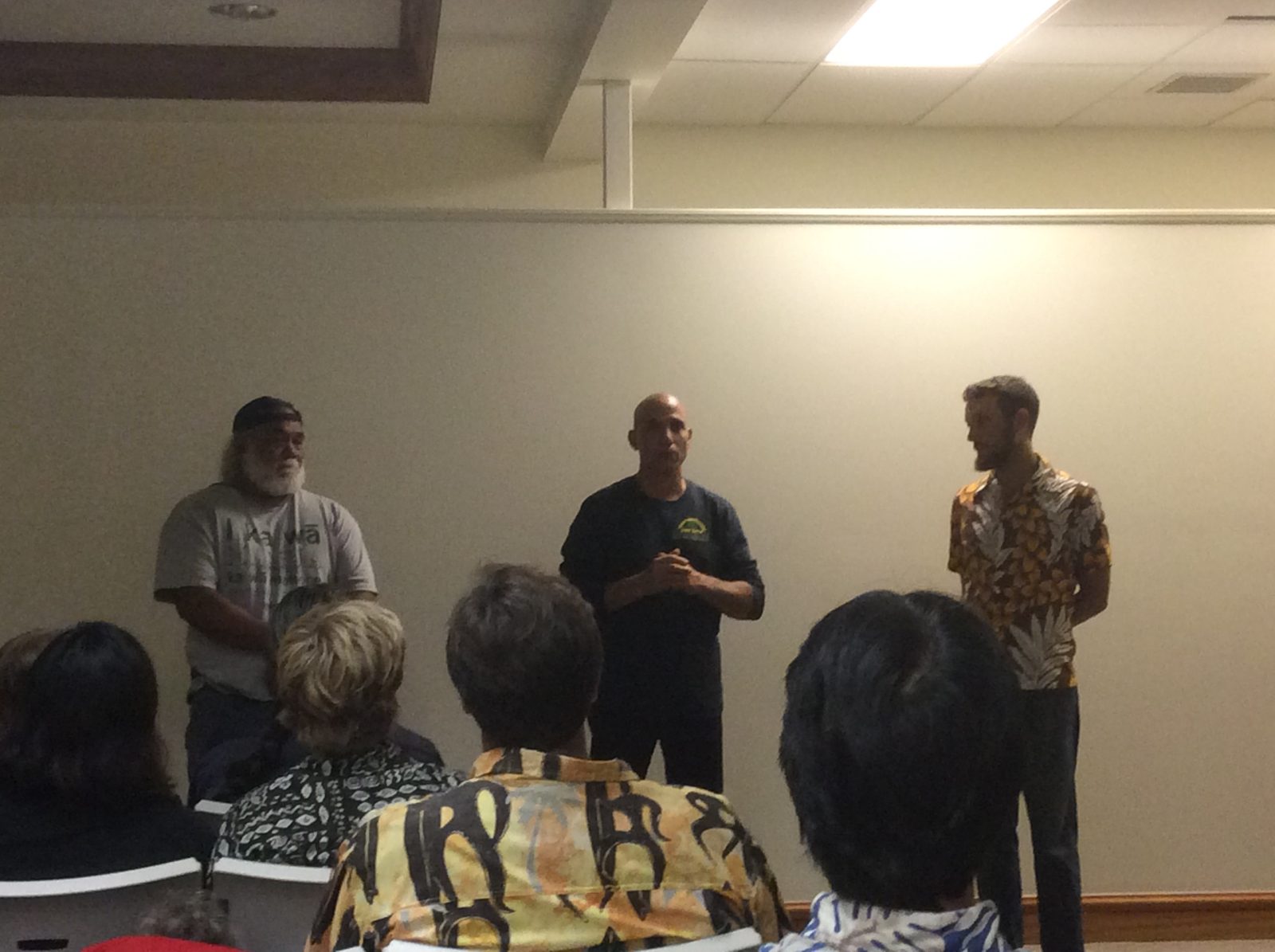
The group on the last morning, Saturday, October 3, before the farm tours.
Topics microbes soil economics policy health taro culture food pigs scale protectors research biochar fermentation minerals school gardens

What came out of it

The short version. The full findings have the numbers, the doubts, and what to test next.

The recipes on the lawn mostly followed Master Cho

Dr. Hoon Park's Protectors (LAB) matched Cho point for point: 1 part rice-wash serum to 10 parts milk, five days in the shade, sprayed at 1:1,000. Kim Chang's Food (FPJ) and Medicine (OHN) kept his ratios. The drift was in small things: jars filled past two-thirds, and sugar never weighed.

Protectors (LAB): 1 Part Rice Wash, 10 Parts... Sweet Potato Leaves + Brown Sugar = Food... Medicine (OHN): Five Herbs, Six Jars, Three... Microbes (IMO) by Hand: Squeeze Test, Keep It... Purslane Food (FPJ) Fast: Chop It in a Tub... Fermenting the Weeds Bugs Won't Eat

Big farms, big claims, few records

A 750-acre Kohala mac nut farm with about 300 acres in natural farming. A piggery grown from 9 piglets to about 500 with no shots. A kalo farmer who stopped spending $8,000–12,000 a year on fertilizer. All from memory, and James Rushing reminded the room that no top-tier paper yet showed natural farming working.

Mac Nuts, Kalo and 500 Pigs: Natural Farming... Four Scientists on Natural Farming: Proof,... How NRCS Sizes a Natural Farming Piggery Food Waste to Pig Feed, Taro by Hand, Soil...

Our tūtū already farmed this way

Kanaka farmers read old practice as natural farming: a fish buried by a tree, sugarcane beside the ʻulu, kalo in old imu pits. Alika Atay sprays calcium phosphate at flowering and keeps LAB off fruit. HFUU's politics ran alongside: if you're not at the table, you're part of the menu.

Kanaka Farmers: Our Tūtū Already Farmed This Way Not at the Table? You're on the Menu Move 10% to Local Food, Keep $300 Million in... From a 6×6 Bed to 8 Acres: Natural Farming in...

The program

Thursday, October 1: talks, skill shares on the lawn, and the keynote

Vincent Mina ·USA (Hawaiʻi) ·36 min

A Sewer-Pipe Worm Trough That Eats 100 lb of Pulp a Week

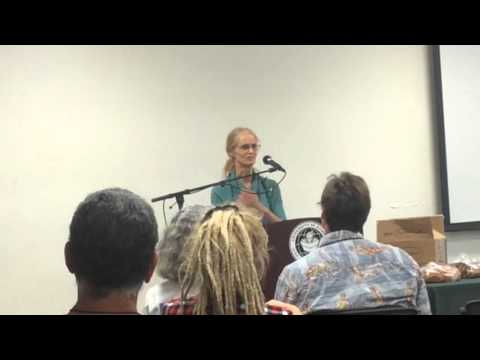
Vincent Mina, state president of Hawaii Farmers Union United, opened the symposium hall talks with the story of his 2,000-square-foot greens farm and the union's policy work, then walked through slides of his backyard worm system: half-pipe troughs cut from 2-foot sewer pipe and fed health-food-store juice pulp, mineral powder, biochar and Microbes (IMO-3). He also showed how he makes IMO-3 by the ton on wheat mill run and biochar, his compost screener, a hau-flower Food (FPJ), and a taro planting on old cane land mulched with sun hemp.

Found His farm makes a living on 2,000 sq ft, producing about 400 lb of greens a week

biochar food microbes policy soil taro

Derek Kurisu ·USA (Hawaiʻi) ·18 min

How a Hilo Grocer Put Local Food and IMO on the Shelf

A KTA Super Stores executive explains how the store's Mountain Apple Brand grew to about 45 local partners and 210 products, and how KTA raised local leafy produce to 90–97% and local beef from about 5% to 45% of sales. He then tells how Dr. Hoon Park won him over to Korean Natural Farming, which led KTA to sell a bagged Microbes (IMO) product, IMOlizer, and to hope for natural-farming food on its shelves.

Found Mountain Apple Brand: about 45 business partners and about 210 products

beef economics health local food microbes retail

John Caverly ("Ginger John") ·USA (Hawaiʻi) ·6 min

How Microbes Brought the Worms Back to Old Cane Land

A Hilo-side farmer opens the Microbes (IMO) skill share on the lawn with his own story. His old cane land at Onomea had no earthworms and nothing would grow; after he began making Microbes with Dr. Park, seedlings given Microbes outgrew his organic mix, and 500 lb of IMO-4 laid under a diseased kalo field was followed two weeks later by worms everywhere. He says he has bought no organic fertilizer in seven years and that it takes about 40 days to go from rice to bagged IMO-4.

Found Seedlings given Microbes were plainly bigger in two weeks

bananas earthworms microbes mulch soil taro

Dr. Hoon Park, John Caverly ·USA (Hawaiʻi) ·50 min

Microbes (IMO) by Hand: Squeeze Test, Keep It Under 120°F

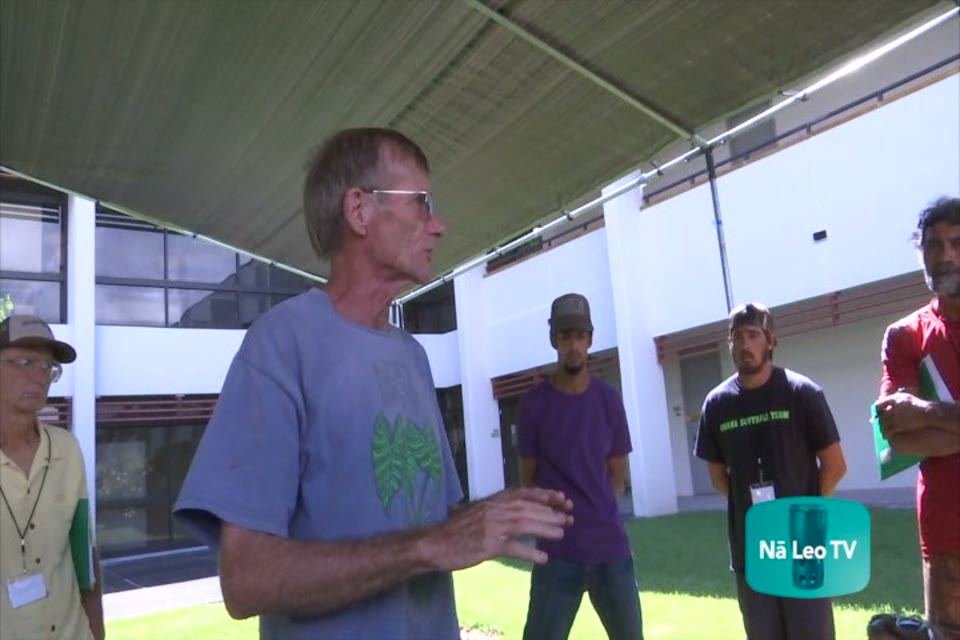
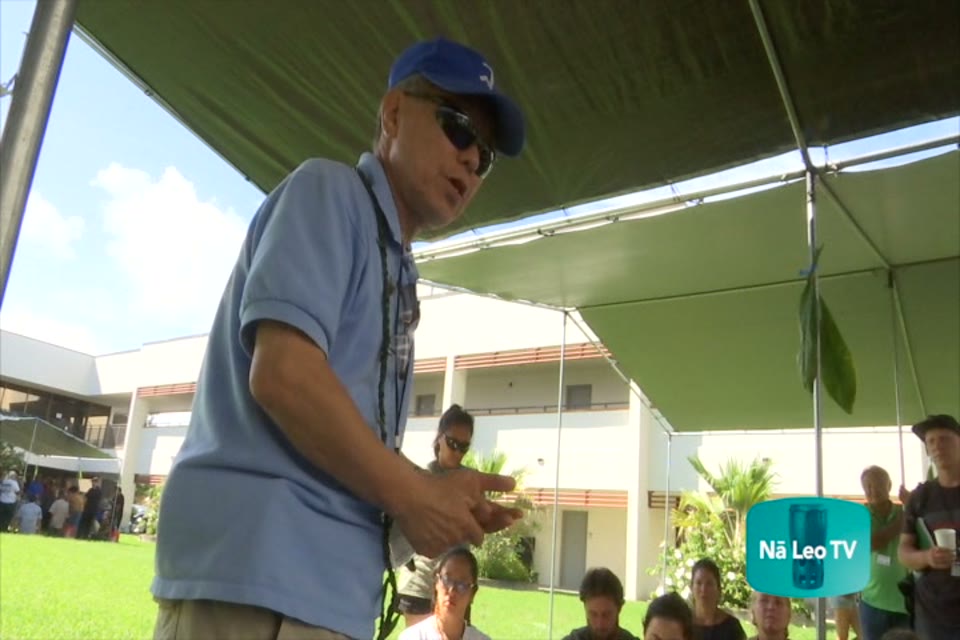
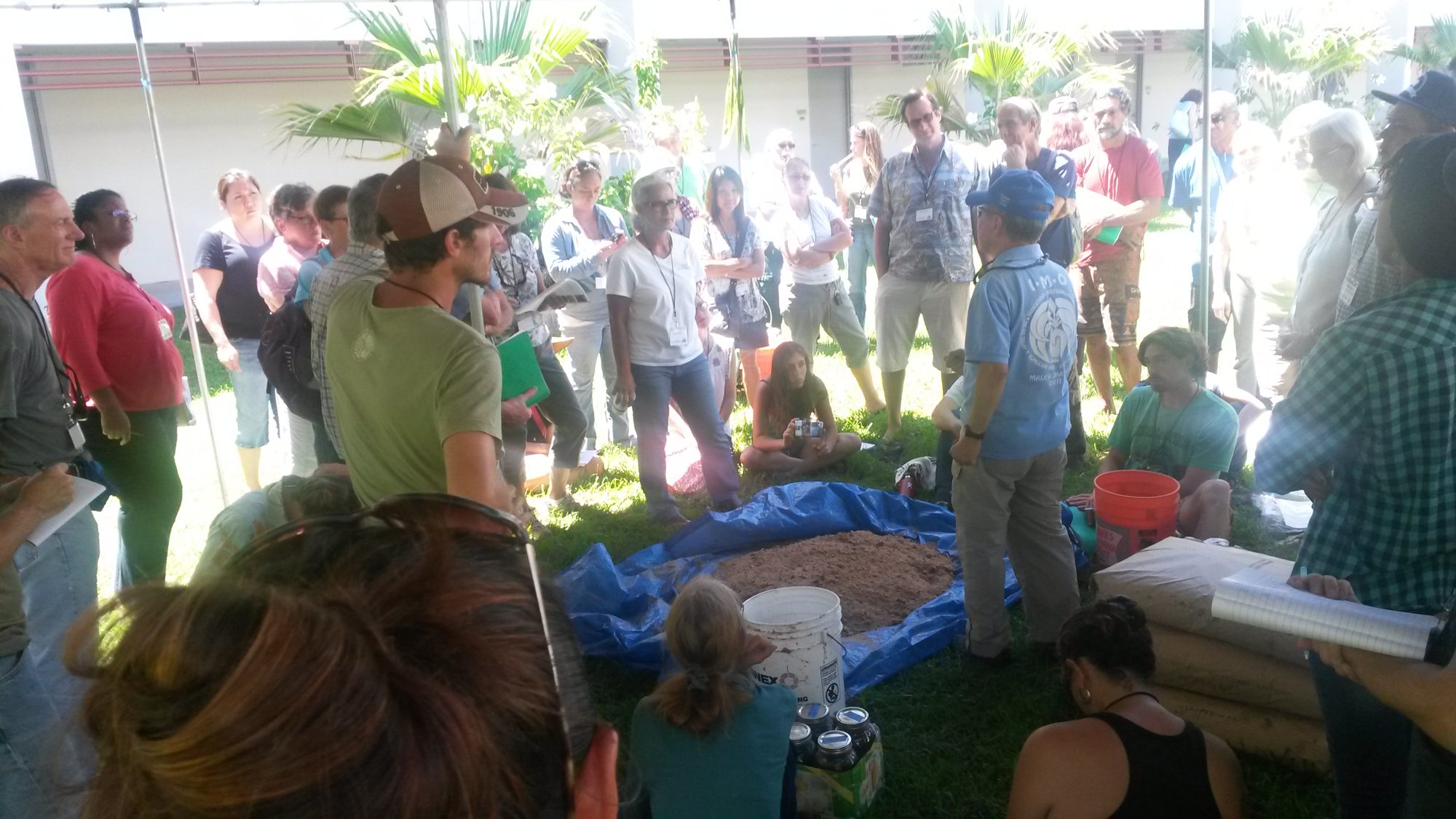
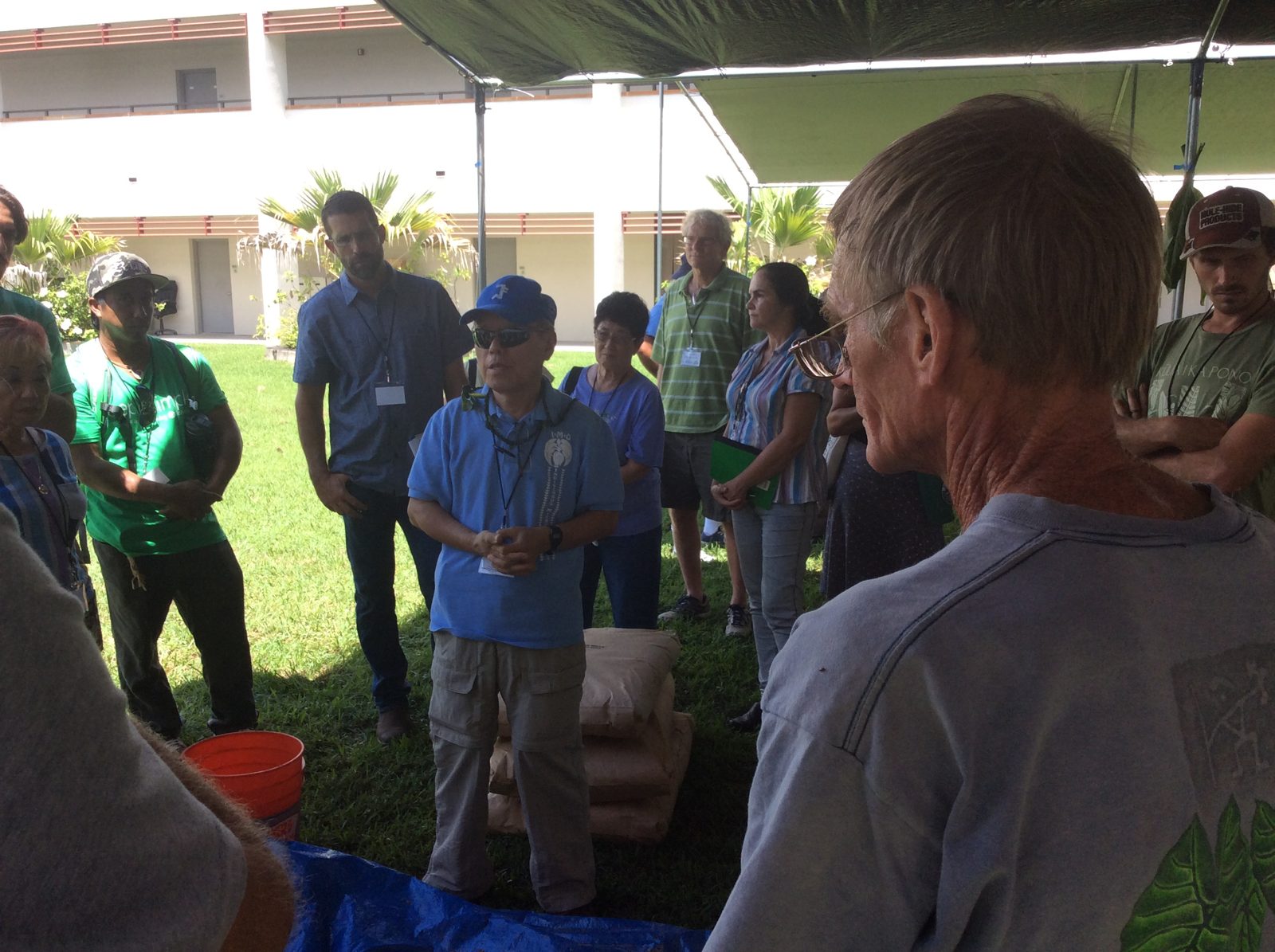
Dr. Hoon Park and farmer John (very likely 'Ginger John' Caverly) teach the Microbes (IMO) method on the lawn: rice in a box, then rice plus brown sugar, then a pile of wheat mill run wetted with IMO-2 and Food (FPJ) water and checked with a squeeze test. A woman helper who is never named shows an IMO-1 box and talks about mill run supply. A second group gets the IMO-3 temperature rule and Master Cho's four jobs of IMO, Dr. Park tells how he drinks Protectors (LAB) for his stomach, and John says roots and microbes work together.

Found IMO-1 takes about three days here

economics food health microbes protectors soil

Kim Chang ·USA (Hawaiʻi) ·12 min

Sweet Potato Leaves + Brown Sugar = Food (FPJ) in a Week

Kim Chang makes a jar of Food (FPJ) from sweet potato leaves on the lawn at Komohana, layering the leaves with an equal weight of brown sugar, capping with sugar, covering with paper and dating it October 1, 2015. She explains which plants to pick and when, how to deal with mold, why the bottle must not be sealed tight, and shows finished jars made from young noni fruit and from fruit for the flowering and fruiting stages.

Found Liquid starts coming out of the leaves within minutes of mixing with sugar

fermentation food mugwort noni recipe sweet potato

Kim Chang ·USA (Hawaiʻi) ·21 min

Medicine (OHN): Five Herbs, Six Jars, Three Months

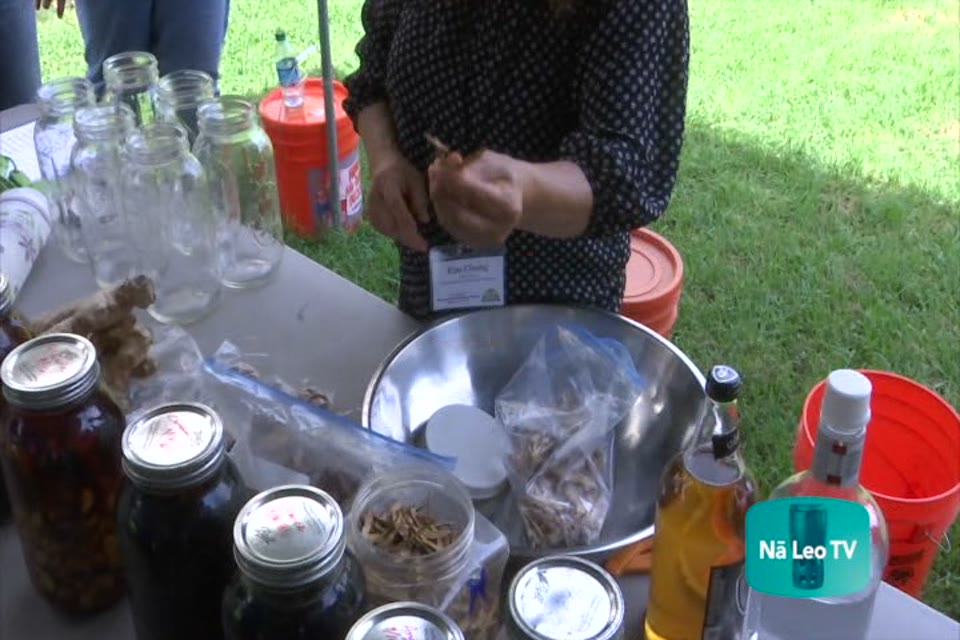
Kim Chang shows a crowd on the lawn how she makes Medicine (OHN): angelica, licorice and cinnamon soaked in beer, ginger and garlic packed with brown sugar, each in its own jar, then vodka poured on and poured off every two weeks, five times. She mixes the finished extracts two parts angelica to one part of each of the others and dilutes the mix 1 to 1,000. It takes about three months, and she says six half-gallon jars give a little over six gallons.

Found Dry herbs: one-third of the jar, beer to the half line, 1–2 days

brown sugar dilution fermentation garlic ginger medicine

Richard Perea ·USA (Hawaiʻi) ·38 min

Fermenting the Weeds Bugs Won't Eat

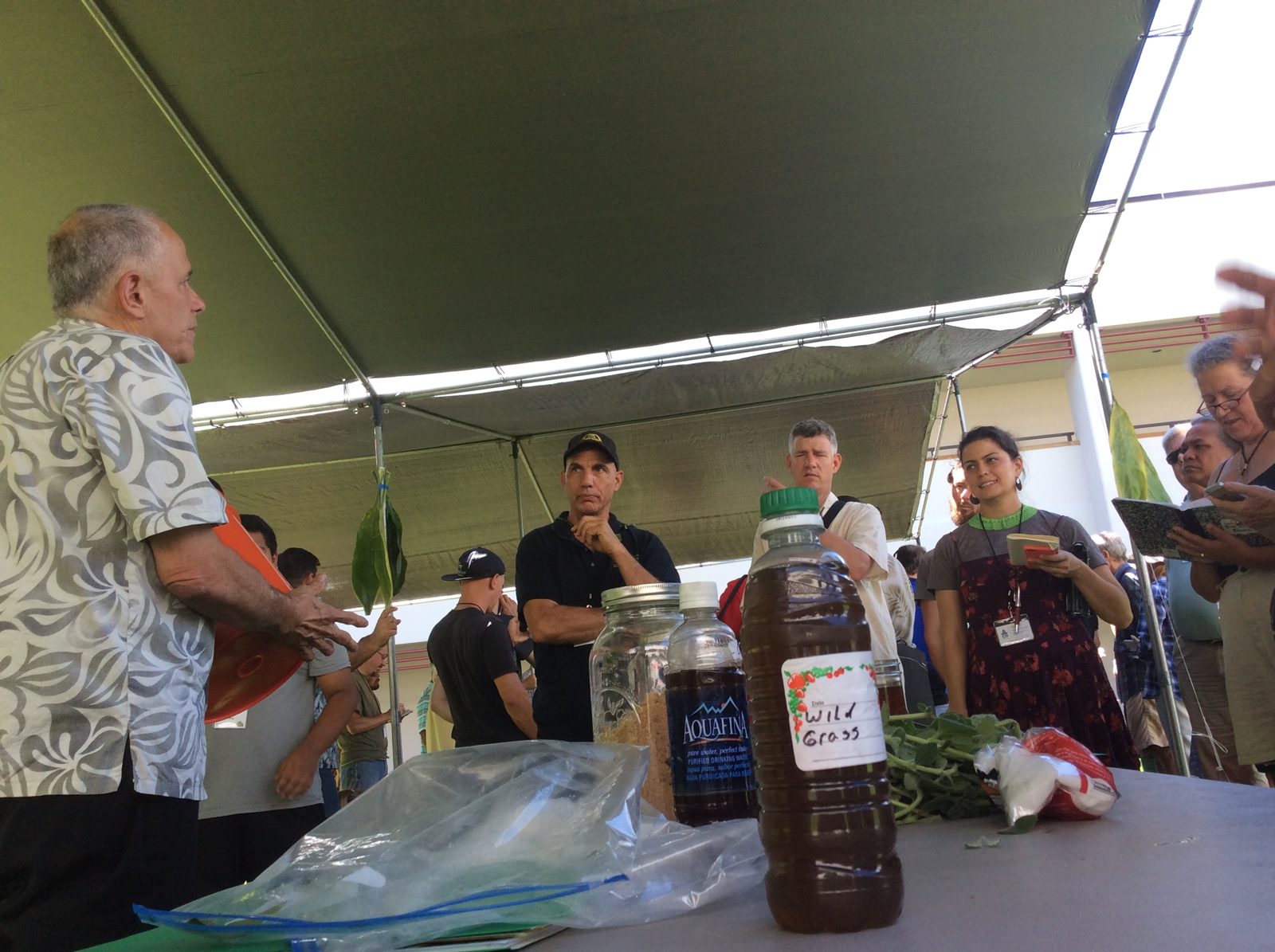
Richard Perea, a farmer from Ocean View, Kaʻū, runs an outdoor skill share on fermenting plants from his land that bugs won't eat. He shows a Christmas berry ferment of rehydrated leaves, brown sugar and water that he drinks and sprays (the 'Biome Rejuvenation Juice' of the YouTube title; it is neither Cleanser (BRV) nor Cho's Food (FPJ)), plus a hydrosol and a vodka bark extract. Then he builds a 'wild grass fertilizer' from guinea grass, forest mulch, Protectors (LAB) and water, used at a cup and a half per 55 gallons.

Found Guinea grass stopped at the line where he sprayed guinea grass fertilizer

christmas berry food guinea grass health microbes pests

Dr. Hoon Park ·USA (Hawaiʻi) ·23 min

Protectors (LAB): 1 Part Rice Wash, 10 Parts Milk

Dr. Hoon Park shows a crowd on the lawn how to make Protectors (LAB) at a glass-jar table: sour rice-wash serum goes into milk at 1 part to 10, sits covered in the shade for five days, and the yellowish liquid under the curd is strained off and stored. He gives the 1:1000 spray rate, warns against spraying just before a fruit harvest, and tells how he drinks it himself, then answers questions on other milks, animals and the leftover curd. The last two minutes cut to another station, where an unnamed presenter recaps the recipe.

Found 250 ml of rice-wash serum into 2.5 litres of milk: a 10% (1:10) addition

fruit health livestock milk pigs protectors

Dr. Hoon Park ·USA (Hawaiʻi) ·13 min

Four Jobs Microbes Do in Soil, and Why Local Ones Win

Dr. Hoon Park, under a tent on the skill-share lawn, explains why Microbes (IMO) matter in soil. He says your own local microbes outlast lab-made ones like EM, and goes through four jobs they do: decomposition, catalysis, revitalization (bringing earthworms) and disease suppression. He ends with charcoal as a home for IMO-4, Master Cho's tree seedlings in the Mongolian desert, and his main point: look at the roots and revive the soil.

Found Basil to first harvest in 3–4 months instead of about 6

basil biochar disease earthworms microbes soil

Ashley Lukens ·USA (Hawaiʻi) ·60 min

Hawaiʻi Hosted 1,141 GE Field Tests to California's 172

At the Thursday lunch, Dr. Ashley Lukens, director of the Hawaiʻi Center for Food Safety, walked through her group's report "Pesticides in Paradise" on the seed companies' genetic-engineering field tests and restricted-use pesticide spraying in Hawaiʻi. She drew on industry figures, USDA field-test permits, Kauaʻi spray records and about 150 medical studies, then argued for mandatory disclosure and buffer zones around schools. Short Q&A at the end.

Found Seed crop acreage grew 10x since 1982

economics health pesticides policy research scale

Drake Weinert ·USA (Hawaiʻi) ·86 min

Liquid Wood Chips and the 1:2:2 Maintenance Mix

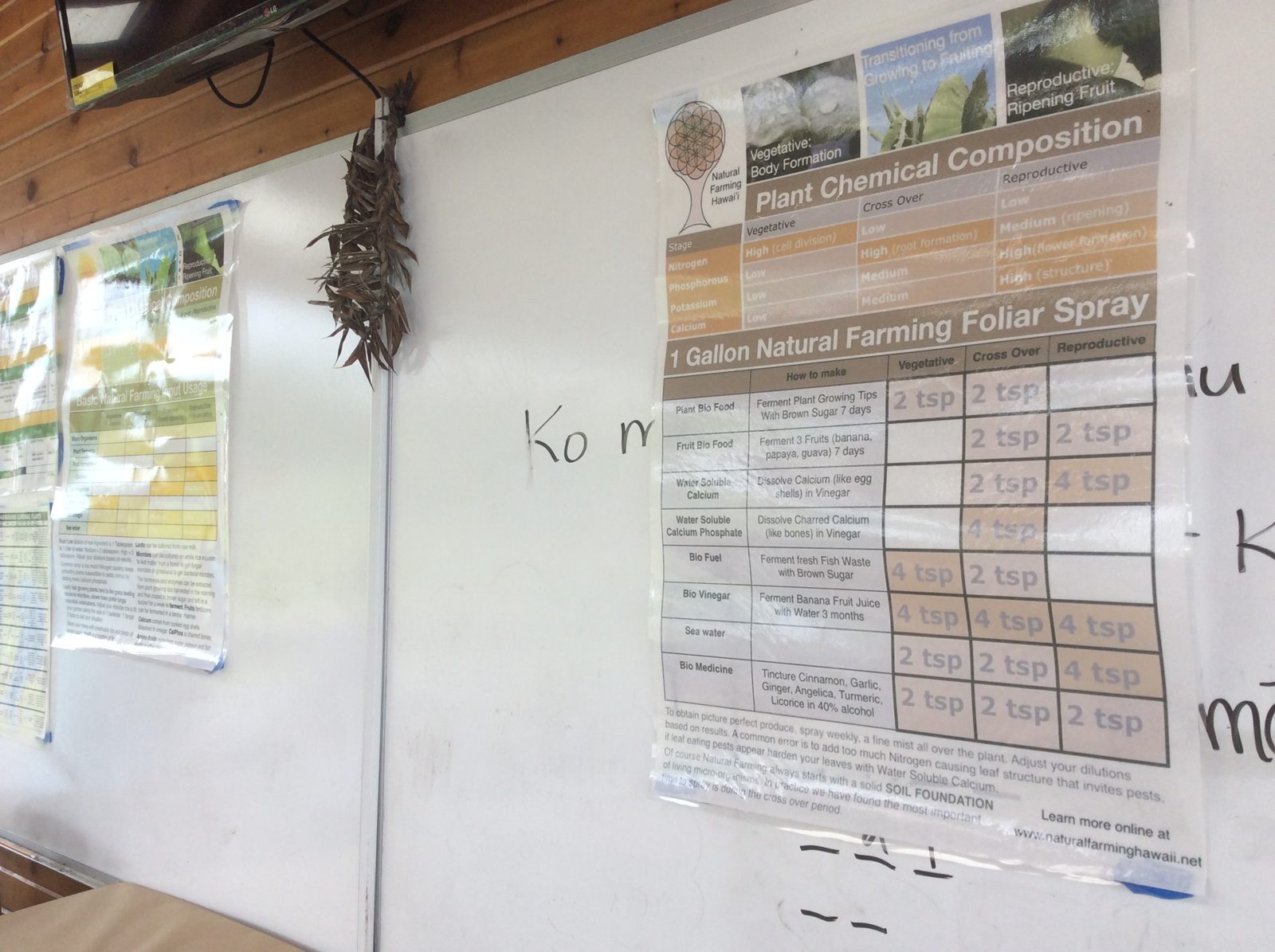
Drake Weinert, introduced by Vincent Mina, shows how he combines the natural farming solutions into ready-to-use mixes: diluted seawater, a blended-weed "liquid green manure", an IMO-4 field treatment, a 1:2:2 maintenance spray of Medicine (OHN), Food (FPJ) and Cleanser (BRV), and one add-on per growth stage. The second half is a microbe primer built on his own microscope work, then photos from a 2008 or 2009 Korea tour, a downtown Hilo street planting and his Kalanianaʻole school garden. It is also an early public version of his idea to name the solutions by what they are used for.

Found Maintenance spraying: about $175 per acre per year for vegetables, $100 for orchards

cleanser economics food medicine microbes minerals

Ted Radovich, James Rushing, Josiah Hunt, Jana Bogs ·USA (Hawaiʻi) ·67 min

Four Scientists on Natural Farming: Proof, Biochar, Minerals

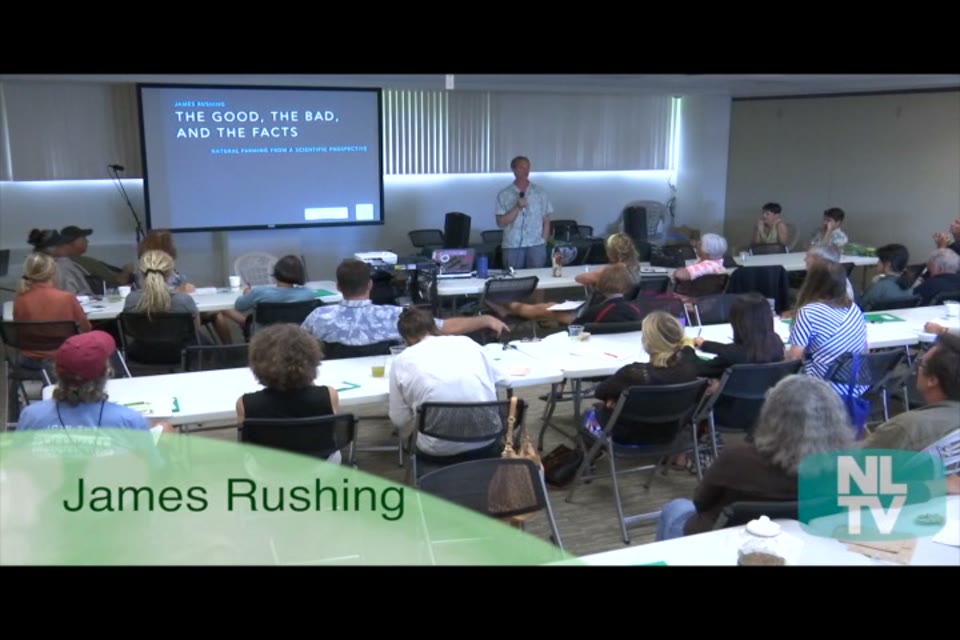
Four short research talks that followed Drake Weinert's keynote. Ted Radovich (UH Mānoa CTAHR) showed his lab's work on Hawaiʻi soils, cover crops, compost and compost tea; James Rushing (UH Hilo) listed what science does and does not yet know about natural farming, and said no top-tier peer-reviewed paper showed it working; Josiah Hunt (Pacific Biochar) explained biochar and read results from published studies; Jana Bogs, a nutritionist and soil consultant, argued for testing soil minerals and microbes, and warned about the sodium in seawater. Each talk got a few questions from the floor.

Found Weathered soil vs fertile soil: P 0.9 vs 480 ppm, Ca 38 vs 4,524, Al 142 vs 15

biochar compost cover crops microbes minerals research

Friday, October 2: the panels

Vincent Mina, with Drake Weinert and Dr. Hoon Park ·USA (Hawaiʻi) ·12 min

Purslane Food (FPJ) Fast: Chop It in a Tub With a Flat Spade

After the day's announcements, Vince Mina plays two short videos of how he makes Food (FPJ) from purslane on his farm: sugar dumped on a tubful of purslane, chopped to a mash with a flat spade, packed three-quarters into jars under a paint-strainer cover. He also passes around a hau-flower Food he uses as a spreader-sticker, Drake Weinert suggests a little salt for dry plants, and Dr. Hoon Park explains Cho's unglazed clay jar and two-thirds fill.

Found About 4 lb of sugar on a tub of purslane made about three gallons of Food

compost fermentation food hau purslane worms

Jeff Melrose ·USA (Hawaiʻi) ·74 min

Hawaiʻi Cropland Shrank From 350,000 to 153,000 Acres

Jeff Melrose, a land-use planner, previews the 2015 statewide map of Hawaiʻi's farms, made with UH Hilo's SDAV lab for the state Department of Agriculture. He stands in for HDOA chair Scott Enright, who was ill. He compares the 1937 and 1980 maps with 2015: about 153,000 acres in crops and 763,000 in pasture, down from 350,000 and 1.1 million in 1980. Then he goes island by island, adds pig and bee maps, and takes questions. HFUU president Vincent Mina introduces him and closes with a pitch for HFUU chapters and membership.

Found 2015: about 153,000 acres in crops and 765,000 acres in pasture

bees coffee economics pigs policy research

Donna Mitts, Drake Weinert, Robert Kobayashi, ʻIwalani Haia, Keliʻi Akina, Jenny, Mark Fontaine, Lou ·USA (Hawaiʻi) ·89 min

From a 6×6 Bed to 8 Acres: Natural Farming in School Gardens

Donna Mitts of the Kohala Center's Hawaiʻi Island School Garden Network introduces staff from four schools: Kalanianaʻole (Drake Weinert), Waiākea High (Robert Kobayashi), Kamehameha Schools (ʻIwalani Haia, Keliʻi Akina) and Laupāhoehoe Community Public Charter School (Jenny, Mark Fontaine, Lou). They show their gardens, pig pens and animals, and talk about money, administrators and cafeteria rules. Natural farming comes up as Microbes (IMO), Protectors (LAB), bone-based calcium and natural-farming pig pens. Nobody gives a rate or a measured result.

Found More than 60 school garden programs on Hawaiʻi Island

culture economics health microbes pigs policy

Chris Trump, John Caverly, David Wong ·USA (Hawaiʻi) ·90 min

Mac Nuts, Kalo and 500 Pigs: Natural Farming at Scale

Three Hawaiʻi Island farmers tell how they run natural farming at scale: Chris Trump on his family's 750 acres of macadamia nuts in Kohala, John Caverly ("Ginger John") on 18 acres of kalo, sugar cane and vegetables, and David Wong on 10 acres of Asian vegetables and about 500 pigs. They give their application rates, how they make Microbes (IMO) by the ton with farm machinery, what weeds and mowing cost, and the permits a no-smell piggery needed. Moderated by Kyle, president of the HFUU East Hawaii chapter.

Found About 750 acres of mac nuts; about 300 in natural farming

economics macadamia microbes pigs scale soil

Danielle Downey, Jen Rasmussen, Jenny Bach ·USA (Hawaiʻi) ·73 min

Wild Bees Gone, Hawaiʻi Farms Now Need Beekeepers

Three Hawaiʻi Island beekeepers answer a moderator's questions and the room's: the state apiarist Danielle Downey, treatment-free beekeeper Jen Rasmussen of Paradise Nectar Apiary, and Jenny Bach, who does hive removals and works in school gardens. They cover how the varroa mite (2008 on the Big Island) and small hive beetle (2010) wiped out most wild colonies, what that means for farmers who used to get free pollination, pesticide residues in hives, fire-ant baits, and what natural farming might do for bees. Nobody on the panel had data on natural farming and bees; one beekeeper had tried a lactic-acid brew of dead beetles as a repellent.

Found Varroa reached Oʻahu in 2007 and the Big Island in 2008

bees pesticides policy pollination protectors research

Dana Keawe, Ala Jellings, Gene Tamashiro, Alika Atay, Chris Chang ·USA (Hawaiʻi) ·81 min

Kanaka Farmers: Our Tūtū Already Farmed This Way

Five Kanaka farmers and cultural practitioners from Hawaiʻi Island, Oʻahu, Maui and Molokaʻi talk about how natural farming fits old Hawaiian practice, ʻāina, health and sovereignty. Alika Atay gives the most practice: the Hawaiian moon calendar, calcium phosphate at flowering, moving the Microbes (IMO) pile, mountain and ocean water, and keeping Protectors (LAB) off fruit. Dana Keawe describes IMO made at 9,000 feet on Mauna Kea for a native-plant nursery and IMO-infused biochar in a native forest restoration.

Found Hugelkultur beds sprayed with natural farming solutions broke down faster

culture health microbes minerals policy protectors

Adam Reed, Sally Bredeweg, Kori Hasashima ·USA (Hawaiʻi) ·39 min

How NRCS Sizes a Natural Farming Piggery

Three NRCS staff, introduced by HFUU's Vincent Mina. Agronomist Adam Reed gives four soil health principles and shows a slake test of tilled against no-till soil. Engineer Sally Bredeweg works through sizing a deep-litter (IDLS) piggery for 1 boar, 3 sows and 20 growers, from square feet per pig to an 18-inch covered ridge opening. Kori Hasashima then covers NRCS practices, EQIP and the other cost-share programs, and who was eligible in 2015.

Found NRCS spent its first 75 years focused on soil erosion; soil biology is 'our new mission'

economics microbes no-till pigs policy soil

Dr. Koon-Hui Wang ·USA (Hawaiʻi) ·34 min

Microbes Need Mulch That Rots: CTAHR's Field Trials

Dr. Koon-Hui Wang, a UH plant pathologist and nematologist, reports on her natural farming field trials in Hawaiʻi since 2010, using soil nematodes as her measure of soil health. Microbes (IMO-4) helped soil tilth and the soil food web on most farms, but yields matched or beat fertilizer only where there was crop residue or a mulch that rots easily; on a long-fallow Maui field with bamboo-leaf mulch and no seedling treatment, the natural farming plots yielded far less. Her conclusion: the Microbes need something to recycle, and they don't replace pest management.

Found Farm 1 soybean: KNF plots darker green, more biomass, higher chlorophyll and leaf nitrogen

cover crops microbes mulch nematodes pests research

Paul Tower, Vincent Mina, Dave Sansone, David Fuertes, Bob Shaffer ·USA (Hawaiʻi) ·90 min

Food Waste to Pig Feed, Taro by Hand, Soil from a Gulch

Bill Steiner, former UH Hilo dean of agriculture, opens with innovation in old Hawaiian farming (the Kohala field system) and his own oil palm trial, then hands off to five project leaders. Paul Tower pitches a planned Oʻahu plant turning food waste into pig feed, renewable natural gas, compost and hydroponic lettuce; Vincent Mina tells how a 2,000 sq ft greens farm on Maui led him to the Farmers Union; Dave Sansone shows low-effort agroforestry; David Fuertes shows a Kohala ʻohana taro, sweet potato and natural-farming livestock project that makes Microbes (IMO) a ton at a time; Bob Shaffer describes digging up a million cubic yards of buried bagasse and soil at the old Haina sugar mill for potting soil.

Found Steiner imported 10,000 oil palm seeds of three strains from Costa Rica, about six or seven years earlier

culture economics microbes pigs policy scale

Timothy Tweets, Drake Weinert, Vincent Mina, Gene Tamashiro, Stella, J.R. Waikiki, James Cipriciano, Keahi Tajon ·USA (Hawaiʻi) ·9 min

Why They Came: Seven Voices from the Symposium

Short phone-camera interviews with people at the symposium, opening with joking between Drake Weinert, an Australian visitor and a man in an HFUU shirt. Musician Gene Tamashiro speaks on natural law and protecting Hawaiʻi from GMO laws; visitors from Australia, Maui and another island say what they came for; a young farmer explains why small farms need retail prices; Keahi Tajon talks about growing food to feed people.

Found Hawaiʻi can protect itself from GMO laws through natural law and the Hawaiian Kingdom, which 'never ended'

community culture economics microbes policy scale

Saturday, October 3: farm tours, then the film

Russell Ruderman ·USA (Hawaiʻi) ·11 min

Move 10% to Local Food, Keep $300 Million in Hawaiʻi

State Senator Russell Ruderman, introduced by HFUU president Vincent Mina, speaks to the symposium on the last evening. He argues that local food pays off in money, health and soil, that farm-made solutions cut Hawaiʻi's high cost of imported fertilizer, and that farmers need to get into politics to crack open markets like school food.

Found Shifting the local-vs-imported food meter 10% is worth about $300 million to the state

economics health local food policy politics school gardens

Vincent Mina, Kyle Studer, Alika Atay ·USA (Hawaiʻi) ·8 min

Not at the Table? You're on the Menu

On the last evening, just before the film, HFUU president Vincent Mina brings up two of the union's nine chapter presidents. Kyle Studer of the East Hawaiʻi chapter says farmers have to be in politics or get run over, and Alika Atay talks about regenerating poisoned land, organizing people against organized money, and asking the senator to protect Hawaiian canoe plants from genetic modification.

Found HFUU has nine chapters and has grown exponentially in five years

canoe plants culture farmers union policy politics soil

Scenes from the week

About this record

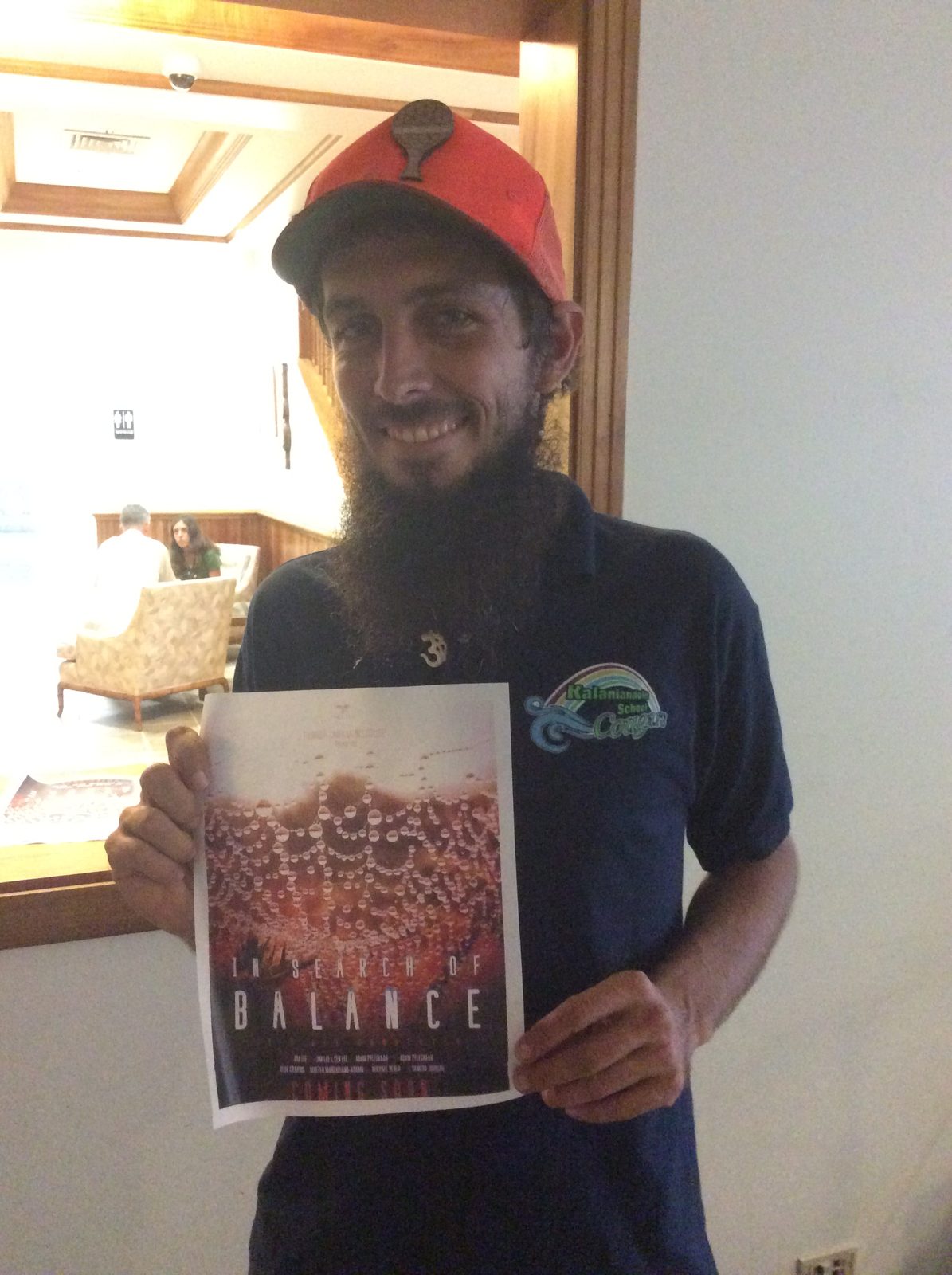
In October 2015, Hawaii Farmers Union United (HFUU) held its Natural Farming Symposium at the University of Hawaiʻi's Komohana Research and Extension Center in Hilo. Thursday was talks in the hall and skill shares on the lawn, where farmers made Food (FPJ), Medicine (OHN), Protectors (LAB) and Microbes (IMO) by hand with the crowd. Friday was panels: school gardens, large-scale producers, bees, Kanaka farmers, NRCS and new projects. Saturday was farm tours, then the film In Search of Balance. Master Cho was not there. Dr. Hoon Park, who brought Korean Natural Farming to Hawaiʻi, was, and the room thanked him.

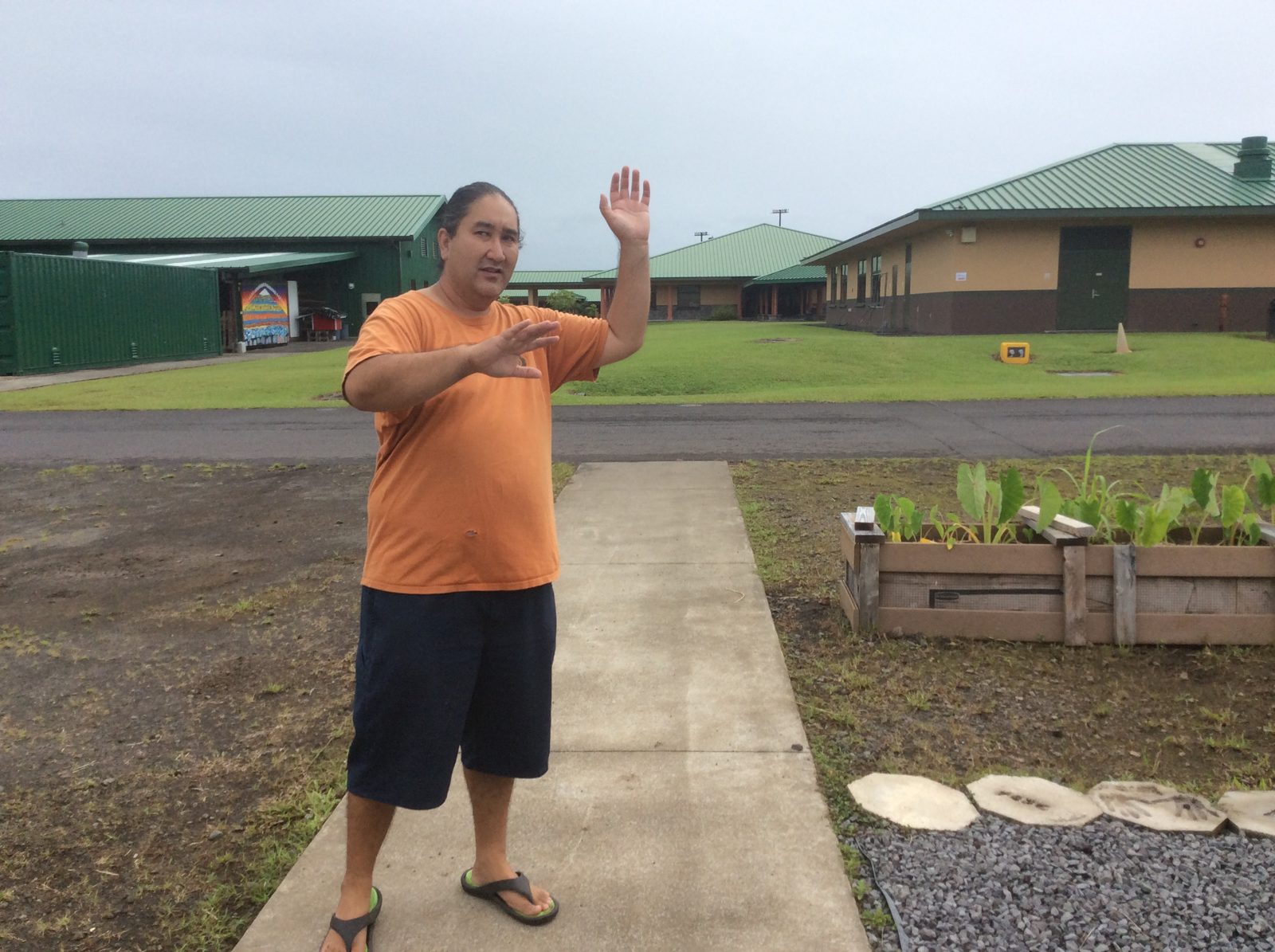
Na Leo TV, Hilo's community station, filmed the sessions. Drake Weinert filmed the skill shares and several panels on his camera and iPhone. The 25 recordings here come from both, matched to the original files by their audio. Saturday's farm tours were not recorded; there are photos from the tour of Drake's Kalanianaʻole school garden only. Some sessions on the program, such as the young farmers panel announced for Friday, have no recording here. A keynote by Congresswoman Tulsi Gabbard on the same YouTube channel is from a later HFUU convention and is not included.

Each recording was transcribed with Whisper large-v3 and checked line by line: against a second transcript of Drake's own recording where one existed, against the slides, and against Na Leo's name captions and conference badges. Speakers were named from their introductions. Each point was compared with Master Cho's books and seminars. Every page lists the corrections that changed meaning, and the lines we could not confirm.

If you were there and spot a mistake, or know a name we got wrong, tell us.