Komohana Research and Extension Center, Hilo, Hawaiʻi · October 1–3, 2015

Natural Farming Symposium 2015

A day of talks and hands-on skill shares in Hilo, a day of panels, then farm tours and a film. 25 recordings: nine talks including Drake Weinert's keynote, six demonstrations on the lawn, eight panels, a short ceremony and hallway interviews. Every one is checked line by line and boiled down to what was made, what was measured and what was only told.

Read what it all adds up to →

Also on the record: Konkuk 2016

Topics microbes soil economics policy health taro culture food pigs scale protectors research biochar fermentation minerals school gardens Clear

13 talks on “soil”

Vincent Mina ·USA (Hawaiʻi) ·36 min

A Sewer-Pipe Worm Trough That Eats 100 lb of Pulp a Week

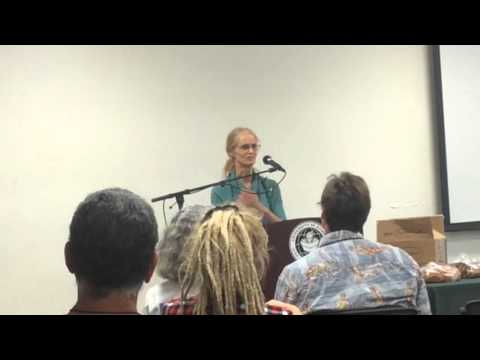
Vincent Mina, state president of Hawaii Farmers Union United, opened the symposium hall talks with the story of his 2,000-square-foot greens farm and the union's policy work, then walked through slides of his backyard worm system: half-pipe troughs cut from 2-foot sewer pipe and fed health-food-store juice pulp, mineral powder, biochar and Microbes (IMO-3). He also showed how he makes IMO-3 by the ton on wheat mill run and biochar, his compost screener, a hau-flower Food (FPJ), and a taro planting on old cane land mulched with sun hemp.

Found His farm makes a living on 2,000 sq ft, producing about 400 lb of greens a week
biochar food microbes policy soil taro

John Caverly ("Ginger John") ·USA (Hawaiʻi) ·6 min

How Microbes Brought the Worms Back to Old Cane Land

A Hilo-side farmer opens the Microbes (IMO) skill share on the lawn with his own story. His old cane land at Onomea had no earthworms and nothing would grow; after he began making Microbes with Dr. Park, seedlings given Microbes outgrew his organic mix, and 500 lb of IMO-4 laid under a diseased kalo field was followed two weeks later by worms everywhere. He says he has bought no organic fertilizer in seven years and that it takes about 40 days to go from rice to bagged IMO-4.

Found Seedlings given Microbes were plainly bigger in two weeks

bananas earthworms microbes mulch soil taro

Dr. Hoon Park, John Caverly ·USA (Hawaiʻi) ·50 min

Microbes (IMO) by Hand: Squeeze Test, Keep It Under 120°F

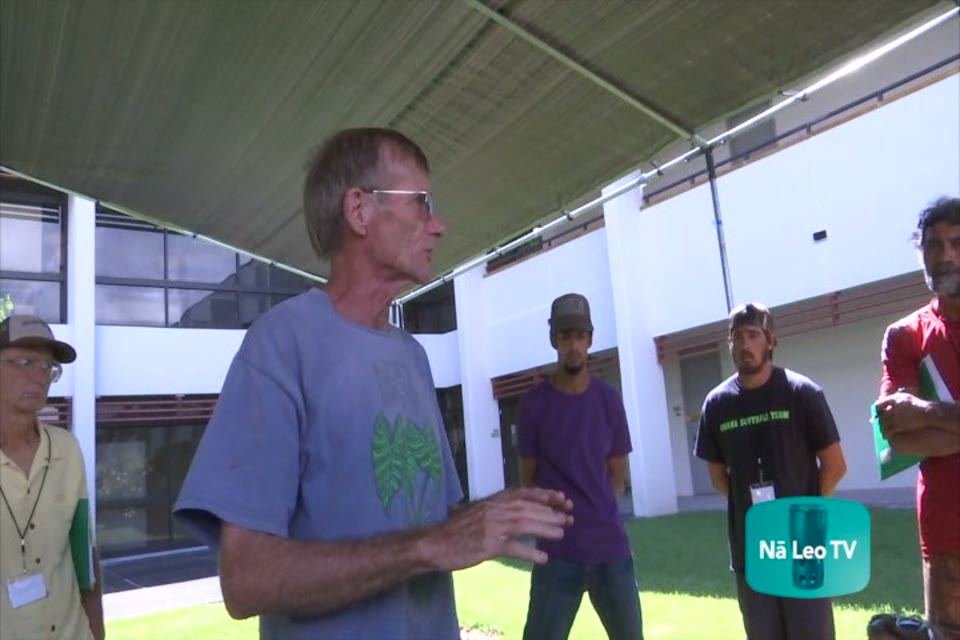
Dr. Hoon Park and farmer John (very likely 'Ginger John' Caverly) teach the Microbes (IMO) method on the lawn: rice in a box, then rice plus brown sugar, then a pile of wheat mill run wetted with IMO-2 and Food (FPJ) water and checked with a squeeze test. A woman helper who is never named shows an IMO-1 box and talks about mill run supply. A second group gets the IMO-3 temperature rule and Master Cho's four jobs of IMO, Dr. Park tells how he drinks Protectors (LAB) for his stomach, and John says roots and microbes work together.

Found IMO-1 takes about three days here

economics food health microbes protectors soil

Dr. Hoon Park ·USA (Hawaiʻi) ·13 min

Four Jobs Microbes Do in Soil, and Why Local Ones Win

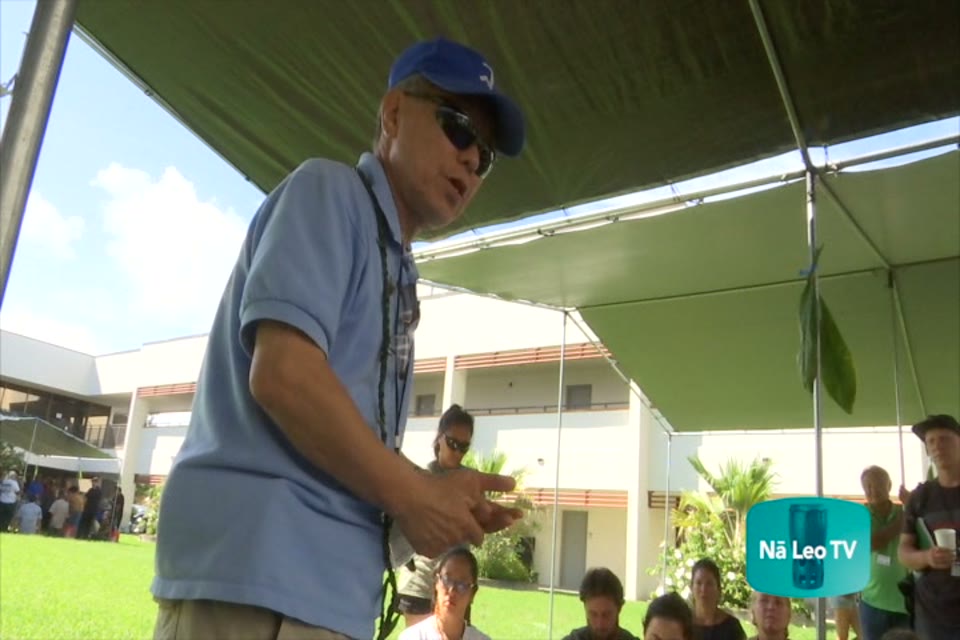
Dr. Hoon Park, under a tent on the skill-share lawn, explains why Microbes (IMO) matter in soil. He says your own local microbes outlast lab-made ones like EM, and goes through four jobs they do: decomposition, catalysis, revitalization (bringing earthworms) and disease suppression. He ends with charcoal as a home for IMO-4, Master Cho's tree seedlings in the Mongolian desert, and his main point: look at the roots and revive the soil.

Found Basil to first harvest in 3–4 months instead of about 6

basil biochar disease earthworms microbes soil

Drake Weinert ·USA (Hawaiʻi) ·86 min

Liquid Wood Chips and the 1:2:2 Maintenance Mix

Drake Weinert, introduced by Vincent Mina, shows how he combines the natural farming solutions into ready-to-use mixes: diluted seawater, a blended-weed "liquid green manure", an IMO-4 field treatment, a 1:2:2 maintenance spray of Medicine (OHN), Food (FPJ) and Cleanser (BRV), and one add-on per growth stage. The second half is a microbe primer built on his own microscope work, then photos from a 2008 or 2009 Korea tour, a downtown Hilo street planting and his Kalanianaʻole school garden. It is also an early public version of his idea to name the solutions by what they are used for.

Found Maintenance spraying: about $175 per acre per year for vegetables, $100 for orchards

cleanser economics food medicine microbes minerals

Ted Radovich, James Rushing, Josiah Hunt, Jana Bogs ·USA (Hawaiʻi) ·67 min

Four Scientists on Natural Farming: Proof, Biochar, Minerals

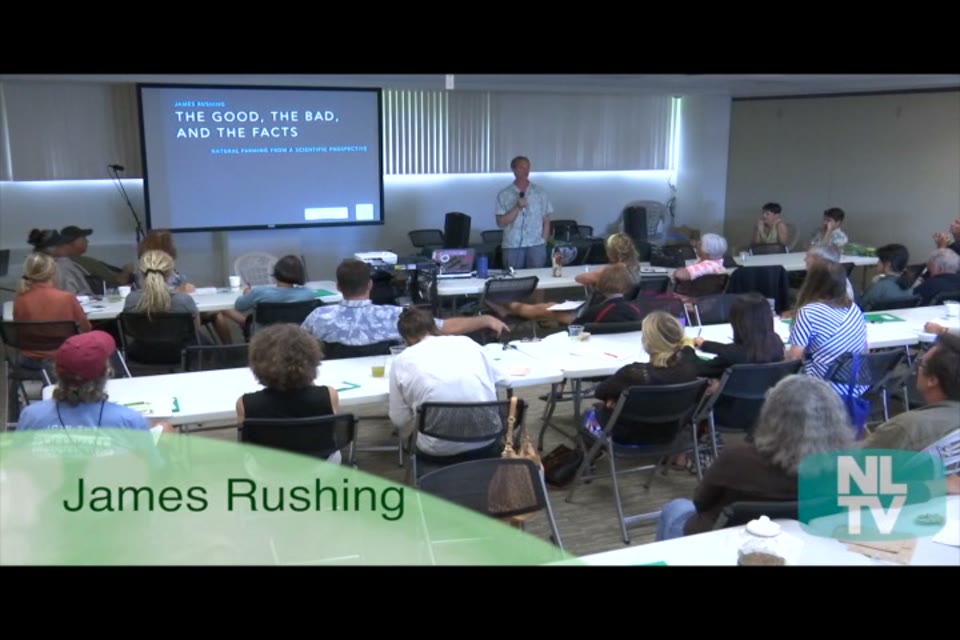
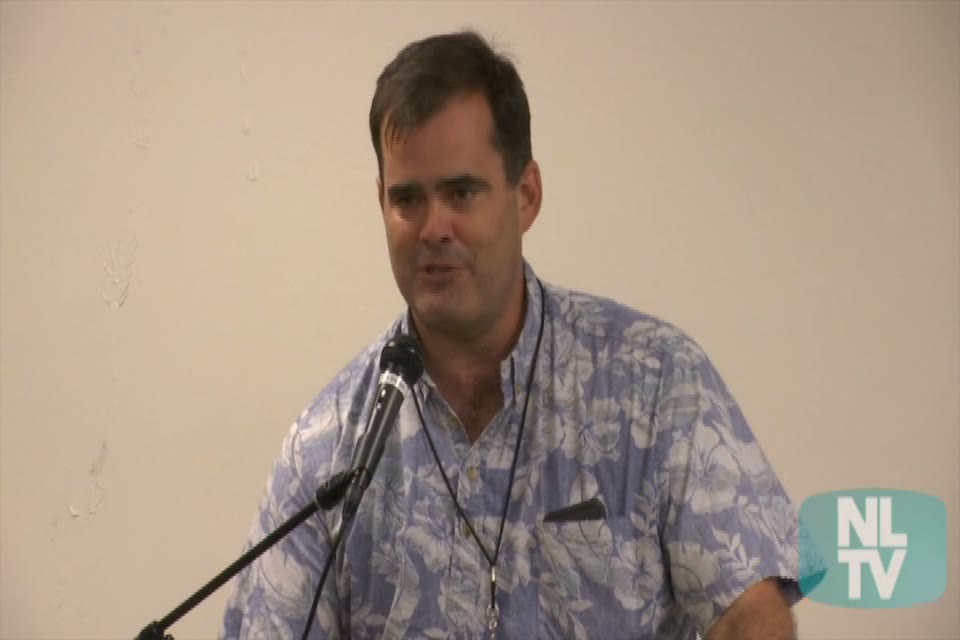
Four short research talks that followed Drake Weinert's keynote. Ted Radovich (UH Mānoa CTAHR) showed his lab's work on Hawaiʻi soils, cover crops, compost and compost tea; James Rushing (UH Hilo) listed what science does and does not yet know about natural farming, and said no top-tier peer-reviewed paper showed it working; Josiah Hunt (Pacific Biochar) explained biochar and read results from published studies; Jana Bogs, a nutritionist and soil consultant, argued for testing soil minerals and microbes, and warned about the sodium in seawater. Each talk got a few questions from the floor.

Found Weathered soil vs fertile soil: P 0.9 vs 480 ppm, Ca 38 vs 4,524, Al 142 vs 15

biochar compost cover crops microbes minerals research

Chris Trump, John Caverly, David Wong ·USA (Hawaiʻi) ·90 min

Mac Nuts, Kalo and 500 Pigs: Natural Farming at Scale

Three Hawaiʻi Island farmers tell how they run natural farming at scale: Chris Trump on his family's 750 acres of macadamia nuts in Kohala, John Caverly ("Ginger John") on 18 acres of kalo, sugar cane and vegetables, and David Wong on 10 acres of Asian vegetables and about 500 pigs. They give their application rates, how they make Microbes (IMO) by the ton with farm machinery, what weeds and mowing cost, and the permits a no-smell piggery needed. Moderated by Kyle, president of the HFUU East Hawaii chapter.

Found About 750 acres of mac nuts; about 300 in natural farming

economics macadamia microbes pigs scale soil

Adam Reed, Sally Bredeweg, Kori Hasashima ·USA (Hawaiʻi) ·39 min

How NRCS Sizes a Natural Farming Piggery

Three NRCS staff, introduced by HFUU's Vincent Mina. Agronomist Adam Reed gives four soil health principles and shows a slake test of tilled against no-till soil. Engineer Sally Bredeweg works through sizing a deep-litter (IDLS) piggery for 1 boar, 3 sows and 20 growers, from square feet per pig to an 18-inch covered ridge opening. Kori Hasashima then covers NRCS practices, EQIP and the other cost-share programs, and who was eligible in 2015.

Found NRCS spent its first 75 years focused on soil erosion; soil biology is 'our new mission'

economics microbes no-till pigs policy soil

Dr. Koon-Hui Wang ·USA (Hawaiʻi) ·34 min

Microbes Need Mulch That Rots: CTAHR's Field Trials

Dr. Koon-Hui Wang, a UH plant pathologist and nematologist, reports on her natural farming field trials in Hawaiʻi since 2010, using soil nematodes as her measure of soil health. Microbes (IMO-4) helped soil tilth and the soil food web on most farms, but yields matched or beat fertilizer only where there was crop residue or a mulch that rots easily; on a long-fallow Maui field with bamboo-leaf mulch and no seedling treatment, the natural farming plots yielded far less. Her conclusion: the Microbes need something to recycle, and they don't replace pest management.

Found Farm 1 soybean: KNF plots darker green, more biomass, higher chlorophyll and leaf nitrogen

cover crops microbes mulch nematodes pests research

Paul Tower, Vincent Mina, Dave Sansone, David Fuertes, Bob Shaffer ·USA (Hawaiʻi) ·90 min

Food Waste to Pig Feed, Taro by Hand, Soil from a Gulch

Bill Steiner, former UH Hilo dean of agriculture, opens with innovation in old Hawaiian farming (the Kohala field system) and his own oil palm trial, then hands off to five project leaders. Paul Tower pitches a planned Oʻahu plant turning food waste into pig feed, renewable natural gas, compost and hydroponic lettuce; Vincent Mina tells how a 2,000 sq ft greens farm on Maui led him to the Farmers Union; Dave Sansone shows low-effort agroforestry; David Fuertes shows a Kohala ʻohana taro, sweet potato and natural-farming livestock project that makes Microbes (IMO) a ton at a time; Bob Shaffer describes digging up a million cubic yards of buried bagasse and soil at the old Haina sugar mill for potting soil.

Found Steiner imported 10,000 oil palm seeds of three strains from Costa Rica, about six or seven years earlier

culture economics microbes pigs policy scale

Russell Ruderman ·USA (Hawaiʻi) ·11 min

Move 10% to Local Food, Keep $300 Million in Hawaiʻi

State Senator Russell Ruderman, introduced by HFUU president Vincent Mina, speaks to the symposium on the last evening. He argues that local food pays off in money, health and soil, that farm-made solutions cut Hawaiʻi's high cost of imported fertilizer, and that farmers need to get into politics to crack open markets like school food.

Found Shifting the local-vs-imported food meter 10% is worth about $300 million to the state

economics health local food policy politics school gardens

Vincent Mina, Kyle Studer, Alika Atay ·USA (Hawaiʻi) ·8 min

Not at the Table? You're on the Menu

On the last evening, just before the film, HFUU president Vincent Mina brings up two of the union's nine chapter presidents. Kyle Studer of the East Hawaiʻi chapter says farmers have to be in politics or get run over, and Alika Atay talks about regenerating poisoned land, organizing people against organized money, and asking the senator to protect Hawaiian canoe plants from genetic modification.

Found HFUU has nine chapters and has grown exponentially in five years

canoe plants culture farmers union policy politics soil