Start here · New to Korean Natural Farming

You don't pay the sun.

So why pay for everything else? Korean Natural Farming turns weeds, rice water, eggshells, bones and a handful of forest dirt into what your soil and plants need. You make it in jars. It costs almost nothing. You could drink every drop.

“The most precious sun — do you pay the sun? You just use the sun free, and then you still complain.” Master Cho Han-Kyu, Papaikou, 2017
▶ Watch all nine in one evening
The Hilo kickoff meeting, December 2025
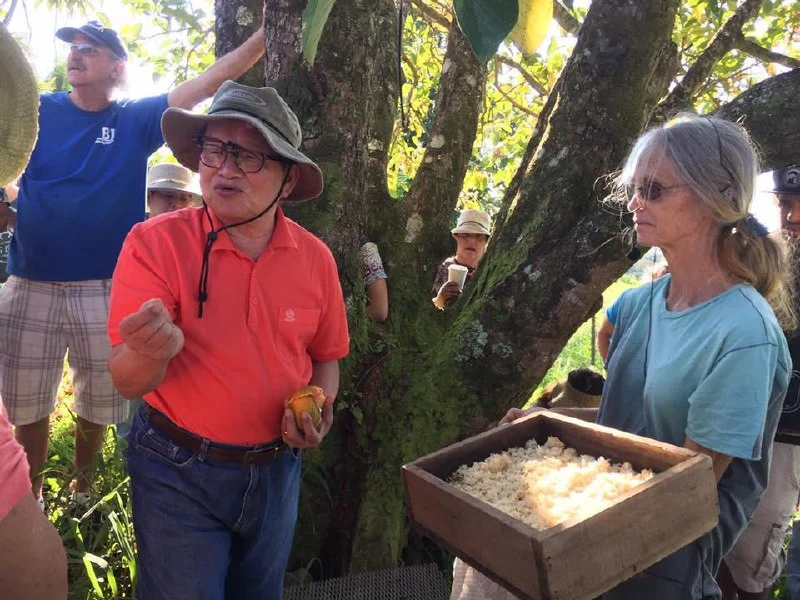
Master Cho Han-Kyu teaching under a tree, beside a wooden box of rice covered in fluffy white wild microbes
Master Cho teaching in Hawaiʻi. The box on the right is rice covered in wild microbes caught from the forest floor: solution nine.

The whole idea, in three lines

Three workers

The sun, the microbes, and you. The first two work for free. Your job is to keep the microbes fed.

Grow good guys

Most microbes are neutral. They follow whichever side is winning. Tip a small share toward the good ones and nearly all of them go good. You don't have to kill anything.

Local, cheap, alive

Everything comes from your own place: your weeds, your woods, your kitchen scraps. The solutions help. The plant does the work.

Who's starting?

Pick one. Same nine solutions, different first steps.

Two experiments you can start today

  1. Plant juice. With a grown-up, pick the tender tips of the fastest-growing weeds in the yard. Mix them with brown sugar in a jar, cover with a paper towel, and smell it every day. In 3 to 7 days it smells fruity, like cider. That's Food. Full recipe below.
  2. The fizzing one. Toast eggshells in a dry pan (grown-up job) until they tinkle when you drop them. Drop them into vinegar and watch it foam. When it stops bubbling, about 3 days later, you've made Reproduction: calcium a plant can drink.
  3. Test it like a scientist. Plant the same seeds in two pots. Give one plain water and the other water with 1½ teaspoons of Food per gallon. Measure both every week and write it down.

Drake: Food is “the one that gets the kids all riled up” because it's ready in days.

Your first month

  1. This week: start a jar of Food from your most vigorous weed, and a dish of rice-wash water for Protectors.
  2. Next week: spray Food at 1:500 (1½ teaspoons per gallon) on the undersides of leaves, early morning or two hours before sunset. Water Protectors into the soil at 1:1000.
  3. Every month after: add one more solution, in the order below. That's how the Hilo group did it, and by next year you'll have all nine.
  4. Always: try anything new on a few plants first, never the whole garden.

What a jar does at farm scale

25 galof water per acre, sprayed on leaves
6 ozof Food in that 25 gallons (1:500)
1 quartof Food covers about 5 acres
  1. Run a strip trial. Pick a few acres, spray them next to your usual program, and compare at harvest. Don't bet the whole farm on anything new.
  2. Drenching the soil? Use four times the water (100 gallons per acre) at the same dilution. Never make the mix stronger.
  3. Microbes at scale come from 50-pound bags of horse feed, your own field soil and two weeks of turning. Put them down at about 3 pounds per 100 square feet.
  4. Sprayers: a hand pump for a garden, a motorized sprayer for 3–5 acres, a PTO or boom rig beyond that, and drones for big ground.

Honest note: most of our teaching comes from small Hawaiʻi farms. Master Cho's methods are practiced in 23 states and 29 countries, but on a corn-and-bean operation you'll be pioneering. Keep notes and tell us what you see.

Start with the smell

  1. Protectors first. Lactobacillus in the drinking water helps digestion. For a piglet with scours, a syringe of it in the mouth is the emergency move.
  2. The no-smell pen. About two feet of logs on the bottom and two feet of wood chips on top, seeded with Microbes. After a farmer dusted a handful of Microbes on his pen floor after each wash-down, Drake came back a week later to no smell and no flies.
  3. Let the pigs do the turning. Deep litter that's been fed Microbes becomes, in Drake's words, “the world's best microbes you could ever have.”
  4. Nothing gets wasted. Guts from butchering become Fuel, bones become Structure, and eggshells become Reproduction.

A Hawaiʻi pig farmer in our archive was invited to Iowa by Iowa State to talk to hog farmers, after workers died from manure-pit gas. No-smell pens are why.

A year where winter is real

🍂 Fall

Catch Microbes under hardwoods before the ground freezes. Make fruit Food and vinegar from apples. Butchering bones become Structure.

❄️ Winter

Grow Microbes indoors, in the barn or garage. The pile steams when you turn it. Kitchen work: Protectors, Medicine, and Minerals from sea salt.

🌱 Spring

Spread Microbes as the ground thaws. Make Food from the first dandelions and nettles. Soak seed before planting.

☀️ Summer

Spray every week or two. Food while plants are leafy; Minerals and Reproduction when they flower and fruit.

A student up north grew Microbes indoors all winter. Drake: “Shovel the snow off the sidewalk, come in, shovel the IMOs inside.”

Tonight

Your first jar: Food

Plant Food = Growing Tips + Brown Sugar. One jar, one weed, one week.

  1. 1
    Pick at dawn. Take the top few inches of the fastest-growing plant around you. That's where the growth hormones are. One kind of plant per jar.
  2. 2
    Weigh it, then sugar it. Use brown sugar at one-third to one-half the plant's weight. Toss it like a salad, don't crush it. The sugar pulls the juice out.
  3. 3
    Pack it ⅔ full and let it breathe. Put paper or cloth over the top with a rubber band, never a tight lid. Set it somewhere shady.
  4. 4
    Smell it every day. In 3 to 7 days the juice runs. It should smell fruity and a little like cider. Strain it.
  5. 5
    Keep it. Stir in sugar until some stays at the bottom. That puts the microbes to sleep, and it keeps a year or two on the shelf.
  6. 6
    Use it. 1:500, which is 1½ teaspoons per gallon of water. Spray under the leaves.

The nine, one a month

Think of it like a toolbox: a tape measure, a square, a saw. With these nine you can build most things. Each card has the meeting where Drake made it.

1 Kid-friendly

Food FPJ

= Growing Tips + Brown Sugar

Feeds fast, leafy growth. The king of the nine.

Pick tender tips at dawn. Toss with ⅓–½ their weight in brown sugar. Jar it ⅔ full under paper.

Where to find it: Your most vigorous weed. Dandelion in spring, apples in fall (fruit for fruiting).

Ready
3–7 days
Use at
1:500
Full recipe →
2

Cleanser BRV

= Food + Water + Time

Living vinegar. Balances pH and clears the leaf so the others soak in.

Fill a jar ⅓ with Food, ⅔ water. Cover with cloth. Wait. A skin on top means it's working.

Where to find it: Any fruit ferment you made yourself. Apple country is vinegar country.

Ready
3–6 months
Use at
1:500
Full recipe →
3

Medicine OHN

= Five Herbs + Sugar + Alcohol

Plant immunity. Aromatic herbs the plant uses to guard itself.

Garlic, ginger, licorice, cinnamon, angelica. Ferment in brown sugar, then pull into alcohol.

Where to find it: Garlic is the anchor. The rest is in any grocery or Asian market.

Ready
A few weeks
Use at
1:1000
Full recipe →
4

Structure WCP

= Bones + Vinegar

Calcium and phosphate. Stiff stems, strong roots.

Char bones till black inside — not gray ash. Soak 1 part bone to 7 parts vinegar, 7–10 days.

Where to find it: Beef or pork bones from butchering. Not bird bones.

Ready
7–10 days
Use at
1:1000
Full recipe →
5

Fuel FAA

= Fish + Sugar

Amino acids. Throws gas on the fire of leaf growth.

Layer raw heads and guts with equal weight brown sugar like lasagna. Solid lid. Wait.

Where to find it: Far from the ocean? Drake's answer to a Saskatchewan farmer: beef scraps, "totally go for it."

Ready
3 months (a year is better)
Use at
1:1000–1:3000
Full recipe →
6 Kid-friendly

Minerals SW

The Ocean, Diluted

Every mineral on the periodic table, already dissolved.

Seawater 1 part to 30 parts water. Skip it during the leafy stage; lean on it for bloom and fruit.

Where to find it: Landlocked: 1 gram of plain sea salt per liter of water is ready to spray. Not iodized.

Ready
Now
Use at
1:30
Full recipe →
7 Kid-friendly

Reproduction WCA

= Eggshells + Vinegar

Calcium that tells the plant it's time to flower and set fruit.

Toast shells till they tinkle. Add 10 parts vinegar slowly — it foams. Done when it stops bubbling.

Where to find it: Breakfast leftovers. Every kitchen has this one.

Ready
About 3 days
Use at
1:1000
Full recipe →
8 Kid-friendly

Protectors LAB

= Rice Water + Milk

Lactobacillus. Takes the space so disease has nowhere to land.

Leave cloudy rice-wash water out 1–2 days. Pour into 10 parts milk. Strain the whey after 3–5 days.

Where to find it: Any kitchen, any season. Any mammal milk — not nut milk.

Ready
About a week
Use at
1:1000
Full recipe →
9

Microbes IMO

= Cooked Rice + Forest Floor

Wild, local fungus. The living soil everything else feeds.

Firm-cooked rice in a box, set into healthy forest soil, sheltered from rain. Fluffy white in 5–7 days.

Where to find it: Under healthy hardwoods. Never under pine or eucalyptus — they narrow the microbes.

Ready
1 week to catch, 2 more to grow
Use at
~3 lb per 100 sq ft
Full recipe →

Dilution cheat sheet: 1:500 ≈ 1½ tsp per gallon · 1:1000 ≈ ¾ tsp per gallon · 1:30 ≈ ½ cup per gallon.

Is it right? Your nose is the lab.

The question everyone asks. Good ferments smell like food. Bad ones smell like something died.

👍 Good👎 Warning signs
FoodFruity, a bit like ciderRotten eggs, vomit
ProtectorsSweet rice turning sourdough; tan, sour wheyCurds left in the whey go rank. Strain well
FuelA fresh fish marketRot. Start over
CleanserSour, with a rubbery skin on top (that's fine)Rarely fails. Even gnats are normal; give it time
Microbes boxFluffy, cotton-candy whiteTie-dyed colors: the rice was too wet or too warm
Microbes pileA bakery, or rich forest floorSour, like fresh asphalt after rain

Mold on a stored jar almost always means it needs more sugar.

Four mistakes almost everyone makes

More is not better

Drake's mom gave each tomato one fish head and grew 300 to 400 pounds of tomatoes. Then she filled a whole trough with fish and got eight tomatoes in a green jungle. Too much nitrogen shuts the roots down.

Going for the kill

Stop asking what to spray to kill it. Ask what the plant is missing. Pests and disease are symptoms, and a well-fed plant has fewer of both.

Too wet, too sealed

Wet rice is the top reason a Microbes box fails, so cook it firm. Most ferments need air, so cover them with paper or cloth. Capped jars can blow; Drake has had them go off in his laundry room.

All at once

You don't need all nine this week. Make one. Try it on a few plants. Watch. Then make the next.

Stuck? Somebody already asked.

Every Office Hours episode is searchable, 225 of them, and results jump to the moment Drake answers.

Or browse the community Q&A.

Keep going

🤝 Come to a meeting

Hilo, second Tuesday of the month. Free, and bring a dish. Next one: Tuesday, October 13 — Soil Foundation.

Meetings →

🧡 Join the Foundation

$60, $90 or $120 a year, you pick. Members get the online meetings, the community chat and the full video library, and keep this work free for everyone else.

Become a member →

📜 Where this comes from

Master Cho Han-Kyu spent a lifetime on these methods and taught them in Hawaiʻi for years. He passed in January 2025, at 93. Now it's our turn to carry it.

History & lineage →

Pure KNF Foundation is a small nonprofit in Papaikou, Hawaiʻi. Questions? foundation@pureknf.org