Your garden is the lab.
Your notes are the data.
Every KNF grower runs experiments whether they mean to or not. You try FPJ on the beans, skip it on the squash, and notice something. Then the season ends and the notebook gets lost. We built a place to keep those notes — so you farm better next season, and so all of us together can finally show what Korean Natural Farming does.
Why we’re asking you to write things down
KNF works. Most of us have seen it with our own eyes: the soil that comes alive, the plants that shrug off pests, the pig pen that doesn’t smell. But “I saw it” isn’t something a university, an extension agent or a grant committee can use. They need records. Dates, amounts, what happened next.
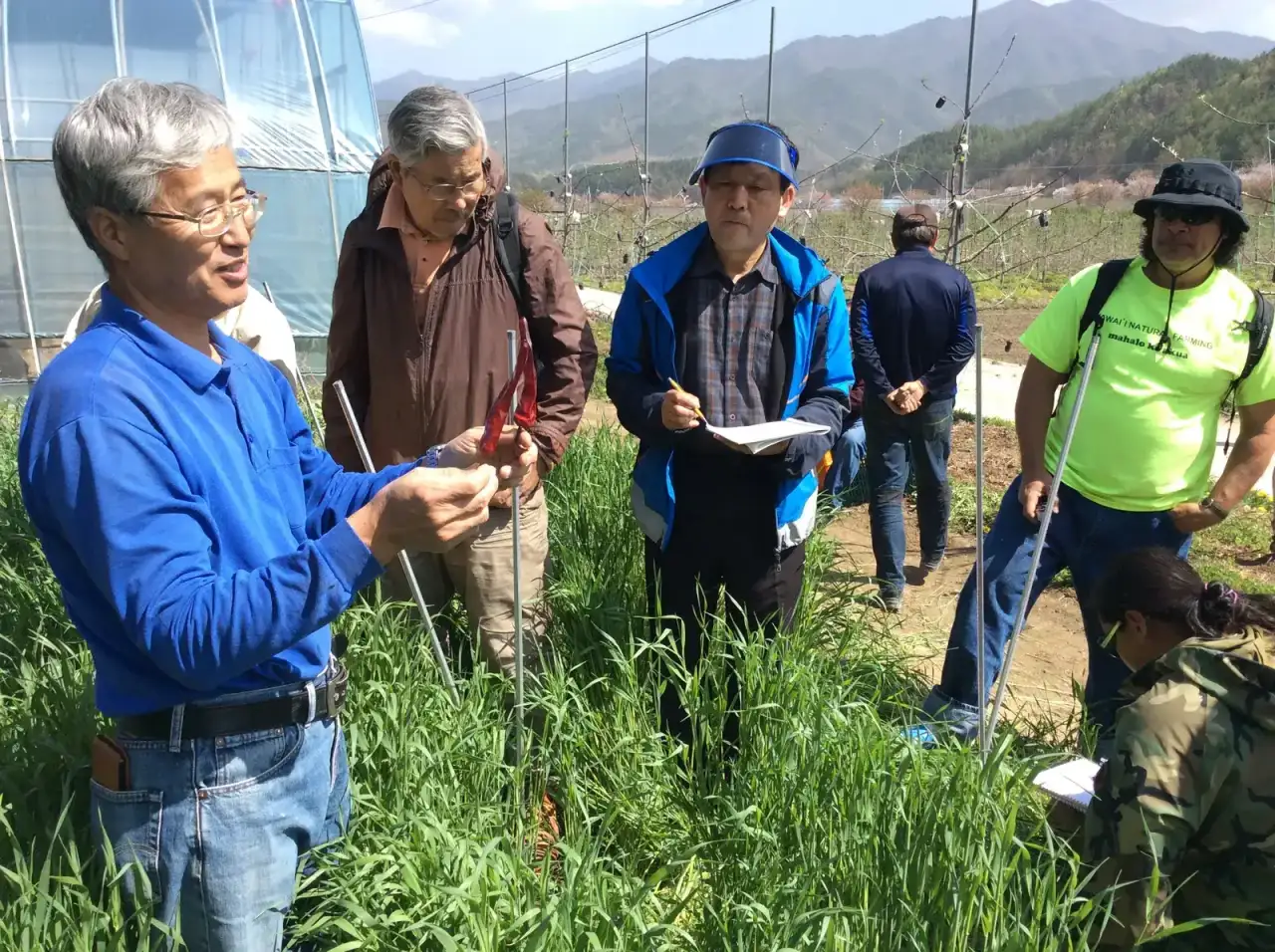
Master Cho ran into this wall himself. A Korean university wanted to teach a natural farming course with him. The government said no:
“There’s no data, no research evidence, so they can’t be approved.”
— Master Cho, advanced seminar, Korea 2017 (as interpreted)
Sixty years of results, and it didn’t count because nobody wrote it down in a way others could check. Researchers in Hawaiʻi hit the same problem from the other side: a UH Hilo study of IMO noted that the lack of standard methods among natural farmers made its effects hard to measure. Everybody makes their inputs a little differently, and nobody records how.
Cho’s answer was simple. At his 2018 seminar in Hawaiʻi he told us to learn one thing at a time and keep a written record. Each farm’s record becomes that farm’s recipe. Put enough farms together and you have the whole recipe.
That’s what this is. A shared notebook for KNF growers, kept the same way by everyone, so it adds up.
It has happened here before
In 2013 and 2014, a handful of Hawaiʻi farmers sat down with UH extension and wrote up exactly how they made FPJ, LAB, seawater, WCA, OHN and FAA. Those six papers from the University of Hawaiʻi are still the ones people cite around the world. Farmer notes became university papers. We want to do it again, bigger, with growers everywhere.
What you get out of it
This isn’t homework for someone else. The first person it helps is you.
- You remember what you did. Which solution, what dilution, which week. No more guessing why last year’s tomatoes were better.
- You see the season as a story. Every entry lands on one timeline with dates and photos. Gaps show up. Patterns show up.
- You get better help. Bring your project to a Hilo meeting and we can see exactly what you did instead of guessing.
- Your failures count too. A crop that didn’t make it, with good notes, teaches the next grower as much as a bumper harvest.
- Your data is yours. Private until you say otherwise, and you can download all of it as a spreadsheet any time.
Two real grows
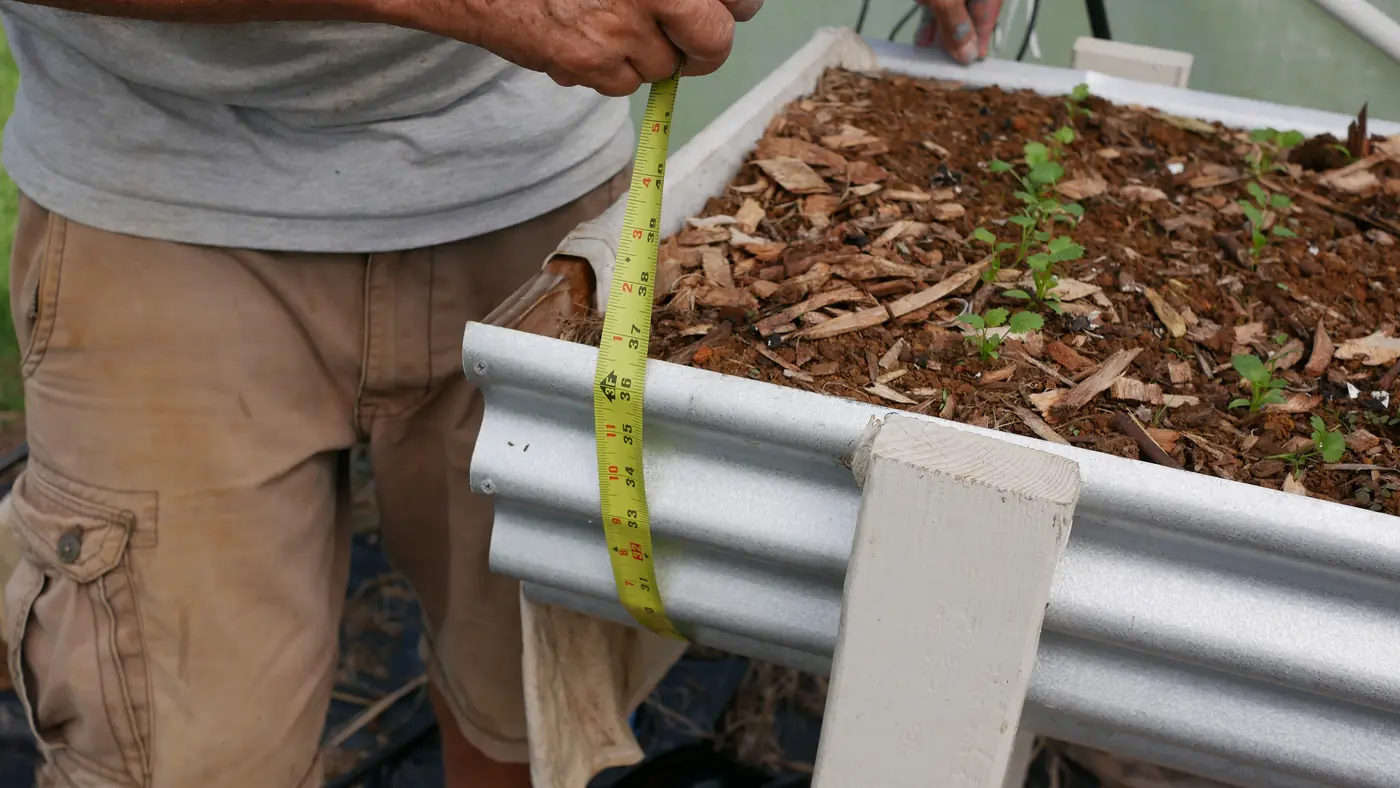
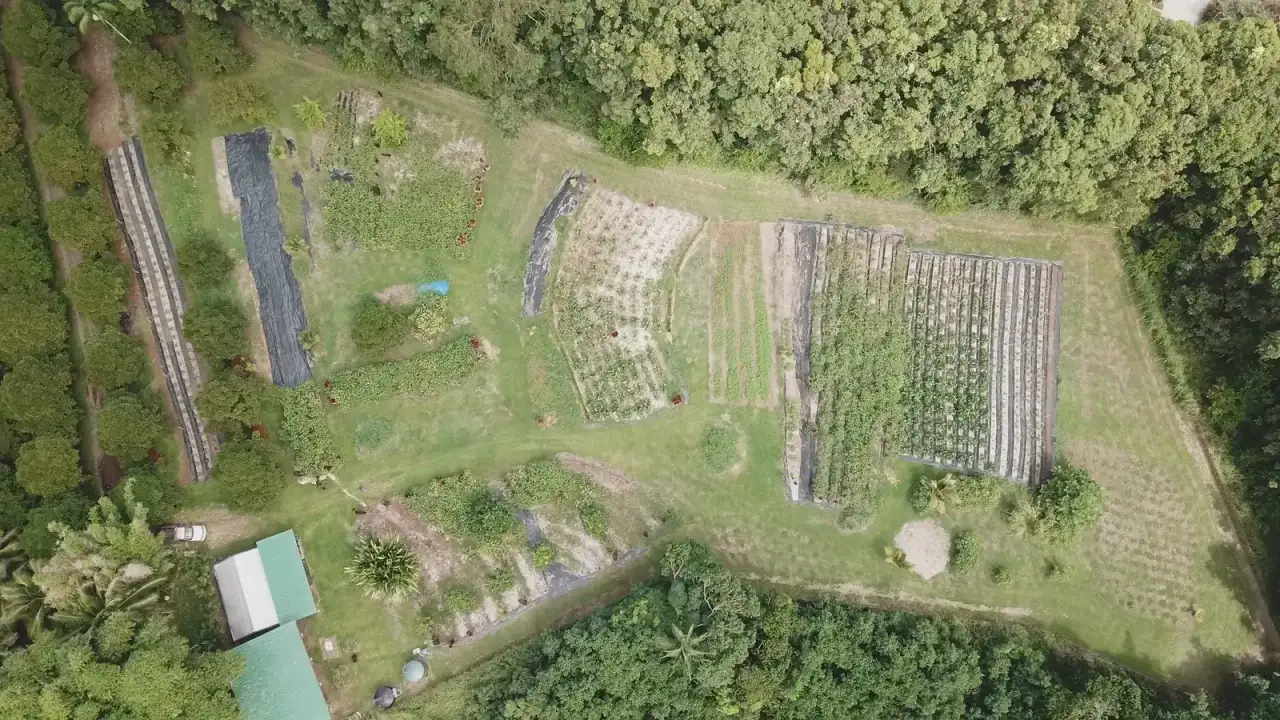
Here’s what it looks like in practice. Both are small — a few square feet on the Food Canoe — and both are logged week by week with photos. One worked. One didn’t. Both are worth reading.
French Fillet Green Beans Hawaiian Style
Fifteen square feet. Weekly notes, every amendment, every watering, ten harvests. It ended with 67 beans and about 40 seeds saved for next time.
Read the whole grow → It didn’tCanoe Crop Kalo
Five months of kalo, logged faithfully. One small corm at the end. Her best guess why: not enough soil. That note alone will save someone a season.
Read the whole grow →Where we are so far
We’re at the very start, and we’d rather tell you that plainly. Here’s the whole program today:
Small numbers. Which means the grow you log this season matters a lot more than it will in five years. Early records set the pattern everyone else follows.
Where it started: Konkuk, 2016
Before this program, there was a room in Seoul. In 2016, Master Cho's students from ten countries stood up at Konkuk University and showed what natural farming did on their plots: potatoes in Paju, maize from Ghana, rice in the Philippines, macadamias in Hawaiʻi. Every talk is now translated, checked line by line, and boiled down to what was tested and what happened.
What happens to your notes
- Private by default. Only you — and the Foundation’s volunteer research team, who look for patterns — can see a new project.
- Public when you choose. Tick one box and other growers can read your grow. We may ask to feature good ones.
- Never sold. We’re a small nonprofit. The point is to learn, not to market to you.
- Used to ask better questions. Our Research Committee reads across projects to see what’s worth testing properly, and what to bring to universities and funders.
Who can join
Logging grows is part of Foundation membership. Membership is pay-what-you-can, starting at $60 a year, and scholarships are available if that’s a stretch — just ask. Anyone can read the public projects without signing up.
Any size counts. A single pot on a lanai, a school garden, a banana patch, a hundred acres of pasture. If you’re growing something the KNF way, it belongs here.
Start your first grow
Pick one thing you’re growing this season. Give it a name. Write down what you do to it and what you see. That’s the whole job. The guide walks you through it.