How to log your grow
Everything you need to know, start to finish. Setting up takes about ten minutes. After that it’s a minute or two whenever something happens in the garden — and one short check-in a week.
You don’t need a science degree, a lab or fancy tools. If you can grow a plant and jot down what you did to it, you can do this. And if you’re wondering why any of it matters, start here.
The whole idea in one sentence
Write down what you did, what you saw, and what you got — with a date on each — for one thing you’re growing. Everything below is just detail on how to do that well.
Setting up
-
Become a member
Logging grows is part of Foundation membership. It’s pay-what-you-can, starting at $60 a year; your account is created when you join. Money tight? Scholarships are available — just ask us. Your membership also funds the volunteers who keep this program running.
Not ready? You can read every public project without an account.
-
Start a project
A project is one notebook for one growing effort. “Backyard Tomatoes 2026.” “Taro Patch, Season 2.” “North Pasture Recovery.” Only the name is required, but the rest makes your notes far more useful to others, so fill in what you can:
- Crop — what you’re growing. More than one is fine.
- Where — state or region, country and zip. Climate changes everything; this is how we compare Hilo to Idaho.
- Size — square feet. A pot is about 1; a raised bed about 32; an acre is 43,560.
- Start date and length — roughly how many weeks you expect the grow to run.
- Description — a few lines on your setup and what you’re hoping to learn.
Your project starts private. You decide later whether to share it.
-
Name your growing areas (optional, but worth it)
Zones are the places inside your project: “Bed 1,” “Greenhouse,” “Banana row.” You can add them as you go from any entry. They let you filter your timeline — and they make the single most valuable thing you can do possible:
Try a side-by-side
Give two beds the same seed, soil and water, and use a KNF input on only one of them. Log both. That one simple comparison tells us more than a year of “it seemed to help.” It’s how Master Cho said to learn: one thing at a time, written down.
What to log, and when
There are nine kinds of entry. You don’t need all of them. If you only do two, do amendments and a weekly report. Every entry gets a date — today by default — and lands on your project’s timeline.
| Entry | Log it when… | Why it helps |
|---|---|---|
| 🌱 Sowing | You seed, transplant, take cuttings or graft. Say how many and how deep. | Starts the clock. Germination and timing only mean something if we know when you planted. |
| 🧪 Amendment | You apply any input — a spray, a drench, IMO on the soil. | The heart of it. This is the “what did you do” that everything else is measured against. |
| 📋 Weekly report | Once a week. A photo, a few lines, hours worked, money spent. | The habit that makes a record. It also shows the true cost of growing the KNF way. |
| 👁 Observation | You notice something: a pest, a disease, a growth spurt, a weather event. Add a photo. | Problems and surprises are data. So is “nothing ate the kale this year.” |
| 💧 Watering | You water by hand or change your irrigation. How much, how long. | Water explains a lot of results people credit to inputs. |
| 🌾 Harvest | You pick. Weigh it or count it. | Yield is the number everyone asks about. Weigh when you can. |
| 🔧 Maintenance | Weeding, mulching, pruning, building. How long it took. | Labor is part of the story, especially for anyone deciding whether to switch. |
| 🍎 Produce test | You check Brix (sugar) with a refractometer. Test a store-bought one too. | Brix is the easiest quality number there is. The store comparison makes it meaningful. |
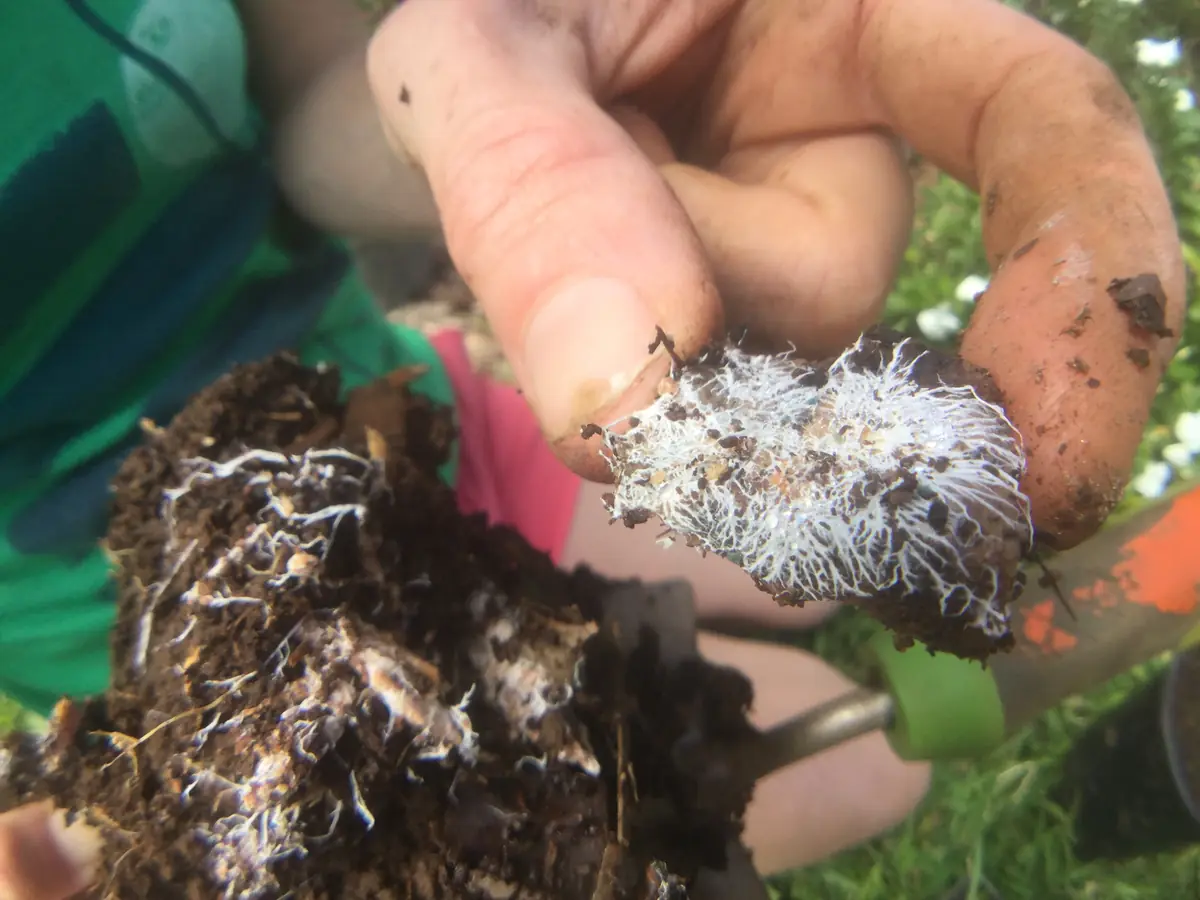
| 🔬 Soil test | You get lab results, look through a microscope, count worms, or test compaction. | Before-and-after soil is the long game. Even a worm count per shovelful is useful. |
Logging your KNF inputs
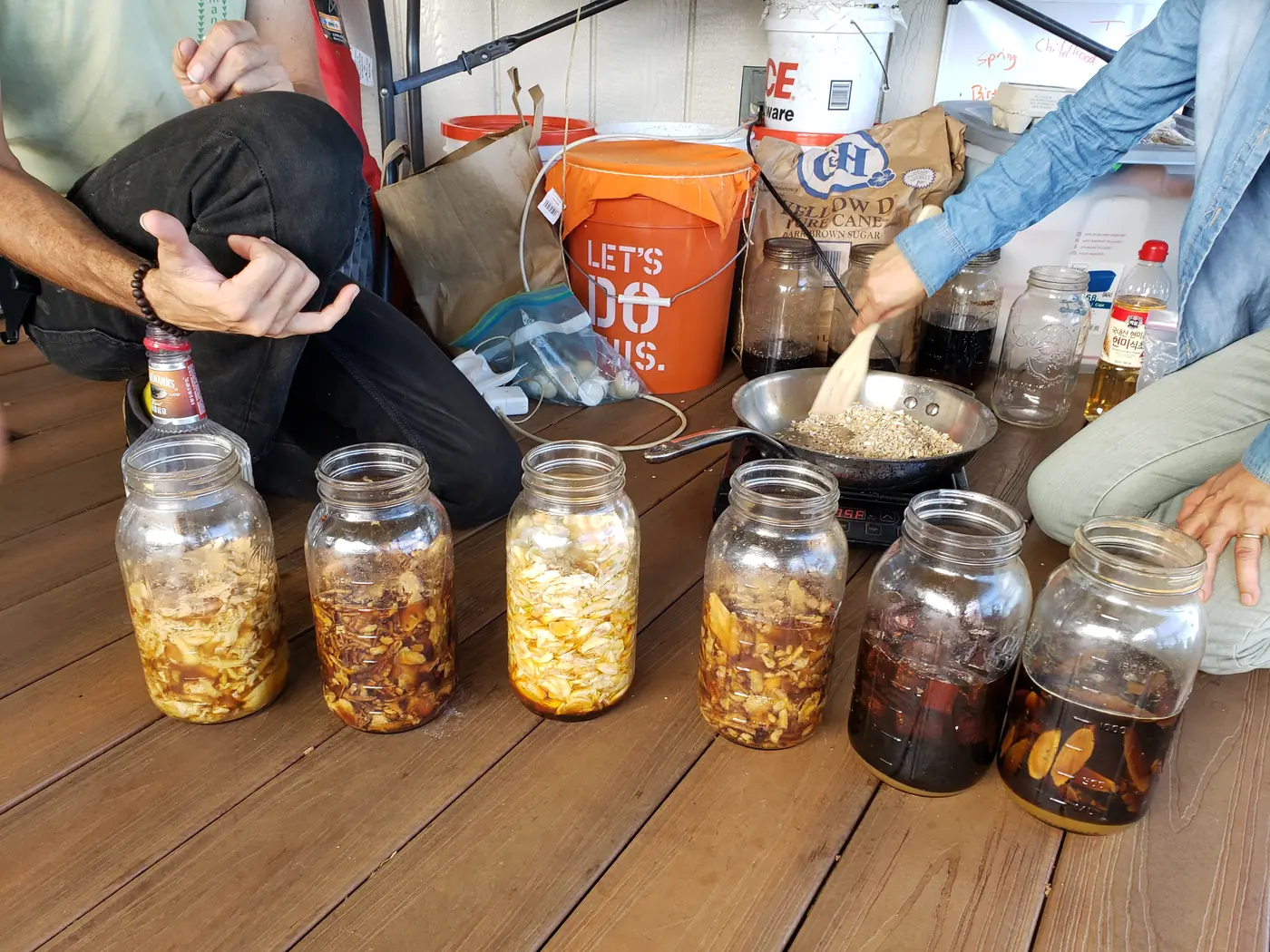
When you log an amendment, you pick how you applied it (spray, foliar, drench, drip, broadcast…), how much total mix you used, and what went in it. Each ingredient is filed under one of the nine solutions: Food, Cleanser, Medicine, Structure, Reproduction, Minerals, Fuel, Protectors and Microbes.
To save you the math, there are ready-made mixes for each stage of growth — Seed, Leaf, Bloom, Fruit, Harvest, Soil and Maintenance. Tap one and it fills in the standard solutions at their usual dilutions. Enter your total in gallons and it works out the milliliters of each for you. Then change anything you did differently.
Be specific about what’s in the jar
“Food” could be FPJ from comfrey or from bamboo shoots. Write the actual thing in the name: “FPJ — mugwort, 3 months”, “FAA — ahi scraps”, “IMO-4, forest behind the house.” That detail is exactly what the researchers say is missing from natural farming studies.
A good first season
Here’s a rhythm that works, taken from real projects:
- Day one: create the project, name your beds, log the sowing. Add a “before” photo as an observation.
- Every time you apply something: log an amendment. Thirty seconds.
- Once a week, same day: a weekly report with one photo from the same spot, a few lines on how it looks, hours and dollars spent.
- When something happens: an observation, with a photo.
- Every harvest: weigh it.
- At the end: a last weekly report — what worked, what didn’t, what you’d change. This is often the most valuable entry of all.
Want to see it done? These two are logged exactly this way:
French Fillet Green Beans Hawaiian Style
Weekly reports, every amendment and watering, ten harvests, seeds saved.
See the timeline → An honest failureCanoe Crop Kalo
Five months logged, one small corm, and a clear guess why. Just as useful.
See the timeline →Tips that make your notes count
- Same spot, same angle for photos. A row of weekly photos from one place shows change better than words.
- Change one thing at a time. If you switch inputs, watering and mulch in the same week, nobody can tell which one mattered.
- Keep an untreated bed if you can. The comparison is the evidence.
- Log the bad weeks. Pests, die-offs and plain neglect are real. A record with only good news isn’t believed.
- Units matter. Pounds or kilos, gallons or liters — just say which.
- Late is fine. Forgot to log Tuesday’s spray? Add it Friday and set the date back.
Sharing your grow
When you’re happy with it, tick “Make this project public” in your project settings. Anyone can then read your timeline and photos. Your name shows as the grower. You can make it private again any time.
Our volunteers look over new public projects before featuring them on the Explore page and in what we show funders — mostly to check it’s a real grow, not spam. That can take a little while; your project is public either way.
For the tech-minded
Every project can be downloaded as a spreadsheet (CSV) from its page. Members can also get an API key and log by simply telling an AI assistant — “log today’s harvest, 12 pounds of tomatoes from bed 2.” See the API guide.
Questions people ask
Do I need to be a scientist?
No. You need to be a grower who writes things down. The science comes from many growers doing it the same way.
My garden is tiny. Is it worth logging?
Yes. The two example projects above are fifteen and twenty square feet. Small, well-kept records beat big, vague ones.
How often do I have to log?
There’s no schedule. A weekly report plus your amendments is plenty. Some people log every day; that’s fine too.
What if I make a mistake?
Edit or delete any entry, any time. Messy notes from a real farm are worth more than perfect notes that never get written.
I don’t only use KNF. Can I still log?
Yes — log whatever you actually did, including compost, bought fertilizer or ultra-low-cost recipes. Honest records are what make comparisons possible.
Who can see my project?
While it’s private: you, and the Foundation’s small volunteer research team, who read across projects to spot patterns worth testing. Once public: anyone. We never sell your information.
What do you actually do with it?
Right now, we’re at the beginning: learning which practices show up again and again in good results, and which questions are worth a proper trial. Over time, a large, consistent set of farmer records is what lets us bring KNF to universities and funders with more than stories — the way Hawaiʻi farmers did with UH in 2013.
Can I get help with my grow?
Please do. Bring your project to a meeting — with your timeline in front of us, we can give you real answers instead of guesses.
Ready?
Pick one thing you’re growing right now. Start there. You can always add more.