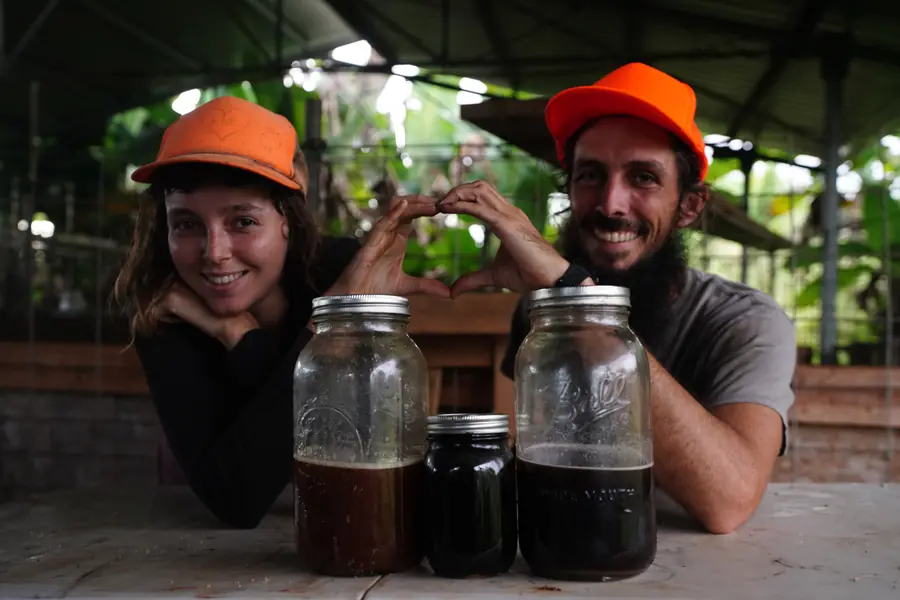
Fuel — Fish Amino Acid
What is Fuel?
Fuel is fermented fish amino acids — a liquid produced by fermenting raw fish heads and guts with brown sugar. As fermentation proceeds, proteins break down into their component amino acids. These amino acids, already in the form plants and soil organisms can use directly, become a concentrated biological fuel source.
What does it do?
Plants can synthesize amino acids from inorganic nitrogen, but the process requires significant energy. When pre-formed amino acids are available, plants bypass this energy-expensive step and put that energy into growth. The main thing you'll see is leaf growth — more canopy, more solar panels. Young plants and leafy greens benefit most; a healthy mature tree makes most of its own amino acids and needs much less. Soil organisms also respond strongly to amino acid availability.
How is it made
Use raw fish heads, guts, and spines — deep-sea fish are best. No freshwater fish, no dried fish, nothing already rotten. Far from the ocean, raw beef scraps and guts work too. Layer the fish with an equal weight of brown sugar in a five-gallon bucket, like lasagna, and close it with a solid lid. The next day it should smell like a fresh fish market, not rot.
Then wait. Master Cho said well-fermented Fuel takes at least six months. Several five-gallon buckets beat one big drum — if a batch goes bad, you lose less sugar. Dilute 1:1000 (about 4 ml per gallon), mixed in with your other solutions, and spray the underside of the leaves. Never go stronger than 1:500.
When to use it
During leafy growth, in the seed and leaf stages, leaving it out if the plant is already lush. From the changeover on, his printed table marks it optional, at 1:1500–2000. In class in December 2017 he gave it at that rate as a standing item: "Amino acid is needed, but only a little." None in the last weeks before harvest. In long rain, use it weaker. Too much Fuel makes soft, fast growth that draws thrips, scale, and aphids — if leaf-suckers show up, ease off Fuel and reach for Structure.