Microbes — Indigenous Micro Organisms
What are Microbes?
Microbes are indigenous micro organisms — a complex community of fungi, bacteria, actinomycetes, and other soil organisms collected from the forest floor or mountain soil in your local environment. They are the single most important preparation in Korean Natural Farming. Everything else in the system is designed to support, feed, and amplify this microbial community.
Why local?
The microorganisms that evolved in your specific climate, with your specific native plants, on your specific soil parent material are uniquely adapted to thrive in your conditions. They have co-evolved with the plants you are growing. Importing microorganisms from elsewhere may provide short-term benefits, but local organisms are already adapted — they need to be cultivated, not imported.
The five stages
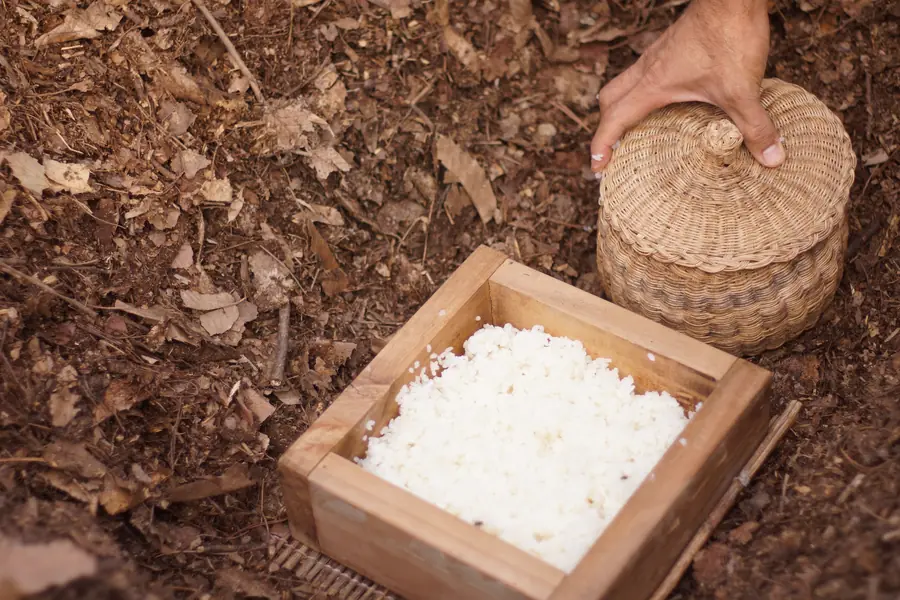
Stage 1 (Seed Microbes): Collect wild microbes from forest duff by placing cooked rice in a wooden box on the forest floor for 5–7 days. A white, sweet-smelling mycelium colonizes the rice.
Stage 2 (Preserved Seed Microbes): Mix colonized rice with an equal weight of brown sugar to put it to sleep. Kept cool, it stores two to three years; bubbles mean it is losing strength. If it smells sour or of alcohol, it has too little sugar: add brown sugar and cap the top with it.
Stage 3 (Propagated Microbes): Mix into bran or organic substrate to multiply the population for larger-scale application.
Stage 4 (Foundation Microbes): Mix Propagated Microbes with soil from your own field, about 1:1, moisten, and ferment again until a rich earthy community establishes. The field's own microbes join the ones you collected; Master Cho said microbes fight strangers, so they have to grow up together. Highest-quality soil amendment. Spread at least 3 lb per 100 sq ft, two to three hours before sunset, as a thin layer under a light mulch, never buried, then drench the bed with Soil Formula, about 2½ gallons per 100 sq ft (about 1 ton per 300 pyeong, the solutions mixed in).
Stage 5 (Fermented Mixed Compost): Incorporate Foundation Microbes into a full compost pile. The most complete soil amendment in Korean Natural Farming.
Where to collect
Old-growth forests, undisturbed mountain slopes, or any area where the natural ecosystem has been intact for a long time. The white, sweet-smelling mycelium visible when you pull back forest leaves is what you are looking for.