Minerals — Sea Water
What is Minerals?
Minerals is seawater, diluted and applied to soil and plants. Seawater contains 80+ trace minerals in ionic form — bioavailable and in ratios that co-evolved with land life over millions of years. Agricultural soils have lost enormous quantities of trace minerals over generations of cropping and erosion. Minerals addresses this directly.
What does it do?
Minerals replenishes the full spectrum of trace elements that plants and soil organisms need. Many plant enzymes require specific trace minerals as cofactors — without them, metabolic processes slow or fail. Flavor compounds in vegetables and fruit often correlate directly with trace mineral availability. Plants are selective absorbers — they take what they need.
How is it used
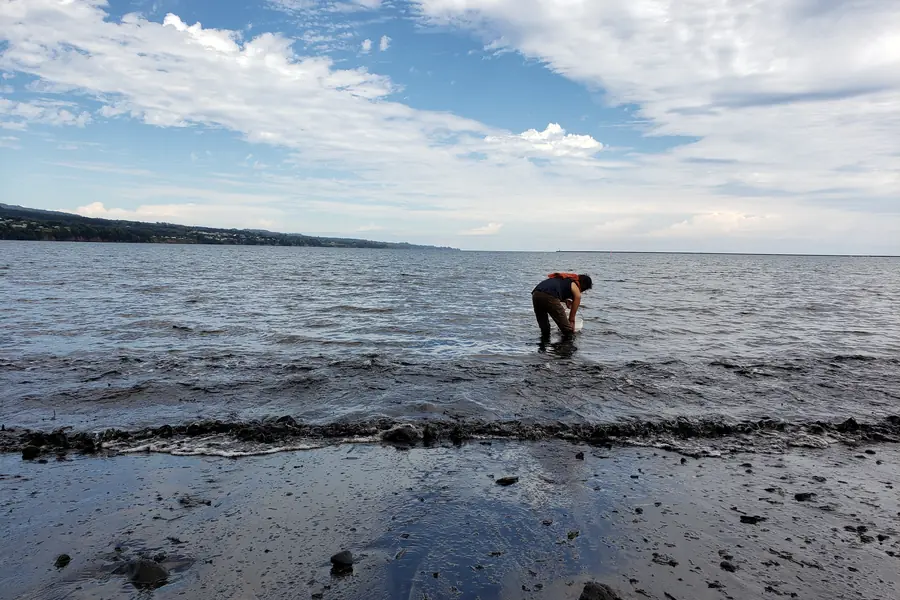
Collect clean ocean water from the top inch, away from harbors or discharge. Master Cho's printed table uses it at 1:20–25 in the soil foundation, the seed soak and the fruit stage; in his classes he often used 1:30 for all of these. His printed table has none while the plant is building leaves or changing over to flower, and we follow it. In his lectures he also used it there: in leaf it "can go in or not" (Korea, 2017), and at the changeover he taught a weekly spray of Minerals 1:25 with Structure and Reproduction at 1:800, from a month before the flowers form (Kohala, 2017). For those without ocean access, unrefined sun-dried sea salt dissolved at about 1 gram per liter is the closest substitute. That is already about the strength of seawater at 1:30, ready to spray. Refined table salt is no good.
When to use it
At planting, in the soil foundation and seed soak; again once fruit sets; and most of all in the last 10–15 days before harvest, in three sprays that step up from 1:30 to 1:25 to 1:20 to raise the sugar. Master Cho went as strong as 1:15 about a week before harvest, with Reproduction. Never stronger than 1:15 on a crop; his 1:10 is for livestock drinking water.