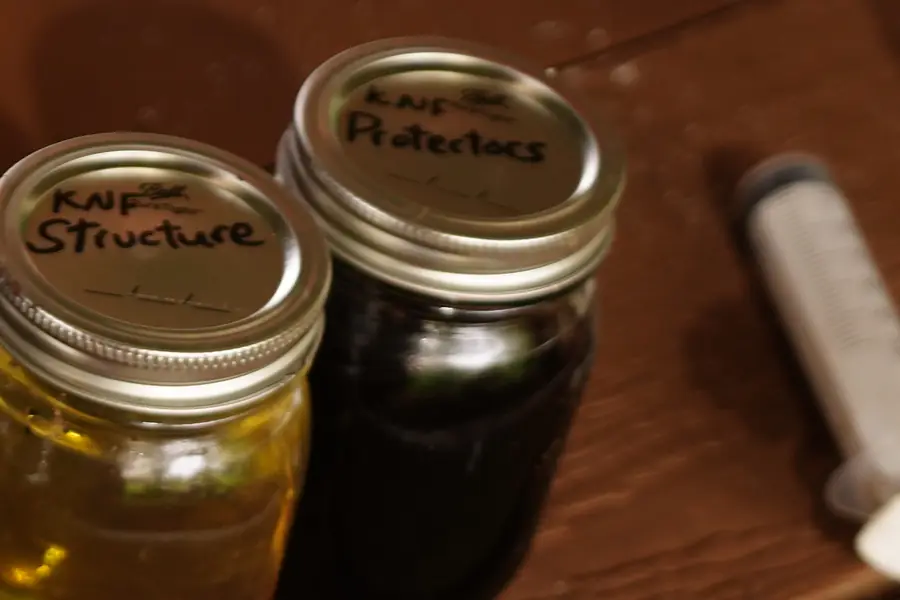
Protectors — Lactic Acid Bacteria
What are Protectors?
Protectors are a concentrated culture of lactic acid bacteria (LAB) — the same organisms responsible for yogurt, kimchi, and sauerkraut — cultivated from wild lactobacillus naturally present on rice. Master Cho considered them foundational to the entire system.
What do they do?
Protectors work through competitive exclusion. A soil or plant surface already densely colonized by beneficial LAB leaves no room for harmful pathogens. The beneficial organisms are not fighting pathogens; they are simply occupying the territory first. LAB also produce compounds that directly inhibit pathogens, improve soil structure through organic matter breakdown, and support the activity of other beneficial microorganisms.
How are they made?
Wash rice and save the cloudy first-wash water. Pour it into a shallow dish, cover it with paper, and leave it out of direct sun for 1–2 days, until it smells like sweet rice turning sourdough. Pour that into fresh pasteurized milk, about 1 part rice water to 10 parts milk (any mammal milk, not nut milk). In 3–5 days it separates into curds and a tan, slightly sour whey. Strain out every bit of curd through a fine cloth — the whey is your Protectors.
Keep it in the fridge, or stir in brown sugar until a thin ring stays on the bottom to keep it on the shelf (see my video How to Supersaturate KNF Solutions). Master Cho mixed it with an equal weight of brown sugar. Cap it loosely; it can build gas. Dilute 1:1000 while the plant is building leaves, and 1:2000 at the changeover. His printed table leaves it out once fruit sets: it eats the sugar. In Hilo in 2016 he added it at 1:1000 to make the fruit bigger, and warned against going stronger.
When to use them
Most valuable at planting (to establish beneficial microbial foundation), after any chemical application that disrupted soil biology, and whenever disease pressure is present or anticipated.