Konkuk University, Seoul · October 5–7, 2016

Natural Science Farming Symposium 2016

A day of talks in Seoul, then two days on the farms. 23 talks, three languages. Master Cho's students from ten countries showed what natural farming did on their fields, from Afghan potatoes to Hawaiian macadamias. Every talk is translated, checked line by line, and boiled down to what was tested and what happened.

Read what it all adds up to →

Also on the record: Hilo 2015

Topics microbes soil economics pigs poultry rice history corn food scale disease feed health minerals protectors reproduction Clear

12 talks on “soil”

Chris Trump ·United States (Hawaiʻi) ·14 min

800 Acres of Macadamia on KNF for $21 an Acre a Year

Chris Trump, who farms 800 acres of macadamia nuts in Hawaiʻi with his family, reports six years of feeding the whole orchard with natural farming only. He says the full program, labor included, costs $21 per acre per year, and that 98% of diseased trees recovered. He also explains why he moved from huge solid Microbes (IMO4) piles to a sprayed liquid Microbes (liquid IMO) program after a storm hit a 50-ton pile.

Found Whole nutrition program costs $21 per acre per year

disease economics macadamia microbes orchard scale

Teruhiko Sawamura ·Japan ·23 min Spoken in Japanese

Kumamoto Grower: Wild-Grass Compost Cut Tomato Wilt

Teruhiko Sawamura grows organic greenhouse tomatoes in Shiranui, Kumamoto, using natural farming he learned from Master Cho. He builds soil with riverbank reeds and grasses aged three years into low-nitrogen compost, plus home-made bokashi made on a clay floor, and sprays a home-made plant extract with brown rice vinegar and seawater. He reports much less bacterial wilt, organic tomatoes shipped in the scarce autumn season from ten years of his own saved seed, and support from the Kumamoto governor after the 2016 earthquake. It is a farm report with photos; no trial data were shown.

Found Bacterial wilt of tomato dropped a great deal

cleanser disease economics food minerals rice

Baryalai Malekzada ·Afghanistan ·17 min

Reproduction (WCA) on the Soil Lifted Potato Yield 63%

A potato trial at Paju, March to July 2016, grown with natural farming solutions throughout, tested ten ways of giving Reproduction (water-soluble calcium, WCA): on the soil, on the leaves, or both, at three strengths. The strongest soil dose gave the top yield, 40.7 t/ha against 25.03 for no calcium, and the heaviest tubers. Calcium on the leaves alone did little for yield; soil and leaf together built the most foliage.

Found Strongest soil dose (T4) gave the top yield: 40.7 t/ha vs 25.03 with no calcium

microbes phosphorus potato reproduction soil yield

Zacheous Kazibwe ·Uganda ·8 min

Farm-Made Microbes Beat Commercial EM on Peanuts

A one-season peanut trial at Konkuk's Paju test farm compared solid Microbes (IMO4), liquid Microbes (IMO4 in water), commercial EM and a water-only control. Both IMO treatments gave more pods, heavier seed, far more root nodules and higher soil microbe counts. Solid IMO4 gave the top yield, 2,816 kg/ha, against 1,904.6 for EM and 1,674.8 for the control.

Found Solid IMO4 gave the highest yield, 2,816 kg/ha

legumes microbes peanut soil yield

Morning presenters, with questions from the floor ·22 min

Q&A: From 50-Ton IMO Piles to Strong Calcium on Potatoes

A short Q&A after the ten morning talks. Chris Trump explained how he moved from 50-ton piles of Microbes (IMO) to small IMO3 batches brewed into liquid IMO; a Hawaiʻi taro grower described IMO4 in flooded fields; the Konkuk students explained their trial designs, how liquid IMO was made for the peanut trial, where the tomato trial's phosphorus came from, and why the potato trial used water-soluble calcium six to nine times stronger than the usual 1:1000. Several questions went unanswered for lack of time or because the presenter had left.

Found Chris Trump has made about 70–75 tons of IMO over three years, not every year

microbes potato reproduction scale soil taro

Yoo Nam-gyu ·South Korea ·6 min

Natural-Farmed Soybeans Bloomed and Ripened Sooner

A short photo report from a 2016 soybean plot at Konkuk, grown side by side with natural farming and conventional farming. Conventional weeds were killed with herbicide at 50 days; the natural farming weeds were pulled by hand. The natural farming plot bloomed three days earlier (July 19 vs July 22) and was yellowing toward harvest at 90 days while the conventional plot was still green. No yield or other numbers were shown.

Found Natural farming plot bloomed July 19, conventional July 22

legumes soil soybean weeds

Son Sung-kyu ·South Korea ·10 min

Mindanao Rice Farmers Took Up Cho's Method, Now Export Rice

A Korean pastor who served in the Philippines from 1991 to 2013 contrasts chemical and natural farming on two slides of paired words, then shows a pig pen and a duck-and-chicken coop. He says farmers used to chemicals are the hardest to change, even after some 60 conferences. He ends with a Mindanao NGO report: he brought Master Cho in for a three-day seminar, the group spent a year testing natural farming on rice, and he says the farmers now export brown rice.

Found Farmers already used to chemical farming were hard to convert, even after almost 60 conferences

economics history pigs poultry rice soil

Cho Han-kyu ·South Korea ·23 min Spoken in Korean

Cho at 82: Natural Farming Is Love, Not a Technique

Master Cho, 82, speaks without slides near the end of the first day. Despite the uploader's title, this is not a history lecture. His point is that natural farming is a movement of love, not a technique, and he makes it with stories: turning Kona lava into 3 cm of soil in six months with corn and microbes, Hawaiʻi's vanished egg farms, a 1,200-hectare project in China, and a spring made with bananas in Africa. He also corrects the students on Microbes (IMO4): mix in soil from the field the IMO4 will go to.

Found He has farmed since age 14 and is now 82

corn history microbes minerals poultry scale

Jegatheesary Gunasingam ·Sri Lanka ·20 min

Sri Lanka: Classes Alone Failed, Small Groups Worked

A World Vision Sri Lanka staff member reports on a 2013–2015 project, funded by World Vision Korea and KOICA, that brought natural farming (which she calls 'neo-organic') to 600 farm families in Vaharai, a war-affected coastal division. After a year of training only a handful of farmers had taken it up; small groups, close follow-up and training the government agriculture instructors turned it around. The final evaluation shows wide use of homemade fertilizers and pesticides, more home gardens and water access, and weekly chemical-free vegetable markets, but no yields, costs or incomes.

Found After one year of training, only a few farmers had adopted; both transcripts heard 'only two'

economics health microbes soil training vegetables

Se-Chul Chun ·South Korea ·25 min

Feeding the Good Bacteria Cut Pepper Root Rot to 6%

A Konkuk plant pathologist, new to natural farming, reviews biological control of soil-borne disease and shows his own work: bacteria coated on rice seed against seedling rot, and bacteria against Phytophthora root rot of pepper, both working better when given a sugar the bacteria can use and the pathogen cannot. He then gives first, unreplicated microbe counts from the Paju natural farming soils and from each IMO step: counts fell about tenfold from IMO1 to IMO4 and the fungi shifted from Aspergillus to Rhizopus. He draws no conclusion about natural farming yet.

Found Pepper root rot: 81% with the pathogen alone, 22% with bacterium KJIR5, 6% with KJIR5 plus arabinose

biological control disease microbes pepper research rice

Field trip Lee Eun-ha (host), with Master Cho Han-kyu (interpreted by Dr. Hoon Park) ·South Korea ·44 min Spoken in Korean

Hens Eat Fermented Cow Dung on a Pastor's Muju Farm

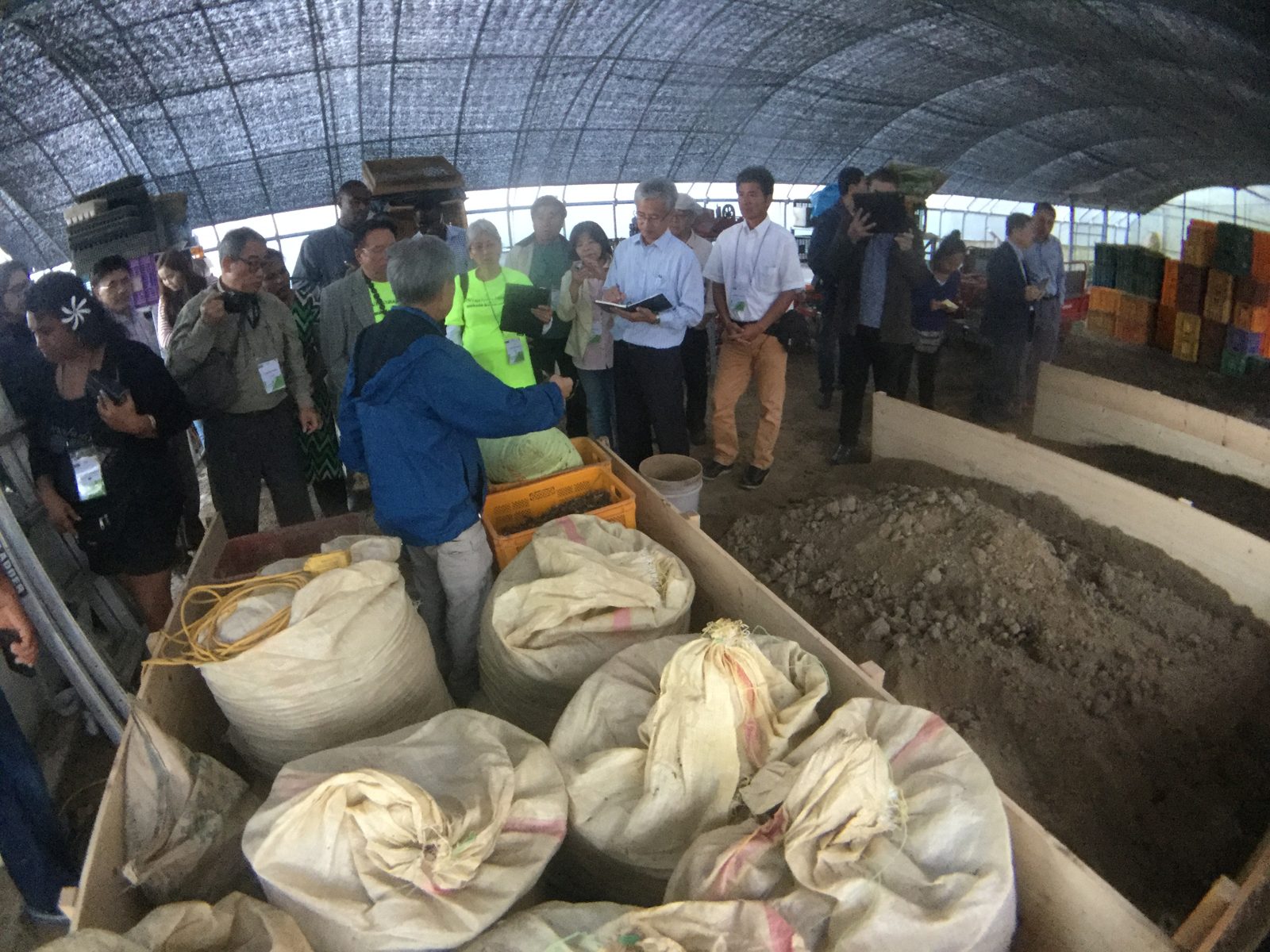
On the evening of October 6, 2016, the group visited a small hen farm next to a country church, run by Lee Eun-ha, the former missionary to the Philippines who spoke on the first day. Master Cho calls it the first place in the world to feed fermented cow dung to hens, inside a closed loop where the farm makes its own feed and fertilizer. The hosts showed chopped green corn stalk fermented for feed, a BMW water tank, IMO4 mixed with a tiller, a feed mixer and fermenting trough, hens on a bare-earth IMO4 floor with no smell, a chili field with soft soil, and a makgeolli insect trap. Laying was about 60% while feed ratios were still being tested.

Found Laying rate about 60%, aiming for 65 to 70%

cow dung economics feed food microbes poultry

Field trip Kim Eun-ja (interpreted into English by Dr. Hoon Park) and Ahmad Jawid Zamany ·South Korea ·54 min

Build the Soil First: A Chemical Field's First Natural Year

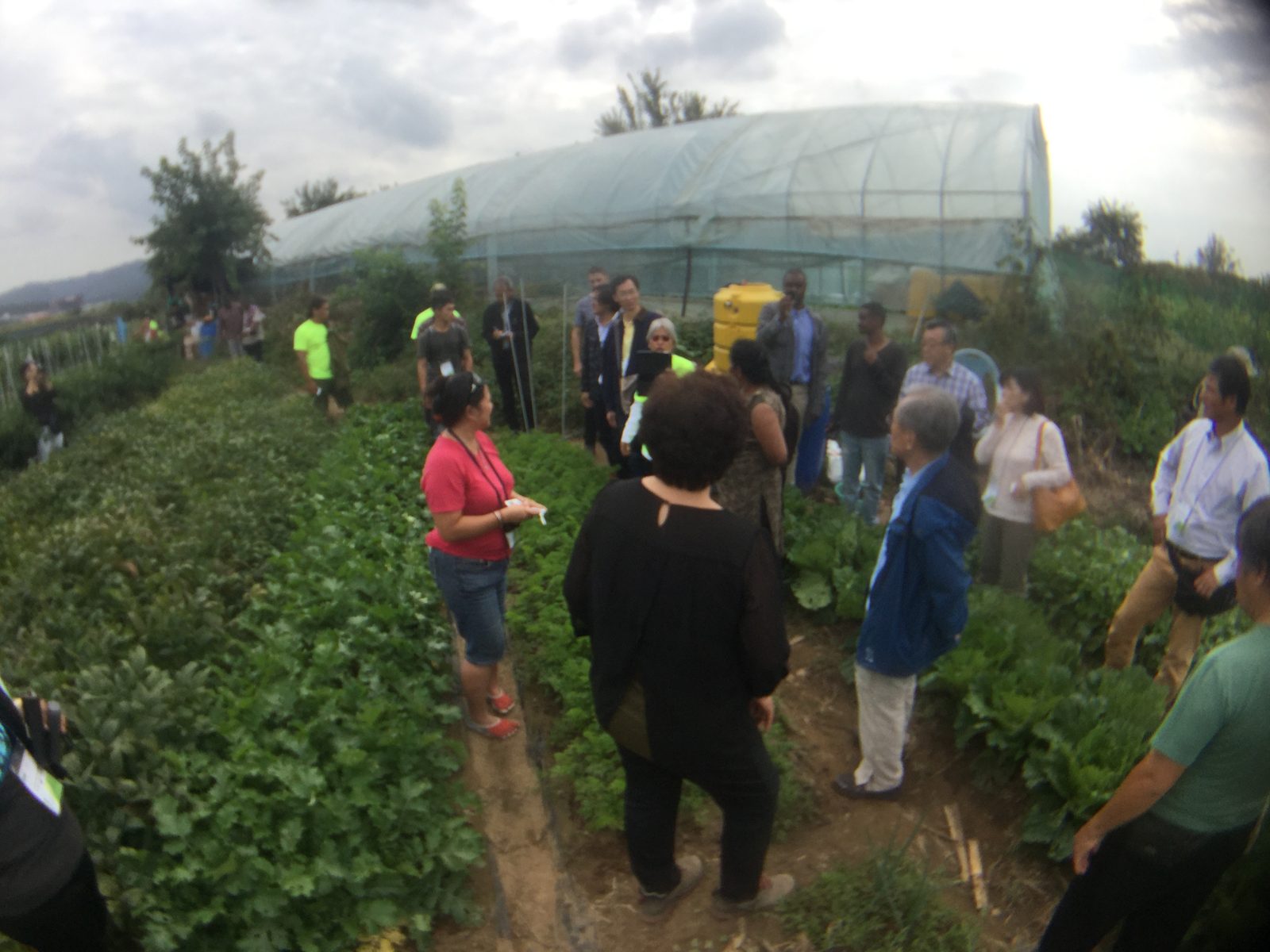
The trip's last farm: Konkuk's natural farming practice field in Paju, where the students' trials from the talks grew. Ahmad Jawid Zamany showed his tomato, eggplant and pepper plots under three systems; in October the natural rows were still flowering and fruiting while the others had nearly stopped. Kim Eun-ja then walked the group through her first natural year on ground farmed with chemicals for decades: careful soil groundwork, her own Microbes fertilizers (IMO5), crop residue returned to the field, and the tomatoes she over-fed with nitrogen.

Found Natural tomato, eggplant and pepper rows still flowering and fruiting in October; organic and conventional had almost stopped

corn ginger microbes pepper poultry soil