Konkuk University, Seoul · October 5–7, 2016

Natural Science Farming Symposium 2016

A day of talks in Seoul, then two days on the farms. 23 talks, three languages. Master Cho's students from ten countries showed what natural farming did on their fields, from Afghan potatoes to Hawaiian macadamias. Every talk is translated, checked line by line, and boiled down to what was tested and what happened.

Read what it all adds up to →

Also on the record: Hilo 2015

Topics microbes soil economics pigs poultry rice history corn food scale disease feed health minerals protectors reproduction Clear

5 talks on “food”

Teruhiko Sawamura ·Japan ·23 min Spoken in Japanese

Kumamoto Grower: Wild-Grass Compost Cut Tomato Wilt

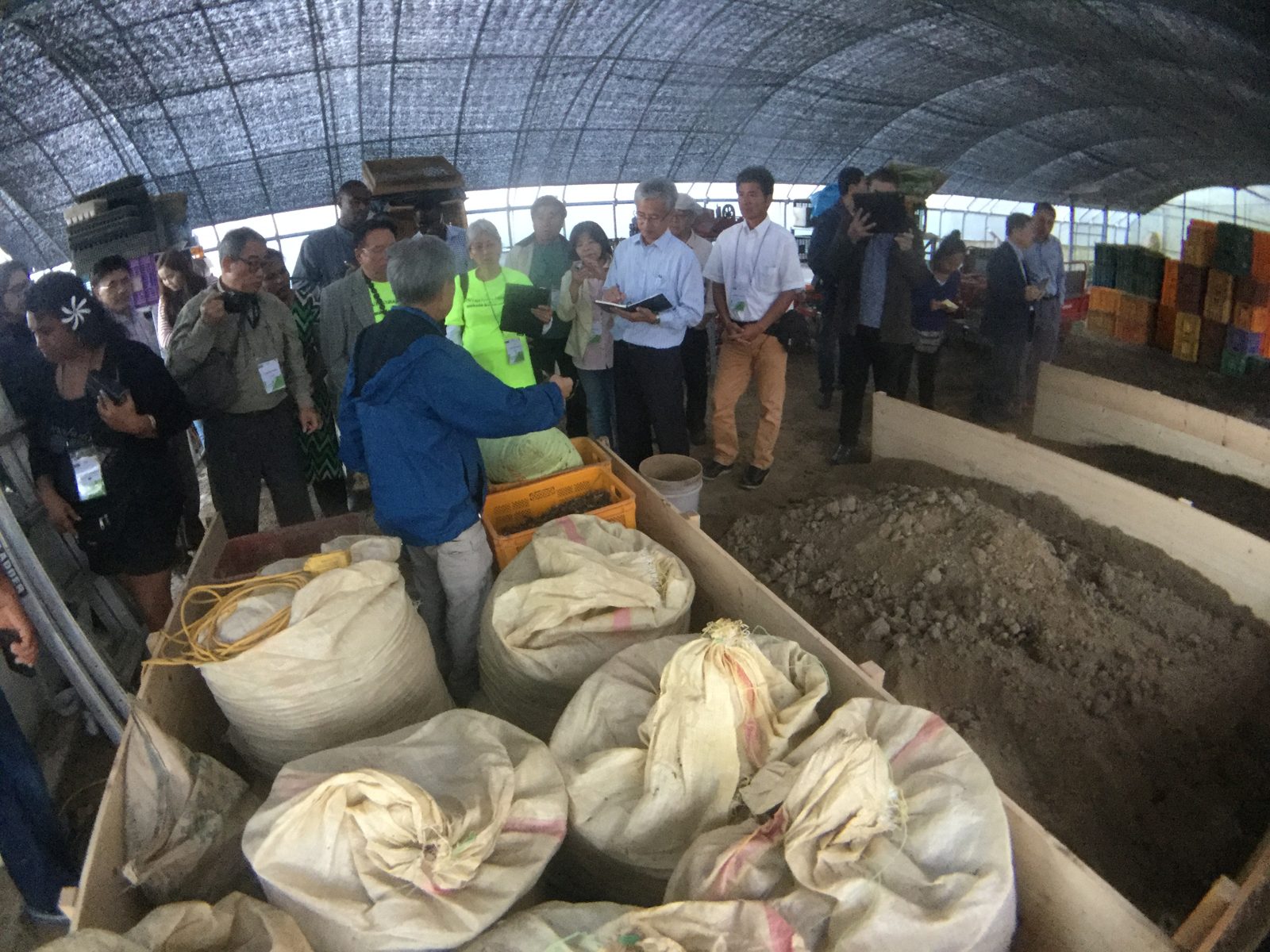
Teruhiko Sawamura grows organic greenhouse tomatoes in Shiranui, Kumamoto, using natural farming he learned from Master Cho. He builds soil with riverbank reeds and grasses aged three years into low-nitrogen compost, plus home-made bokashi made on a clay floor, and sprays a home-made plant extract with brown rice vinegar and seawater. He reports much less bacterial wilt, organic tomatoes shipped in the scarce autumn season from ten years of his own saved seed, and support from the Kumamoto governor after the 2016 earthquake. It is a farm report with photos; no trial data were shown.
Found Bacterial wilt of tomato dropped a great deal

cleanser disease economics food minerals rice

Richard Kwame Denteh ·Ghana ·12 min

Natural-Farmed Maize Out-Yielded Chemical, 4.8 vs 4.1 t/ha

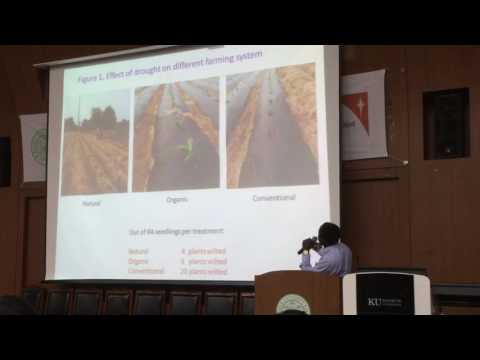
A one-season maize trial at Konkuk's Paju research centre compared natural farming, organic and conventional (chemical) systems side by side. The natural plots had the longest, heaviest ears and the highest yield: 4.8 t/ha dry grain against 4.3 for organic and 4.1 for conventional. After a one-week drought just after germination, 20 of 84 conventional seedlings wilted, against 4 natural and 3 organic.

Found Dry grain yield 4.8 t/ha natural vs 4.3 organic and 4.1 conventional

corn drought food fuel medicine structure

Julius B. Sugue ·Philippines ·15 min

Rice Root Volume Nearly Tripled with Fuel (FAA) at 1:500

A one-season paddy rice trial at Paju gave Fuel (FAA) at three strengths, 1:2000, 1:1000 and 1:500, on top of a full natural farming spray program, against a no-FAA control. The 1:500 plots had the most tillers, the longest roots, nearly three times the control's root volume and the most panicles per hill (23.6 vs 18.4). Filled grains per panicle and 1,000-grain weight did not differ, and no grain yield per area was reported.

Found Root volume at flowering 180 cc with FAA 1:500 vs 65 cc in the control

food fuel medicine microbes reproduction rice

Field trip Lee Eun-ha (host), with Master Cho Han-kyu (interpreted by Dr. Hoon Park) ·South Korea ·44 min Spoken in Korean

Hens Eat Fermented Cow Dung on a Pastor's Muju Farm

On the evening of October 6, 2016, the group visited a small hen farm next to a country church, run by Lee Eun-ha, the former missionary to the Philippines who spoke on the first day. Master Cho calls it the first place in the world to feed fermented cow dung to hens, inside a closed loop where the farm makes its own feed and fertilizer. The hosts showed chopped green corn stalk fermented for feed, a BMW water tank, IMO4 mixed with a tiller, a feed mixer and fermenting trough, hens on a bare-earth IMO4 floor with no smell, a chili field with soft soil, and a makgeolli insect trap. Laying was about 60% while feed ratios were still being tested.

Found Laying rate about 60%, aiming for 65 to 70%

cow dung economics feed food microbes poultry

Field trip Master Cho Han-kyu (interpreted by Dr. Hoon Park) ·South Korea ·85 min Spoken in Korean

One IMO4, Three IMO5s: Match the Plant's Stage

After the farm visits of October 6, 2016, Master Cho Han-kyu gave the field-trip group an evening lecture, interpreted by Dr. Hoon Park, on one idea: IMO5 is not one recipe. The IMO4 base stays the same, and what goes in depends on the crop's stage: fish protein for early growth, calcium phosphate from charred bone for the changeover, calcium from charred shell for maturing. He worked it through with corn (calcium phosphate about a week before the changeover, day 58 of 180), then covered seawater at 1:30, a vinegar, LAB and yeast tonic, and an alcohol, mugwort and dropwort recovery mix with doses for pigs.

Found Corn, sugarcane and rice, the grass family, carry about 15–16 leaf layers

corn food microbes minerals nutritive cycle pigs