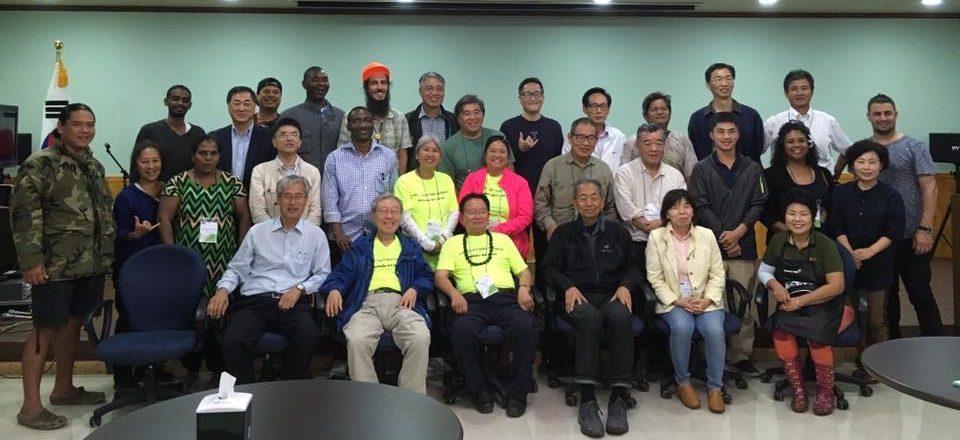
Konkuk University, Seoul · October 5–7, 2016

Natural Science Farming Symposium 2016

A day of talks in Seoul, then two days on the farms. 23 talks, three languages. Master Cho's students from ten countries showed what natural farming did on their fields, from Afghan potatoes to Hawaiian macadamias. Every talk is translated, checked line by line, and boiled down to what was tested and what happened.

Read what it all adds up to →

Also on the record: Hilo 2015

Topics microbes soil economics pigs poultry rice history corn food scale disease feed health minerals protectors reproduction Clear

4 talks on “minerals”

Teruhiko Sawamura ·Japan ·23 min Spoken in Japanese

Kumamoto Grower: Wild-Grass Compost Cut Tomato Wilt

Teruhiko Sawamura grows organic greenhouse tomatoes in Shiranui, Kumamoto, using natural farming he learned from Master Cho. He builds soil with riverbank reeds and grasses aged three years into low-nitrogen compost, plus home-made bokashi made on a clay floor, and sprays a home-made plant extract with brown rice vinegar and seawater. He reports much less bacterial wilt, organic tomatoes shipped in the scarce autumn season from ten years of his own saved seed, and support from the Kumamoto governor after the 2016 earthquake. It is a farm report with photos; no trial data were shown.

Found Bacterial wilt of tomato dropped a great deal

cleanser disease economics food minerals rice

Cho Han-kyu ·South Korea ·23 min Spoken in Korean

Cho at 82: Natural Farming Is Love, Not a Technique

Master Cho, 82, speaks without slides near the end of the first day. Despite the uploader's title, this is not a history lecture. His point is that natural farming is a movement of love, not a technique, and he makes it with stories: turning Kona lava into 3 cm of soil in six months with corn and microbes, Hawaiʻi's vanished egg farms, a 1,200-hectare project in China, and a spring made with bananas in Africa. He also corrects the students on Microbes (IMO4): mix in soil from the field the IMO4 will go to.

Found He has farmed since age 14 and is now 82

corn history microbes minerals poultry scale

Field trip Gokseong County center staff, interpreted into English by Dr. Hoon Park ·South Korea ·8 min

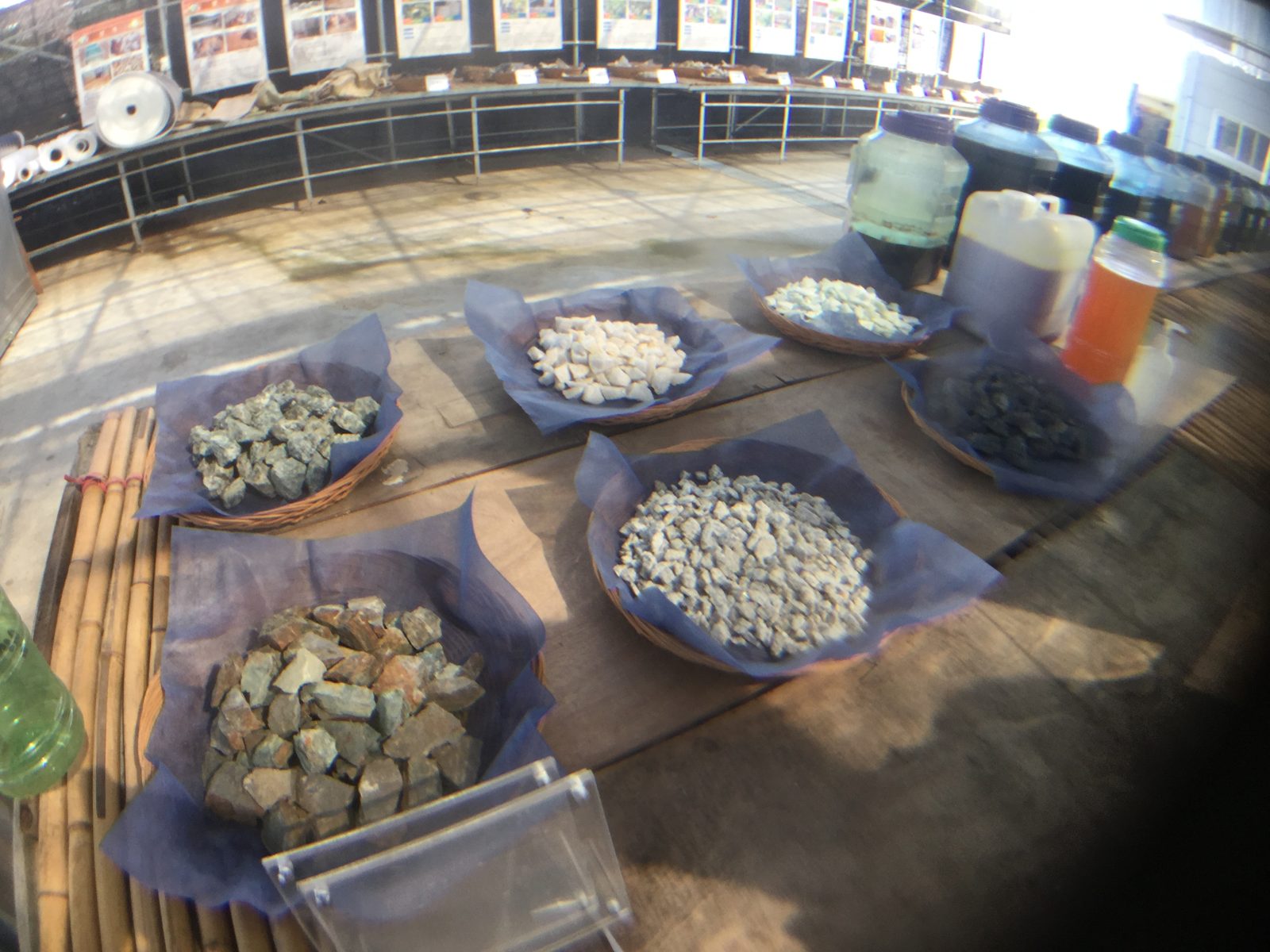
Five Kinds of Stone and a Drop: Gokseong's Mineral Water

The group's first stop in Gokseong was the county's own natural farming center. Staff showed a mineral-water system: water is pumped up and dropped onto five kinds of stone in a tank, which the guide says adds minerals and oxygen, and a small bag of Microbes (IMO4) adds microbes too. Outside, the county's return-to-farm support center and the start date of its natural farming teaching, 2009, were explained.

Found Water dropped onto stone picks up minerals and oxygen

extension gokseong microbes minerals water

Field trip Master Cho Han-kyu (interpreted by Dr. Hoon Park) ·South Korea ·85 min Spoken in Korean

One IMO4, Three IMO5s: Match the Plant's Stage

After the farm visits of October 6, 2016, Master Cho Han-kyu gave the field-trip group an evening lecture, interpreted by Dr. Hoon Park, on one idea: IMO5 is not one recipe. The IMO4 base stays the same, and what goes in depends on the crop's stage: fish protein for early growth, calcium phosphate from charred bone for the changeover, calcium from charred shell for maturing. He worked it through with corn (calcium phosphate about a week before the changeover, day 58 of 180), then covered seawater at 1:30, a vinegar, LAB and yeast tonic, and an alcohol, mugwort and dropwort recovery mix with doses for pigs.

Found Corn, sugarcane and rice, the grass family, carry about 15–16 leaf layers

corn food microbes minerals nutritive cycle pigs