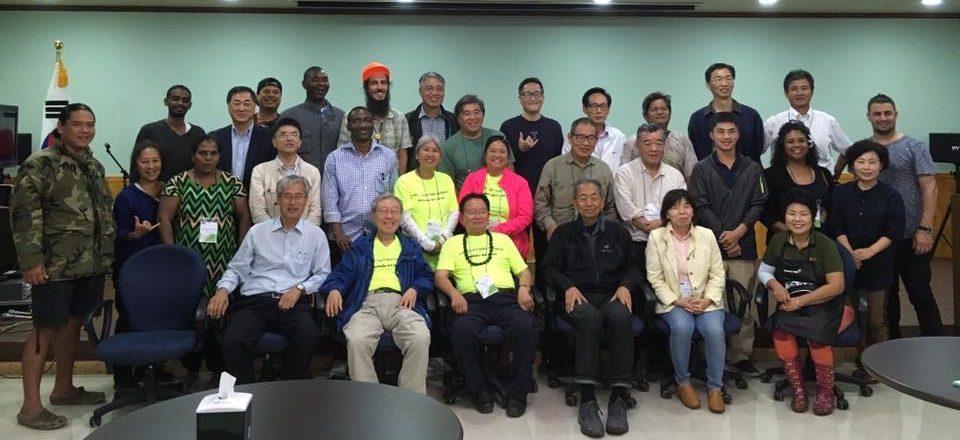
Konkuk University, Seoul · October 5–7, 2016

Natural Science Farming Symposium 2016

A day of talks in Seoul, then two days on the farms. 23 talks, three languages. Master Cho's students from ten countries showed what natural farming did on their fields, from Afghan potatoes to Hawaiian macadamias. Every talk is translated, checked line by line, and boiled down to what was tested and what happened.

Read what it all adds up to →

Also on the record: Hilo 2015

Topics microbes soil economics pigs poultry rice history corn food scale disease feed health minerals protectors reproduction Clear

9 talks on “pigs”

Joe McGinn ·United States (Hawaiʻi) ·25 min

100 Pigs, No Bought Feed: Oʻahu's Natural Farming Network

Joe McGinn tells how a natural farming support network grew on Oʻahu in the five years after he trained with Dr. Hoon Park and Master Cho in 2011: shared classes, hands-on input making, a 2013 Hawaiʻi symposium, and whole families on the farm. His own farm keeps about 100 pigs, two dozen chickens and six goats on no bought feed, using brewery spent grain treated with natural farming inputs. He also names the hard parts: few trainees keep farming, there is not yet enough product for market, and classes don't pay for themselves.

Found About 100 pigs, two dozen chickens and half a dozen goats on no bought feed

community economics feed history microbes pigs

Drake Weinert ·United States (Hawaiʻi) ·9 min

A $130-a-Year Website Reached 56,000 Users Without Ads

Drake Weinert reported eight years of running NaturalFarmingHawaii.net, a one-person WordPress blog that cost about $130 a year and was never advertised. Google Analytics showed 56,456 users, 95,858 sessions and 237,176 page views since 2010, with most visitors arriving through web search and very few from social media. The odorless pig page, Cho's learning materials and how-to-apply guides drew the most views.

Found 56,456 users since 2010

education history internet outreach pigs

Lee Eun-ha ·South Korea ·13 min Spoken in Korean

They Called It Crazy to Feed Chickens Soil Microbes

A Korean missionary tells how he learned natural farming from Master Cho, failed for two or three years in the Philippines, and was called crazy for culturing feed for chickens and pigs with soil microbes. He shows two feed systems: green feed his team can now make the same way all year, and a layered, fermented corn feed with lactic acid bacteria and Microbes (IMO). He gave no numbers. A trial of feed ratios for hens and eggs was still running, with data being prepared.

Found The natural farming method did better than the local method in his side-by-side test

feed health microbes pigs poultry protectors

Son Sung-kyu ·South Korea ·10 min

Mindanao Rice Farmers Took Up Cho's Method, Now Export Rice

A Korean pastor who served in the Philippines from 1991 to 2013 contrasts chemical and natural farming on two slides of paired words, then shows a pig pen and a duck-and-chicken coop. He says farmers used to chemicals are the hardest to change, even after some 60 conferences. He ends with a Mindanao NGO report: he brought Master Cho in for a three-day seminar, the group spent a year testing natural farming on rice, and he says the farmers now export brown rice.

Found Farmers already used to chemical farming were hard to convert, even after almost 60 conferences

economics history pigs poultry rice soil

Cho Kyung-hoon ·South Korea ·17 min Spoken in Korean

One Korean County Took Natural Farming Rice From 23 to 200 ha

A county extension officer from Gokseong tells how his office moved from organic farming that failed to natural farming under Master Cho, starting in 2009. Natural farming rice in the county grew from 23 ha in 2009 to 200 ha in 2015–2016, with 250 ha expected next. The rest is a photo tour of crops and livestock with field stories, spoken figures and few controlled comparisons.

Found Natural farming rice grew from 23 ha in 2009 to 200 ha in 2015 and 2016

economics health horticulture pigs poultry rice

Chang-pyo Lee ·South Korea ·26 min

Neorganic Rice: Same Yield, Higher Price, Up to 3x Profit

Chang-pyo Lee of World Vision Korea reports on 'Neorganic' farming (natural farming plus no-till, mulch and compost) in World Vision projects in Vietnam, Sri Lanka and Ethiopia. In Vietnam, rice yielded the same as conventional at lower input cost, and a higher selling price gave two to three times the net profit; chicken and herbs also earned more, while lettuce, broccoli and pigs fed no protein earned less. Ethiopian seed potatoes yielded more at all three cooperatives, and Sri Lankan families gained food access and diet diversity, though their yields were not significantly different from non-participants.

Found Vietnam rice: same yield, 11,000 vs 6,500 VND/kg, 2.3–3.3 times the net profit

economics microbes pigs potato poultry rice

David Wong ·United States (Hawaiʻi) ·21 min

No Antibiotics, No Vaccines: A Pig Farmer on Food and Health

A Hawaiʻi pig farmer who started with nine piglets in 2012 says his farm uses no antibiotics, vaccines, hormones or steroids and came through two local disease outbreaks without trouble. He then argues, with news clippings and US disease graphs, that drugs in livestock and chemicals in food harm human health, and closes by telling the room he has cancer and is treating it with food alone.

Found Pigs raised since 2012 with no antibiotics, vaccines, hormones or steroids, 'doing quite well'

antibiotics disease health history livestock pigs

Field trip Dr. Hoon Park (interpreting), with Master Cho Han-kyu and the farm's owner, named as Mr. Lee Chang-hyun ·South Korea ·28 min

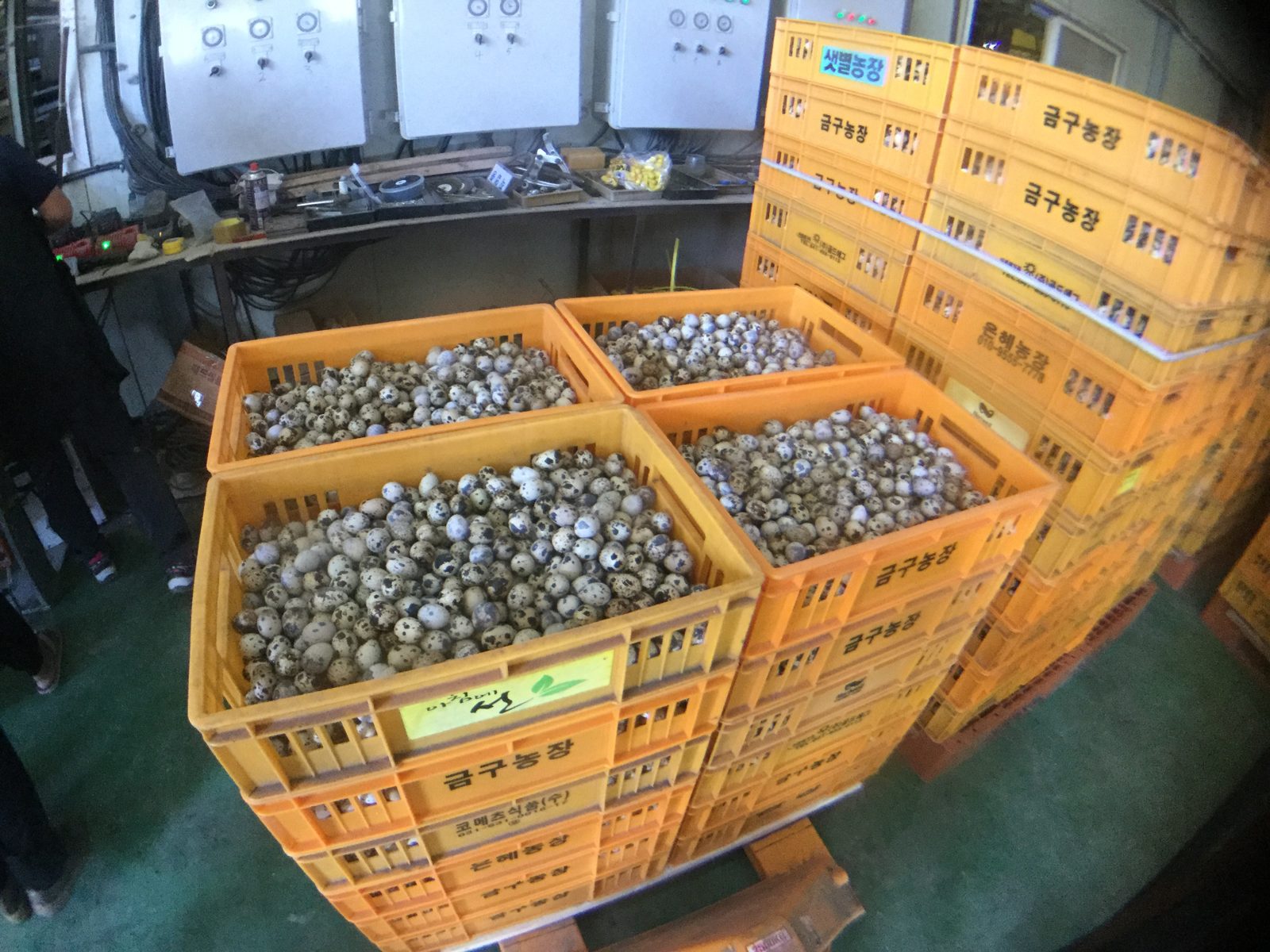
Quail Waste Becomes Feed at Gokseong's New Model Farm

A large quail egg farm in Gokseong was building, with the county, a model farm for pigs, hens and cows beside its quail houses. Dr. Hoon Park interpreted as the hosts and Master Cho explained the deep sawdust floor (soil, salt, sea water), a ventilation roof from Cho's research center, and a feed plan built on the farm's own waste: about 8 tons of quail manure a day. The visit ended at the owner's seven-year-old ginseng, grown under shade with Microbes (IMO).

Found Natural ventilation keeps the pens from getting too hot

cattle feed ginseng microbes pigs poultry

Field trip Master Cho Han-kyu (interpreted by Dr. Hoon Park) ·South Korea ·85 min Spoken in Korean

One IMO4, Three IMO5s: Match the Plant's Stage

After the farm visits of October 6, 2016, Master Cho Han-kyu gave the field-trip group an evening lecture, interpreted by Dr. Hoon Park, on one idea: IMO5 is not one recipe. The IMO4 base stays the same, and what goes in depends on the crop's stage: fish protein for early growth, calcium phosphate from charred bone for the changeover, calcium from charred shell for maturing. He worked it through with corn (calcium phosphate about a week before the changeover, day 58 of 180), then covered seawater at 1:30, a vinegar, LAB and yeast tonic, and an alcohol, mugwort and dropwort recovery mix with doses for pigs.

Found Corn, sugarcane and rice, the grass family, carry about 15–16 leaf layers

corn food microbes minerals nutritive cycle pigs