
Konkuk University, Seoul · October 5–7, 2016

Natural Science Farming Symposium 2016

A day of talks in Seoul, then two days on the farms. 23 talks, three languages. Master Cho's students from ten countries showed what natural farming did on their fields, from Afghan potatoes to Hawaiian macadamias. Every talk is translated, checked line by line, and boiled down to what was tested and what happened.

Read what it all adds up to →

Also on the record: Hilo 2015

Topics microbes soil economics pigs poultry rice history corn food scale disease feed health minerals protectors reproduction Clear

2 talks on “pepper”

Se-Chul Chun ·South Korea ·25 min

Feeding the Good Bacteria Cut Pepper Root Rot to 6%

A Konkuk plant pathologist, new to natural farming, reviews biological control of soil-borne disease and shows his own work: bacteria coated on rice seed against seedling rot, and bacteria against Phytophthora root rot of pepper, both working better when given a sugar the bacteria can use and the pathogen cannot. He then gives first, unreplicated microbe counts from the Paju natural farming soils and from each IMO step: counts fell about tenfold from IMO1 to IMO4 and the fungi shifted from Aspergillus to Rhizopus. He draws no conclusion about natural farming yet.
Found Pepper root rot: 81% with the pathogen alone, 22% with bacterium KJIR5, 6% with KJIR5 plus arabinose

biological control disease microbes pepper research rice

Field trip Kim Eun-ja (interpreted into English by Dr. Hoon Park) and Ahmad Jawid Zamany ·South Korea ·54 min

Build the Soil First: A Chemical Field's First Natural Year

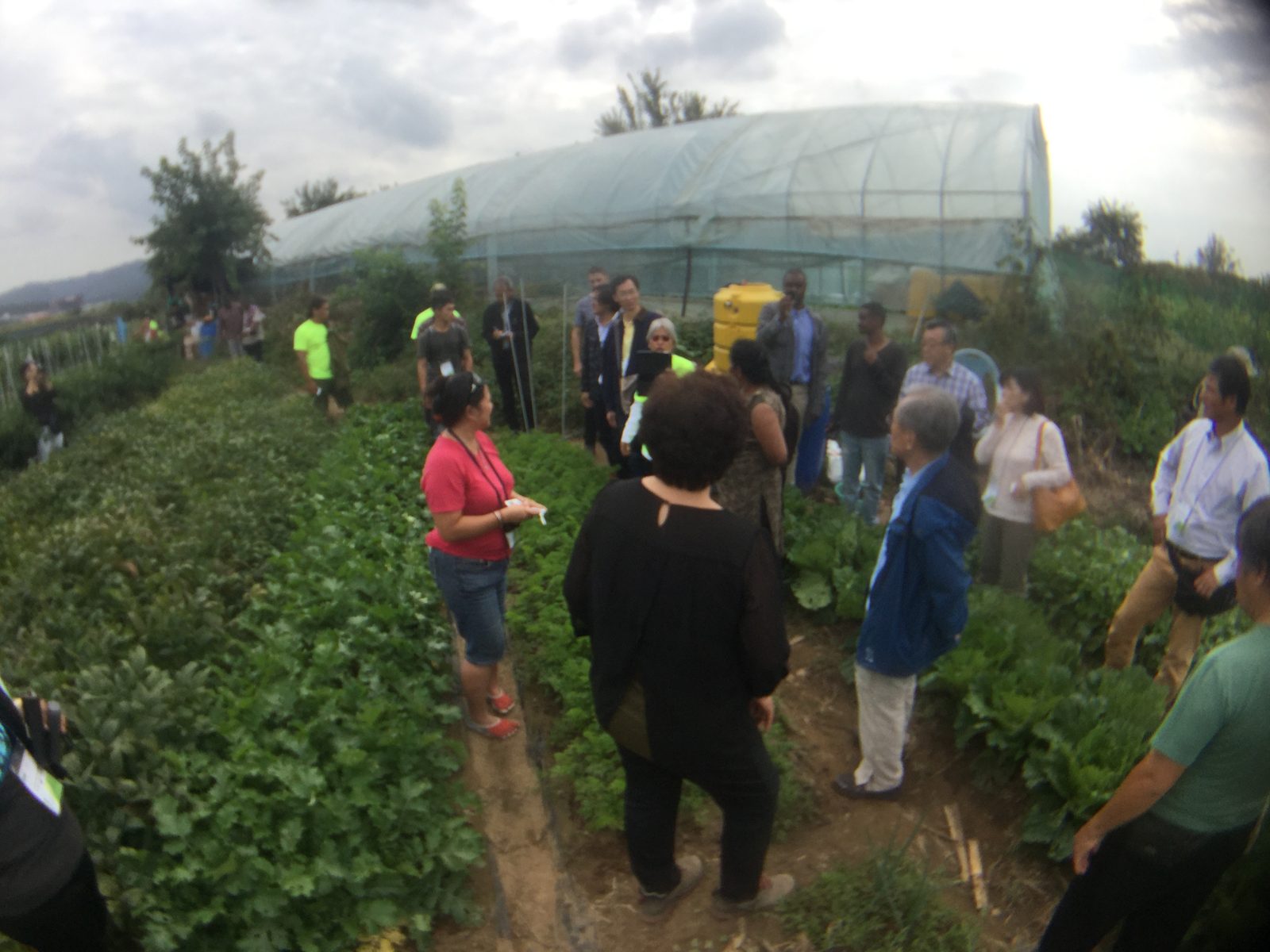
The trip's last farm: Konkuk's natural farming practice field in Paju, where the students' trials from the talks grew. Ahmad Jawid Zamany showed his tomato, eggplant and pepper plots under three systems; in October the natural rows were still flowering and fruiting while the others had nearly stopped. Kim Eun-ja then walked the group through her first natural year on ground farmed with chemicals for decades: careful soil groundwork, her own Microbes fertilizers (IMO5), crop residue returned to the field, and the tomatoes she over-fed with nitrogen.

Found Natural tomato, eggplant and pepper rows still flowering and fruiting in October; organic and conventional had almost stopped

corn ginger microbes pepper poultry soil