Konkuk University, Seoul · October 5–7, 2016

Natural Science Farming Symposium 2016

A day of talks in Seoul, then two days on the farms. 23 talks, three languages. Master Cho's students from ten countries showed what natural farming did on their fields, from Afghan potatoes to Hawaiian macadamias. Every talk is translated, checked line by line, and boiled down to what was tested and what happened.

Read what it all adds up to →

Also on the record: Hilo 2015

Topics microbes soil economics pigs poultry rice history corn food scale disease feed health minerals protectors reproduction Clear

4 talks on “tomato”

Teruhiko Sawamura ·Japan ·23 min Spoken in Japanese

Kumamoto Grower: Wild-Grass Compost Cut Tomato Wilt

Teruhiko Sawamura grows organic greenhouse tomatoes in Shiranui, Kumamoto, using natural farming he learned from Master Cho. He builds soil with riverbank reeds and grasses aged three years into low-nitrogen compost, plus home-made bokashi made on a clay floor, and sprays a home-made plant extract with brown rice vinegar and seawater. He reports much less bacterial wilt, organic tomatoes shipped in the scarce autumn season from ten years of his own saved seed, and support from the Kumamoto governor after the 2016 earthquake. It is a farm report with photos; no trial data were shown.

Found Bacterial wilt of tomato dropped a great deal

cleanser disease economics food minerals rice

Ahmad Jawid Zamany ·Afghanistan ·14 min

Natural-Farmed Tomatoes Fruited a Week Sooner, Yielded More

A one-season tomato trial (cv. Sunglove) in Paju compared Natural Science Farming, organic and conventional plots. The natural plots started slower but ended with taller plants, more leaves, longer roots, first harvest about a week earlier and the highest marketable yield: 3.80 kg per plant against 3.42 organic and 3.12 conventional. They also scored lower for blossom end rot and insect damage and higher for taste and appearance.

Found Highest marketable yield: 3.80 kg/plant vs 3.42 organic and 3.12 conventional

fruit quality microbes pests tomato yield

Morning presenters, with questions from the floor ·22 min

Q&A: From 50-Ton IMO Piles to Strong Calcium on Potatoes

A short Q&A after the ten morning talks. Chris Trump explained how he moved from 50-ton piles of Microbes (IMO) to small IMO3 batches brewed into liquid IMO; a Hawaiʻi taro grower described IMO4 in flooded fields; the Konkuk students explained their trial designs, how liquid IMO was made for the peanut trial, where the tomato trial's phosphorus came from, and why the potato trial used water-soluble calcium six to nine times stronger than the usual 1:1000. Several questions went unanswered for lack of time or because the presenter had left.

Found Chris Trump has made about 70–75 tons of IMO over three years, not every year

microbes potato reproduction scale soil taro

Field trip Kim Eun-ja (interpreted into English by Dr. Hoon Park) and Ahmad Jawid Zamany ·South Korea ·54 min

Build the Soil First: A Chemical Field's First Natural Year

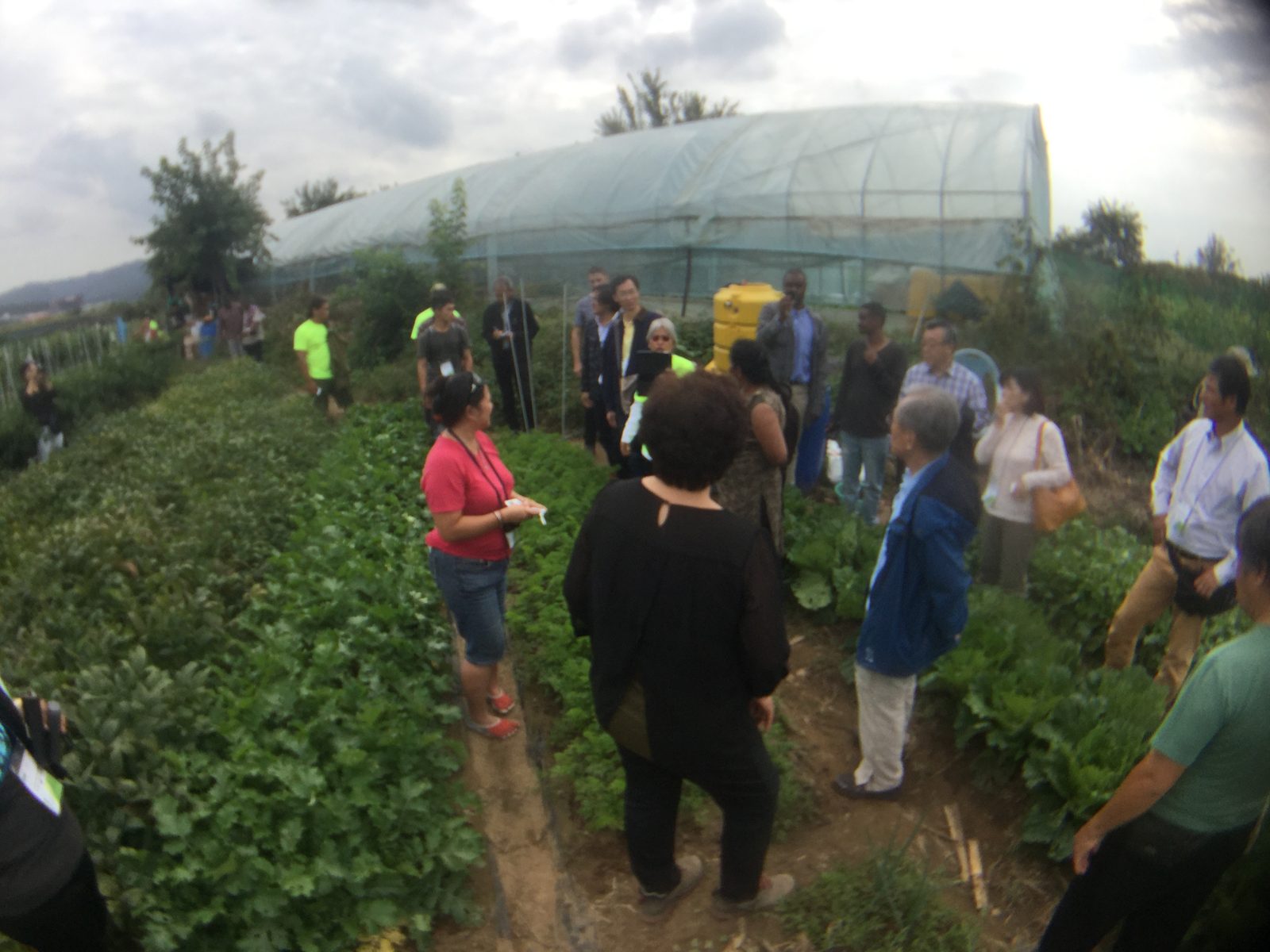
The trip's last farm: Konkuk's natural farming practice field in Paju, where the students' trials from the talks grew. Ahmad Jawid Zamany showed his tomato, eggplant and pepper plots under three systems; in October the natural rows were still flowering and fruiting while the others had nearly stopped. Kim Eun-ja then walked the group through her first natural year on ground farmed with chemicals for decades: careful soil groundwork, her own Microbes fertilizers (IMO5), crop residue returned to the field, and the tomatoes she over-fed with nitrogen.

Found Natural tomato, eggplant and pepper rows still flowering and fruiting in October; organic and conventional had almost stopped

corn ginger microbes pepper poultry soil