Build the Soil First: A Chemical Field's First Natural Year
Kim Eun-ja (interpreted into English by Dr. Hoon Park) and Ahmad Jawid Zamany, Kim Eun-ja's natural farming test farm in Jeokseong, Paju, the Konkuk University natural farming practice field where the students' 2016 trials grew · South Korea
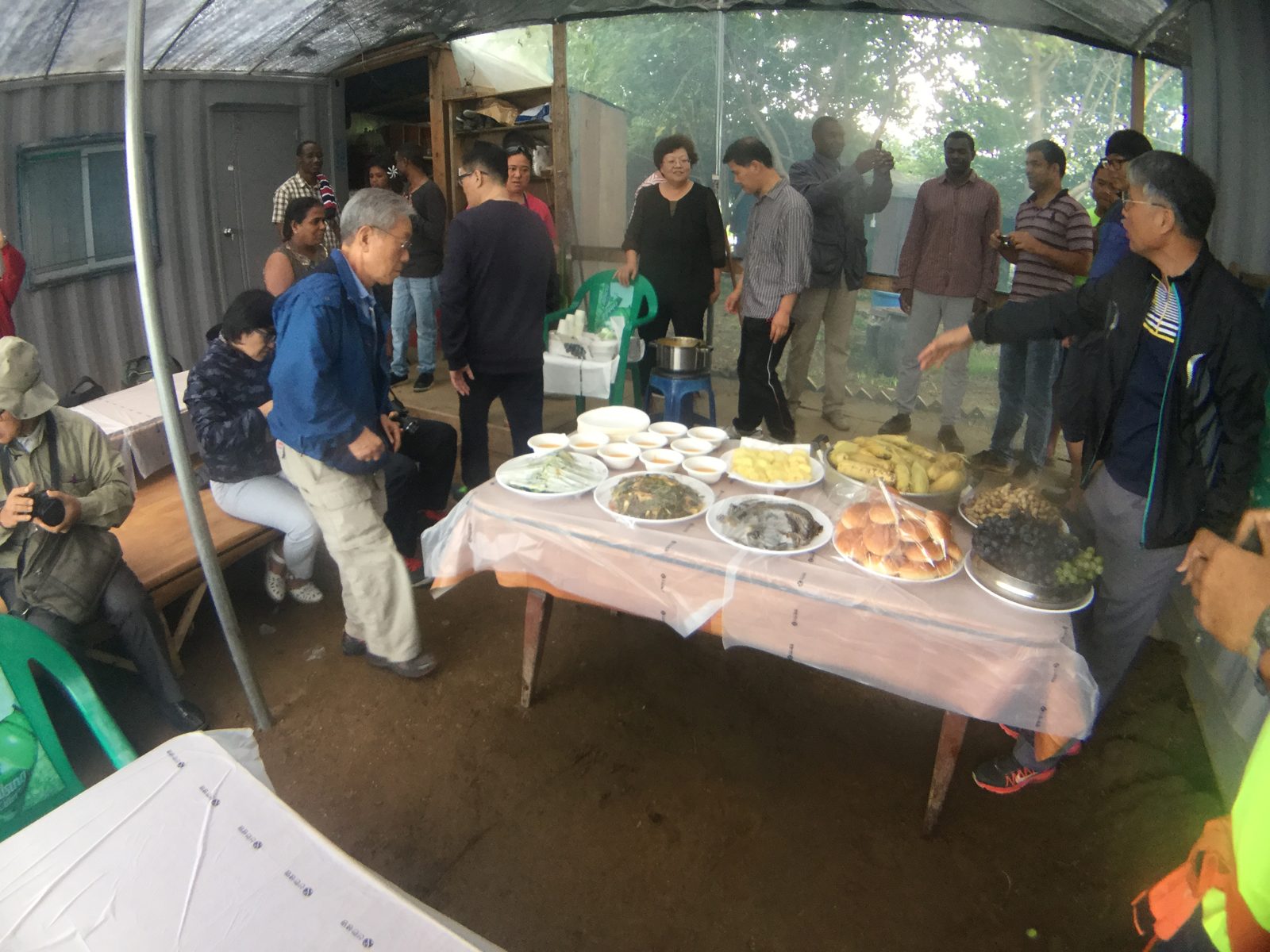
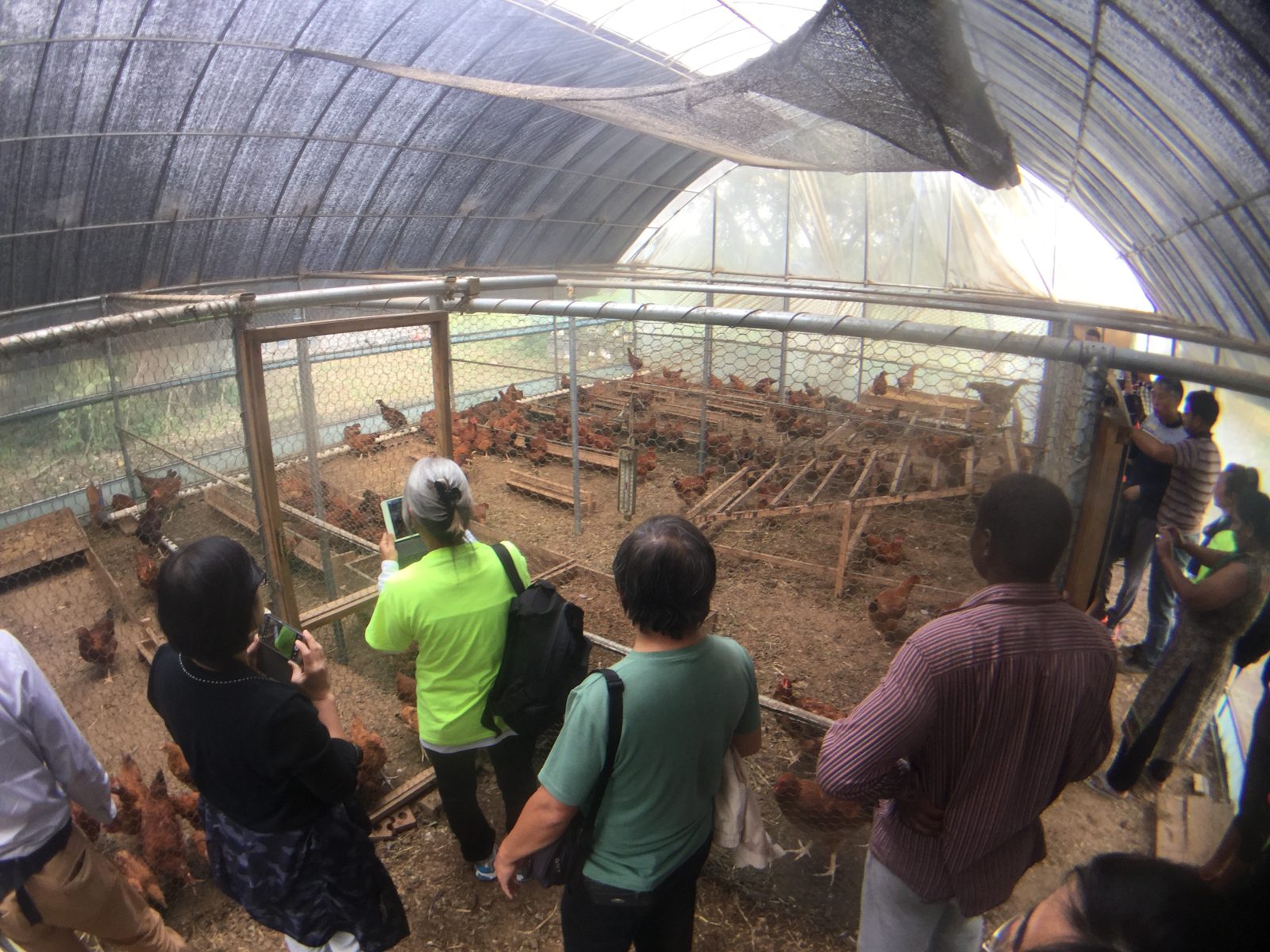
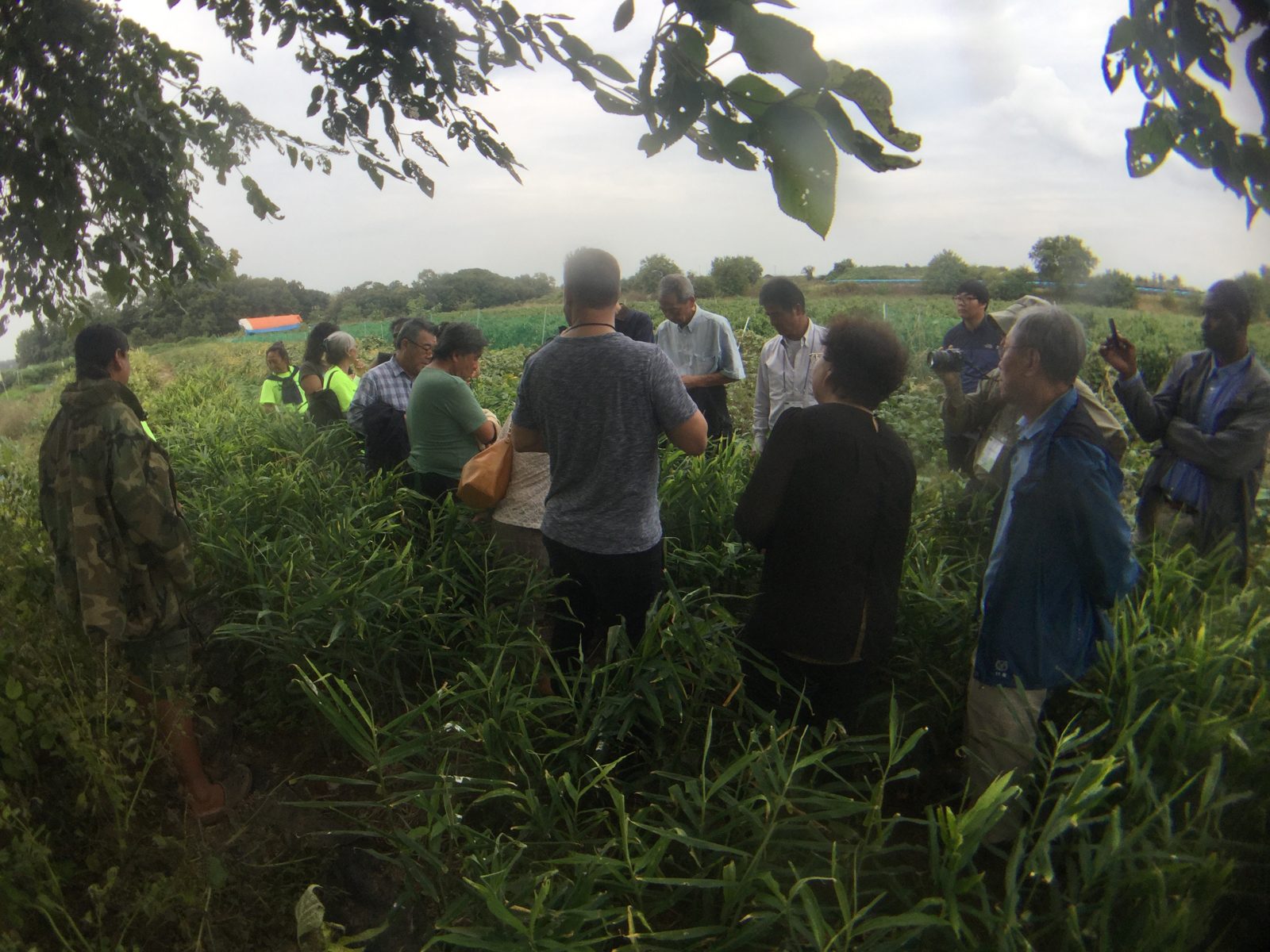
Video of this visit will be added to the members' archive. The transcript times below match that recording.
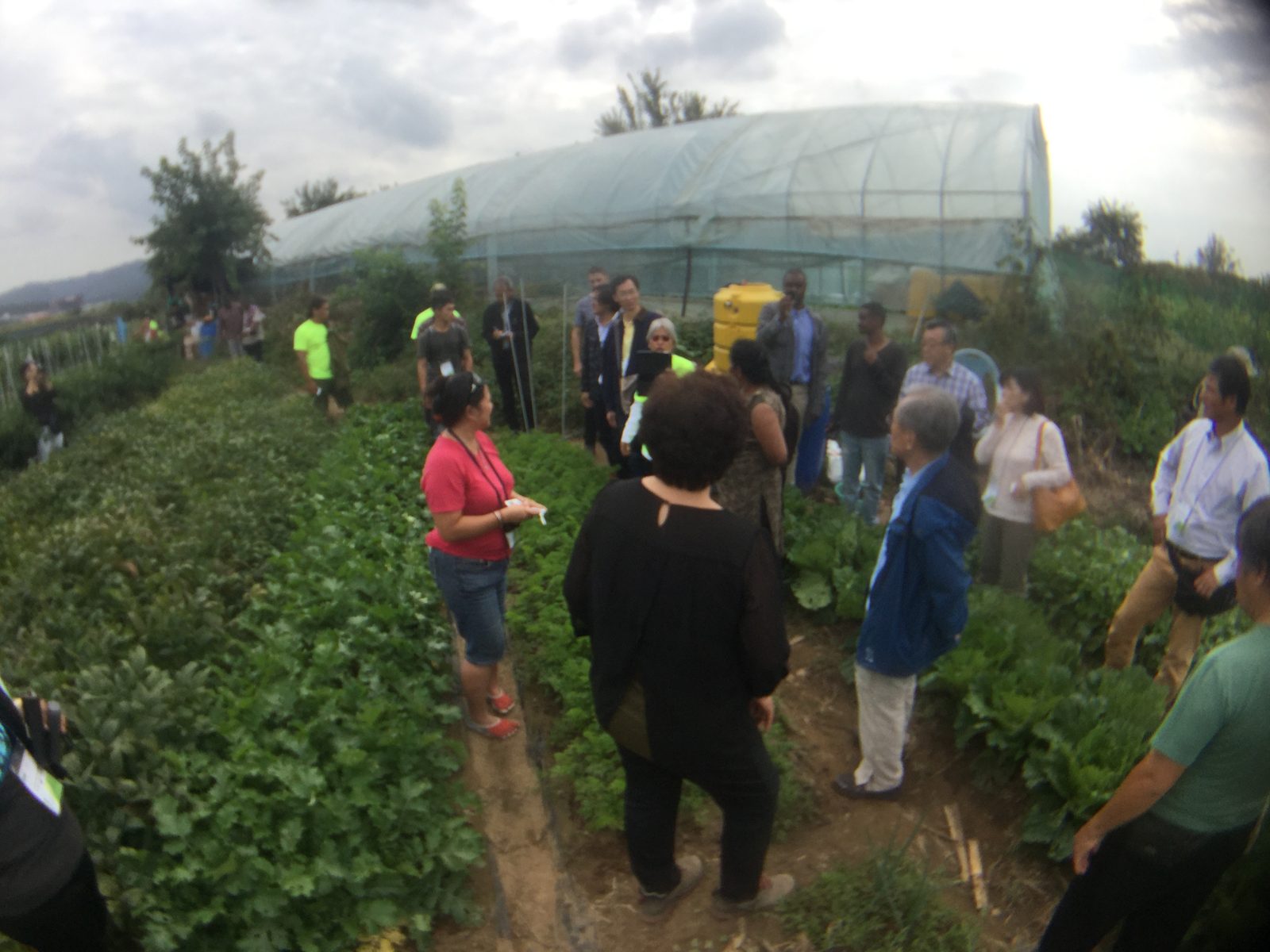
The trip's last farm: Konkuk's natural farming practice field in Paju, where the students' trials from the talks grew. Ahmad Jawid Zamany showed his tomato, eggplant and pepper plots under three systems; in October the natural rows were still flowering and fruiting while the others had nearly stopped. Kim Eun-ja then walked the group through her first natural year on ground farmed with chemicals for decades: careful soil groundwork, her own Microbes fertilizers (IMO5), crop residue returned to the field, and the tomatoes she over-fed with nitrogen.
What they found
What the Konkuk practice field in Paju looked like at season's end, where the students' trials from the talks grew and Kim Eun-ja runs her test farm, and what its growers learned in their first natural year.
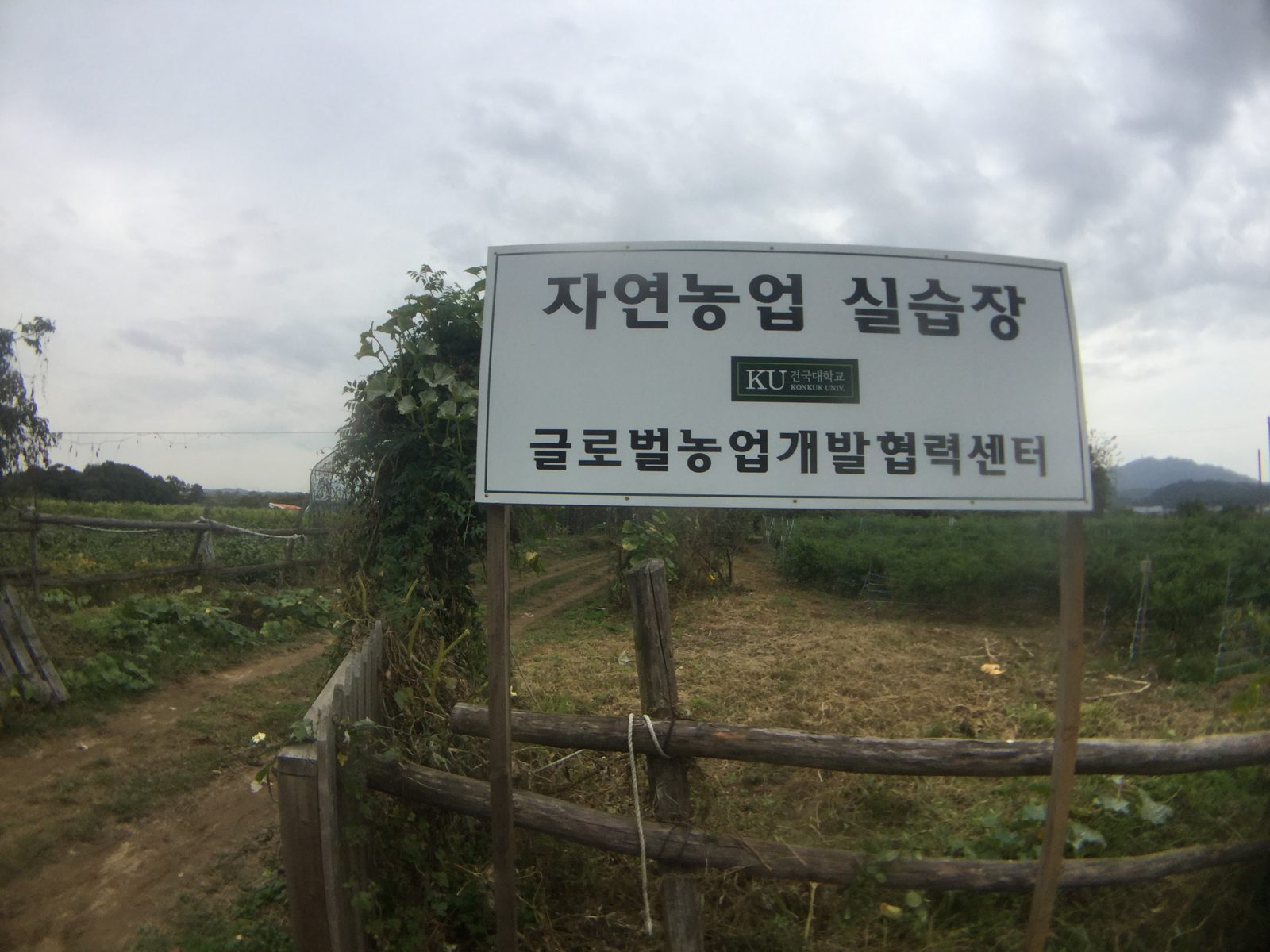
Konkuk University's natural farming practice field (gate sign 자연농업 실습장, KU 글로벌농업개발협력센터), Paju, Gyeonggi Province; visited the afternoon of October 7, 2016, about 13:10 to 15:12 by photo times. Kim Eun-ja runs it as her test farm (talk 21: close to 1,000 pyeong, about 3,300 m², in Jeokseong, Paju). The ground grew napa cabbage and radish for decades with chemical fertilizer and pesticides; natural farming began in March 2016. Seen on the walk: Zamany's conventional, organic and natural plots of tomato, eggplant and pepper (talks 07, 08); corn, peanuts, sesame, perilla, soybean, napa cabbage, radish, carrots, green onion, chives, ginger and lettuce; hens in a shade-covered hoop house; rabbits in wire cages; a small shed of farm-made solutions; a greenhouse holding IMO4 and feed IMO5. First pass with a tiller, all later work by hand. Not stated: field or bed sizes, yields, rates or dilutions for any solution.
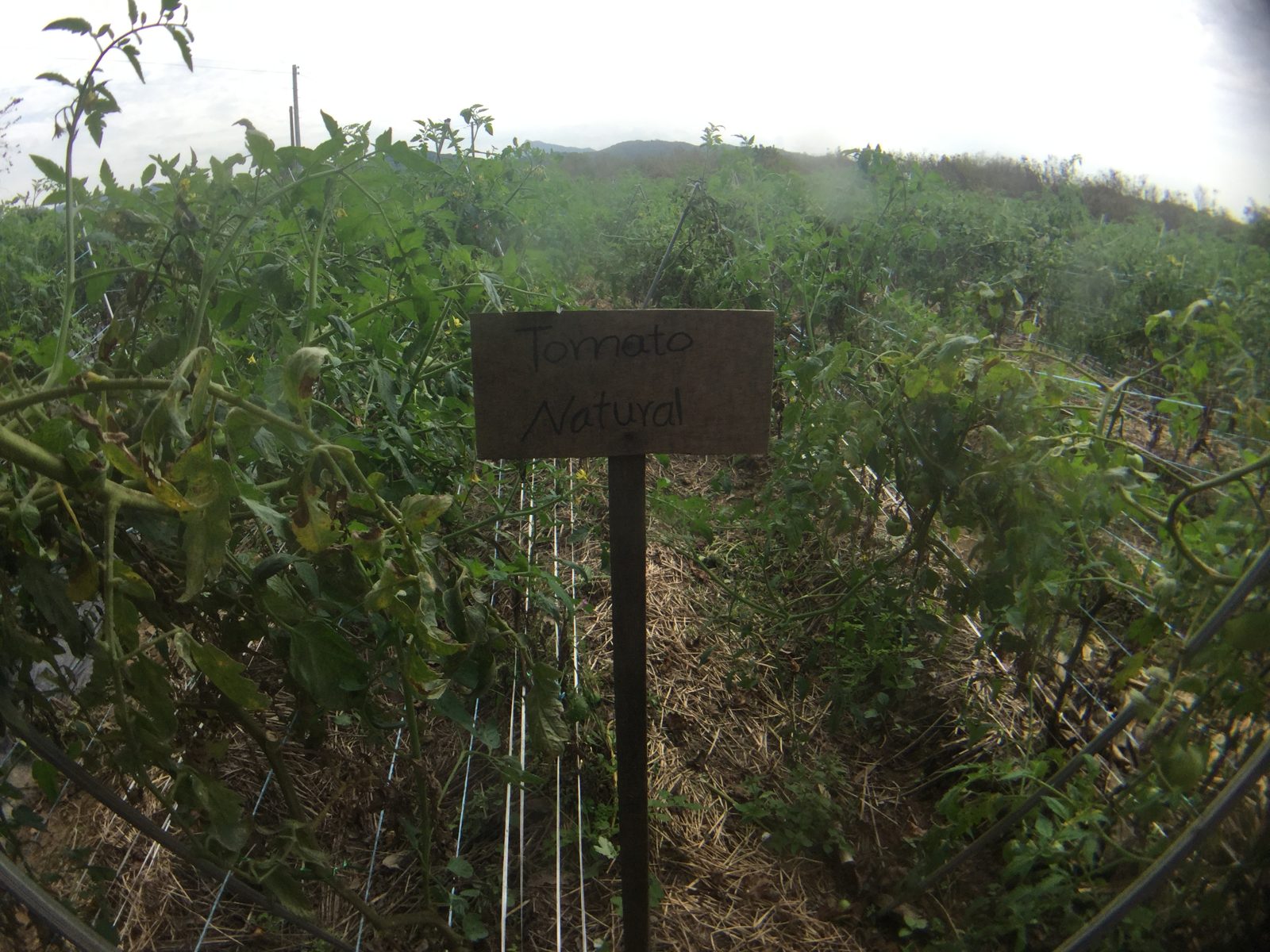
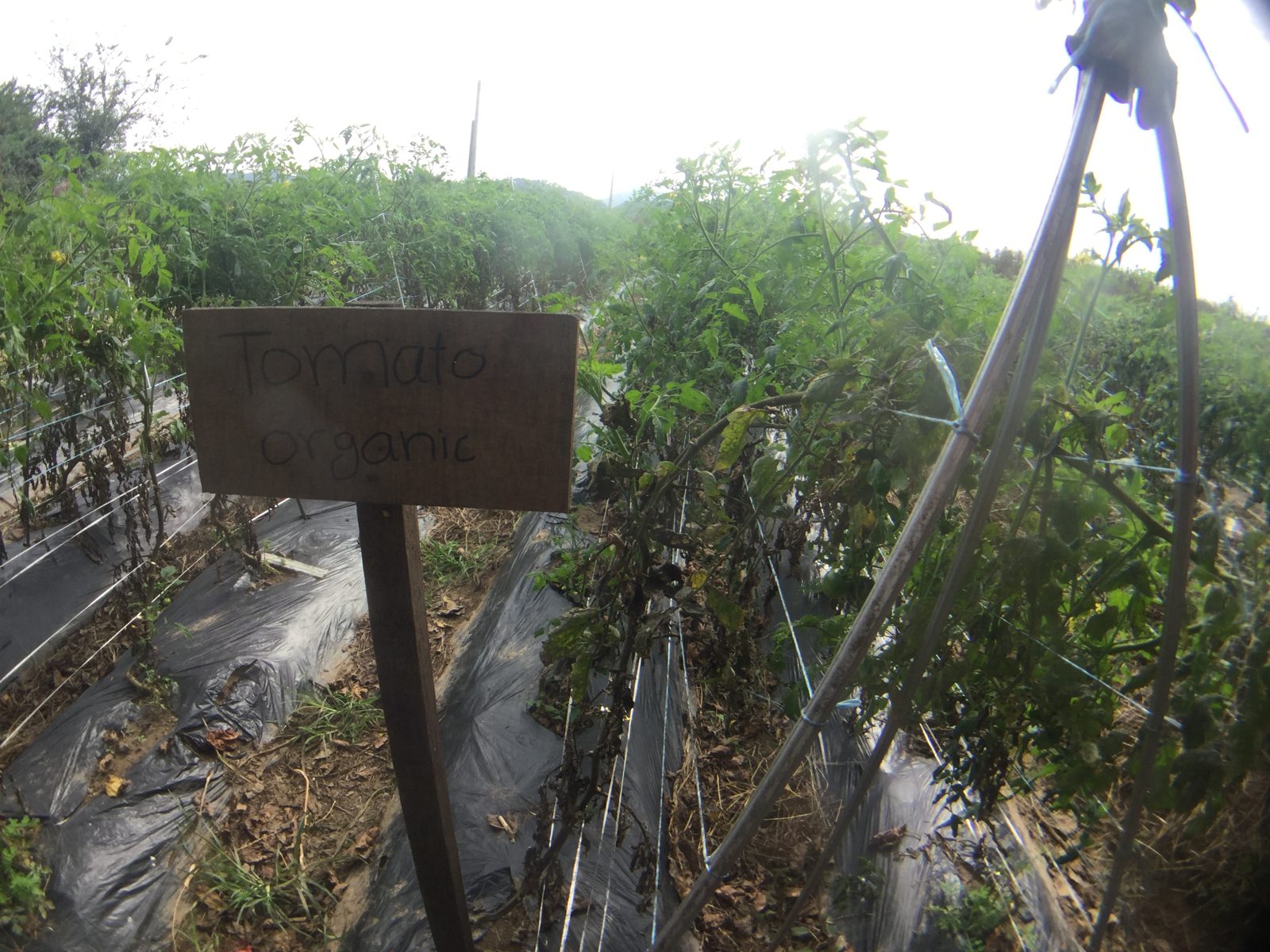
- Zamany's three systems (tomato, eggplant, pepper) — Conventional: nitrogen, phosphorus, potassium and calcium, given before planting and one month after planting. Organic and natural rates not given on the walk; talk 07 says the natural plots used Microbes (IMO4). Black plastic mulch on the beds; conventional rows under a plastic cover. Data taken from the middle row of each plot.
- Mulch on peppers after a cold start — Mulch to keep the soil warm; the peppers did not grow for the first month because it was cold. Mulch type not stated; straw and black plastic both visible.
- Second corn crop for feed — Corn sown a second time on the same ground to feed the chickens and animals. Charcoal went in before the first planting, not the second.
- Peanut companion planting — Peanuts between shishito peppers and between cherry tomatoes. Spacing was too tight; next time about 1 m.
- Kim Eun-ja's tomatoes and peppers — IMO5 kept light where the soil already had enough nitrogen. No natural pesticide ever on the tomatoes; some natural pesticide on the peppers (name unclear). Dilutions adjusted by how the plants looked; rates not given.
- Soil foundation (groundwork) — Built 3 to 4 months before planting, then covered with a sheet; no spraying or watering until sowing. Seedlings given solutions at varied, stronger dilutions. A strip done the ordinary way sits beside it for comparison.
- Nitrogen IMO5 — Oil cake, sesame cake, fish scraps and quail droppings (one more word unclear, possibly chicken manure), made with IMO4/IMO5. Rates not given.
- Phosphorus IMO5 — Rice bran and bone meal. Rates not given.
- Potassium IMO5 — Burnt rice hulls (rice-hull charcoal) and wood ash; because that was not enough, chemical potassium chloride and potassium sulfate were mixed in.
- NPK compound — The N, P and K batches combined, 'IMO4 plus IMO5', in equal shares of N, P and K (no amounts given), and scattered on the soil (뿌리다; the interpreter said 'spray', but IMO5 is solid). IMO5 given monthly to the chive bed in summer and to green onions sown thickly in spring.
- Liquid fertilizer when leaves pale — When leaf color lightens, she sprays a liquid fertilizer; one ingredient word is unclear. No dilution given.
- Crop residue returned — Corn roots and stalks piled under shade cloth and leftover eggplant and other plants in a barrel make a liquid fertilizer (water at first, then rain), spread before replanting the same crop. Planned for 2017: this year's corn stalks cut fine and returned to the corn field, compared with corn on ordinary compost.
- Ginger for the herbal nutrient — Planted in May for Medicine (OHN); mulched with corn stalks; should have been hilled up repeatedly but was not, for lack of time. Not watered: a river beside the plot keeps it moist.
- Chicken-feed IMO5 — Made in separate layers in wooden rice-bran bins and a straw-covered heap in a greenhouse, covered with felt blankets; mixed only when taken out to feed the chickens. Rabbit droppings are not used.
- Hornet traps (seen, not explained) — Cut plastic bottles hung among the peppers, holding liquid and drowned hornets. Bait not stated.
-
Natural tomato, eggplant and pepper rows still flowering and fruiting in October; organic and conventional had almost stopped
Ahmad Jawid Zamany on his three-system plots (talks 07 and 08). He added that the leaves feel and smell different. Shown in the field, not measured.
▶ 2:33 As spoken
-
Peppers stalled a month in the cold, then caught up: fewer leaves, more fruit
A Korean speaker at the pepper plots (not identified) says mulch kept the soil warm after the cold start and the plots have since evened out.
▶ 6:03 As spoken
-
Buyers picked the natural tomatoes in an unlabeled test
Zamany gave customers fruit from all three systems without saying which was which; they chose the natural for its shape. Size of the test not stated. Fits talk 07's higher taste and appearance scores. Quality analysis (vitamins, carotenoids, fatty acids, nutrients) still to come.
▶ 9:49 As spoken
-
Peanuts beside shishito peppers and cherry tomatoes: peppers grew so hard half had to be cut back
The grower, most likely Kim Eun-ja, will try 1 m spacing next time. She and the interpreter credit the peanuts' nitrogen for peppers still flowering in October as it cools. Not measured.
▶ 12:59 As spoken
-
Over-fed tomatoes showed nitrogen excess: 'that's why I told you my tomatoes failed'
Kim Eun-ja, matching her talk (21): the tomatoes she planted further over got a lot of nitrogen. On the tomatoes shown she held back IMO5 because the soil already had enough nitrogen, and said the fruit color was beautiful.
▶ 16:46 As spoken
-
No natural pesticide ever went on these tomatoes; the peppers got some
She adjusted dilutions by how the plants looked. Bugs came sometimes, 'but not enough to worry about'.
▶ 18:25 As spoken
-
Decades of chemicals, natural farming since March 2016: no earthworms at first, a few now
She calls it a field in transition. Cabbage and radish still draw many bugs because the land grew them for so long. Earthworms not counted.
▶ 19:21 As spoken
-
A bed built with great care held up under heavy insect pressure; the ordinary strip beside it did worse
Soil foundation made 3 to 4 months before planting, covered, no spraying or watering. Insects came in numbers but 'couldn't wipe it out'. She points to a strip prepared the ordinary way beside it (1451 s), and later a poorly prepared patch 'is gone' (1615 s). By eye only.
▶ 21:29 As spoken
-
Green onions grown with IMO5 had a fragrance eaters called new to them
One of her best IMO5 results. 10,000 won of seed (the interpreter said 'about $10') sown thickly in spring gave, she says, a large harvest. Not weighed.
▶ 25:44 As spoken
-
Corn residue and leftover crops go back as liquid fertilizer, not out as waste
Residue of corn removed midway was gathered under shade cloth and made into liquid fertilizer; leftover eggplant and other plants go into a barrel. She ties this to Master Cho's teaching that you must eat what comes out of your own body. Next year she will compare corn on its own chopped residue with corn on ordinary compost and expects 'quite a difference'.
▶ 29:07 As spoken
-
Barely tended ginger still grew; she says hilling decides how much it sets
Planted in May for the herbal nutrient. With no time to hill it, new shoots kept coming instead of more rhizome. Locals told her ginger does poorly in the area. Harvest expected in about 20 days because of the cold.
▶ 34:43 As spoken
-
Host's claim: no continuous-cropping disorder in natural farming, if the soil is alive
Asked about growing ginger on the same ground every year (a Taiwanese visitor said they rest a field a year after each crop), she says natural farming can crop every year, but without bringing the soil back to life you get a year or two at most. A visitor adds a nematode-balance explanation. No data shown.
▶ 40:31 As spoken
-
The neighbor's peppers drooped and wilted beside the natural plot
Kim and a visitor point to the neighbor's field next door. Visual only; the neighbor's practices were not described.
▶ 41:37 As spoken
-
Chives were IMO5's best result: cut monthly in summer, same color, sweet
The chive pancakes served at the snack were made from this bed.
▶ 43:59 As spoken
-
Her potassium IMO5 included bought chemical potash because the ash was not enough
Rice-hull charcoal and wood ash, plus chemical potassium chloride and potassium sulfate. Stated plainly by her and the interpreter.
▶ 46:20 As spoken
-
Feed IMO5 under straw was warm, not hot
Visitors dug into the straw-covered heap and the wooden rice-bran bins in the greenhouse: 'fermenting, but not burning'. IMO5 for feeding the chickens, with IMO4 underneath. No temperature measured.
▶ 50:53 As spoken
- Nothing was measured on the walk. Every result is the hosts' word or a side-by-side seen by eye.
- First season on this ground (since March 2016), after decades of chemical farming. One year says little about what the field will do.
- Zamany's numbers are in talks 07 and 08; here he only described the plots. Kim's ordinary-versus-careful beds and the neighbor's field are not controlled comparisons.
- No rates or dilutions were given for IMO5, the liquid fertilizers or the natural pesticide.
- Her potassium IMO5 included chemical potash, so her crops did not run on farm-made materials alone.
- Translation was partial. Kim spoke Korean and was interpreted in pieces; the Korean was rebuilt from two machine passes and a re-run, and several lines stayed unclear (see uncertain).
- A walking tour: wind, overlapping talk and several languages at once. Some speakers are not identified.
- Build the soil before you plant. She prepared hers 3 to 4 months ahead, covered it, and says the plants show where she cut corners.
- Go light on nitrogen. Her over-fed tomatoes failed; where the soil already held enough, she gave less IMO5.
- Try peanuts between peppers or cherry tomatoes, and give them room, about 1 m.
- Return a crop's own residue to its field, as liquid fertilizer or chopped stalks.
- Hill up ginger as it grows if you want rhizomes, not just shoots.
- A field just off chemicals will draw bugs. She planned to share with them while the soil recovers rather than spray.
Next to Master Cho's teaching
-
Agrees
Too much nitrogen spoils fruiting; she held back IMO5 Cho writes that late nitrogen causes poor floral differentiation and fruit bearing, leaving crops stuck in vegetative growth. Her over-fed tomatoes failed, and she cut IMO5 where the soil already had enough nitrogen.
Cho, Cho Han-Kyu's Natural Farming (Theory), p. 119–120
-
Agrees
Share with the bugs; healthy plants weren't wiped out Cho: natural farming aims to co-exist with pests rather than kill them all, and pests flourish where crops are acidic or have too much nitrogen. Her 'this time we share with the bugs' fits this.
Cho, Janong Natural Farming (2003), p. 164
-
Goes further
Soil foundation built 3–4 months before planting Cho's schedule puts IMO4 down one week before seeding, or two weeks in fields with continuous-cropping problems. She prepared the ground months earlier and kept it covered. That is longer than Cho asks, and suited to her first year on a long-chemical field.
Cho, Cho Han-Kyu's Natural Farming (Theory), p. 62
-
Agrees
No continuous-cropping disorder once the soil is built Cho's Theory book gives IMO4 soil-making schedules both for fields with and without successive-cropping disorder. He treats the disorder as something soil groundwork corrects, which is her claim: it works only if you bring the soil back to life.
Cho, Cho Han-Kyu's Natural Farming (Theory), p. 62
-
Agrees
Return the crop's own residue to its field ('eat your own') Cho repeats the maxim 'unless you eat your excreta for three years...', and in the 2017 nutrient-cycle course he has corn cut and laid down on its own ground after IMO4. Her plan to grind corn stalks back into the corn field follows this.
Cho, IMO and Vital Power of Crops and Livestock, p. 17–18
-
Differs
Chemical potassium chloride and sulfate added to the K IMO5 Natural farming swaps chemical N, P, K and Ca for farm-made materials. Mixing bought potash into IMO5 departs from that, though she said so openly.
Office Hours/Recordings - Video/oh074-230507 @ 1:04:00
“I didn't say to them, this is natural. I said to them, which one is the best for you? And they selected the natural.”
▶ 10:02
“This time we have to share it with the bugs.”
▶ 20:42
“When you really take care with the soil foundation, it's completely different.”
▶ 24:24
“If you don't bring the soil back to life, you can't do natural farming. You can do it for a year or two.”
▶ 41:06
“It is fermenting, but not burning.”
▶ 51:11
In this talk
- 0:00Arrival and snack prayer
- 0:30Past peanuts, sesame and perilla
- 1:55Zamany's three systems: tomato, eggplant, pepper
- 3:58Questions: fertilizer records, quality analysis
- 5:44Peppers after a cold start
- 8:08Natural rows still fruiting
- 8:56Corn for feed; the blind taste test
- 11:09The hen house
- 12:59Peanuts with peppers and cherry tomatoes
- 16:24Kim Eun-ja: too much nitrogen, failed tomatoes
- 18:25No sprays on tomatoes; a field in transition
- 21:29Soil foundation, 3 to 4 months ahead
- 25:21IMO5 green onions and careful groundwork
- 27:00Corn residue back into the corn field
- 30:11Hand-made beds; residue liquid fertilizer
- 33:31Ginger for the herbal nutrient
- 35:48Same crop every year? Nematodes and soil
- 41:37The neighbor's wilted peppers
- 43:13Rabbits and the input shed
- 43:59Chives: IMO5's best result
- 45:01Her N, P and K IMO5 recipes
- 48:56IMO4, IMO5 and chicken feed in the greenhouse
- 53:32Back to the bus
Transcript
English translation, checked against the English as spoken.
0:11 For snack, they prepared this for us. And Pastor Park will pray for this snack. Let's pray. Chinese cabbage, soybean, and peanut, and sesame. Perilla, perilla. So this is what a peanut looks like? The peanuts are down in the ground. Oh, look at that. What is that?
들깨, 들깨 피넛이 이렇게 생겼어요? 피넛은 바닥에 있어요
0:56 Oh, I see it, I see it. Yeah, the round kind of leaf. Yeah, it looks like little round ones. Yeah, yeah. And they grow in the ground, the peanuts. Which one was the peanuts? The leaf kind of looks like moringa. Moringa. Yeah, kalamungay.
1:54 Good afternoon. I'm going to explain very briefly my experiment here. I have three systems: conventional, organic and the natural. This is the tomato experiment. And also I have there eggplant. Eggplant also, three systems. I want to compare the plant performance here. So now I have another experiment, for pepper, chili. Also three different systems I want to compare. So this is the natural. We can see they still have a lot of fruits and flowers they are producing, but I don't know the weather let them to ripe or not.
2:42 And this is the... behind you is the organic and conventional. The rows are conventional. Sweet potato too. This side is tomato, pepper and eggplant. So this is like a university experimental farm. Here is natural farming, and back this way is organic and conventional farming. If you look here, there are still flowers and fruits. This side has almost no more flowers, but this side is still growing.
이쪽이 토마토, 고추, 가지인데요. 여기가 지금 자연 농업, 이쪽 뒤가 유기농업하고 관행 농업이 되겠습니다.
3:30 They keep flowering and fruiting, but organic and conventional almost stopped. And if you touch, smell and touch the leaves, very different. This one is organic, though? Yeah, this one is organic, and conventional, with a plastic cover. Any question? For each system, conventional, organic and natural, we followed all the recommended systems. We had a corn, but we harvested it. Do you have a detailed fertilizing record?
4:19 Detailed fertilizer record, like what you put on here? Conventional, we put nitrogen, phosphorus, potassium and calcium. This is not natural; this is strong. Before planting, and then one month after planting. After doing the experiment, what are you analyzing? The yield, or something else? I am going to analyze the quality, some things like vitamins, some [unclear] content, carotenoid content, as well as fatty acid content, and nutrients.
5:05 He presented it in the morning. You can take a look at the book. Then you will tell the details: analyze what kind of nutrient, and how to use it. OK, let's go to the eggplant. Shall we look at the others too? This side is better.
다른 것들도 한번 볼까요? 이 쪽은 더 좋아요.
5:52 We need to see that too. Zamany! The peppers... So, more fruit. At first, this one... because it was cold... Now they've become much more alike, fewer leaves, but a bigger harvest.
그것도 봐야 되네 자마니! 고추는 그래서 더 많은 fruit 처음에 이게 추워가지고 지금은 많이 비슷해졌고 잎은 적어도 수확량은 더 많게
6:48 Ah, because it was mulched, it's warm. So for the first month, this one didn't grow for a whole month. So to secure the temperature there, you have to think about that too. Right. And it's colder here. Yes, right, it's colder. That's the problem.
아 그 멀칭 했으니까 따뜻하니까 그러니까 처음에 한 달 동안 얘가 한 달 동안 자라질 않았어요 그러니까 저기에 그 온도를 확보하기 위해서는 그것도 생각해야 돼요 맞아요 그리고 여기가 더 추워가지고 네 맞아요 더 추워가지고 그런 게 문제예요
7:43 Because this is a hybrid. The transplant date was July 17. No, no. August, August. So this is his natural farming row. And supposedly there's more fruits on it. Still putting out new things. This is some organic, still got some.
왜냐하면 이것은 하이브리드입니다. 트랜스플랜트는 7월 17일입니다. 아니요, 아니요. 8월, 8월
8:32 Much softer soil on this side. Plants look okay. Still pretty healthy. Still a fair amount of flowering happening here. This is the second time. Once we planted and we harvested. And this is the second time. They planted this for the... feed the chickens and animals. They are naturally. They grew well.
9:18 Did you put the charcoal here, or was it already there? Earlier. First, when we... For the second time we didn't put the charcoal. Yeah, it was already there. Did anything surprise you in this experiment? Yes: more health, better quality, better shape of the fruit. It was acceptable for the customer. I put three different systems, one natural, one organic and one conventional. I didn't say to them, this is natural. I said to them, which one is the best for you? And they selected the natural.
10:05 This is the best. This has good shape. It's very lovely. And we accepted this. After that I said, this is natural. We can get your contact after you analyze the quality. If you do a quality analysis, then you can see the results. Shall I get your contact?
10:55 This is conventional, one row; this is another row, conventional. I took my data from the middle. So this is the experiment method. Thank you. Let's go to the chickens. That one fell down.
이제 가서 닭으로 가자
11:41 That's the silk from the corn. What are you going to do with it? I don't know.
12:41 They're smaller than that. Three months old. How old? Five months old. The water. The water is different. Shishito peppers and peanuts went well together, and it had a good effect, peanuts and cherry tomatoes. So, very good combination. Peanut with pepper, and then peanut with cherry tomatoes. Very good combination.
꽈리고추와 피넛이 잘 어울려서 좋은 효과가 있었고, 피넛과 방울토마토.
13:29 Peanuts and peppers. With these peppers, I cut the branches back by half. They grew so well, and I hadn't left enough space between them, so I cut half, and then half again. There was nothing else I could do. When she planted peanuts with pepper together, pepper grew so well, so he had to remove the half of the plant. Too much leaves, too much, you know, so she had to remove the half of the stem. Next time I'll try planting them 1 m apart. So next time, more distance, like one meter distance.
땅콩과 고추. 이 고추 같은 경우는 가지를 반으로 잘라 버렸어요. 너무 잘돼서 간격을 너무 넉넉히 안 했기 때문에 반은 다시 반을 잘라버렸어요 어떻게 할 수가 없어요 다음에는 1m 간격으로 한번 심어보려고 합니다
14:23 This is naturally growing. As you can see, it looks very healthy. This is not a healthy time; it should be down. But naturally, this is growing, so it's still healthy. Quite healthy, and still flowering, Pepper is growing very well still. Even the temperature is cooling down, because of this peanut. Peanut produces nitrogen continuously. That's why pepper is still growing. Everyone, please try it. You can try it.
상당히 건강하게 꽃도 피고
16:23 I give number IMO 5. Don't have to give too much, because this one has already enough nitrogen. And the color was so beautiful. The color of the tomato is very beautiful. A lot of nitrogen did no good. Ah, that's because I controlled it. The tomatoes I planted over this way, I gave them a lot of nitrogen, and the tomatoes showed symptoms of too much nitrogen. That's why I told you my tomatoes failed. Too much nitrogen, their [unclear] goes down. She reduced this extra IMO 5 because she doesn't want too much of the nitrogen.
어두운 질소가 많다는 것은 없었어요. 아, 그건 컨트롤을 했으니까요. 토마토 이쪽에 심은 쟤네는 질소를 많이 줬더니 질소 과한 증상으로 인한 토마토의 증상이 나타났어요. 그래서 제가 토마토 실패했다고 그랬잖아요.
17:12 Nitrogen is very hard to manage with tomatoes, as you'd know well, sir. The reason the peppers have stayed this healthy until now The proper amount: you gotta keep on trying, this way, that way. is that the peanuts did their part.
토마토는 질소 조절이 굉장히 까다로우니까 사장님이 잘 아실 겁니다. 고추가 계속 지금까지 이렇게 건강한 거는 역시 땅콩들이 역할을 잘 했죠.
18:18 It's not here now; it's over there. These tomatoes never got a natural pesticide, not once. I used all the natural farming materials, and managed the dilution rates while watching how the plants were doing. But on the peppers I did use natural pesticide. I used [unclear], and the things I could leave out... Weren't there any bugs?
여기는 지금 없는데 저쪽에 있어요. 이 토마토는 천연농약을 한 번도 하지 않았어요. 자연재료는 다 썼어요. 그리고 상태를 봐가면서 희석 배수를 관리하면서 그런데 이제 고추는 썼어요. 천연 농약은. 단짠을 썼고, 또는 좀 빼먹을 수 있는 것들은 벌레는 없었어요?
19:06 There were bugs sometimes. But not enough to worry about. And now, here, this field, for several decades was farmed the conventional way, with chemical fertilizer and pesticides. That's the kind of field it was. In March this year I first started making this soil, this land, the natural farming way. So it's in transition. Just because this land is now natural farming land... This is not a complete natural farming for long years.
벌레가 때로는 있었죠. 그렇지만 걱정할 정도로 그리고 이제 여기가 이 밭이 그동안 몇 십 년 동안 관행으로 화학비료 농약을 주면서 농사지었던 밭이에요. 제가 올해 3월에 처음 자연 농으로 이 흙을, 땅을 만든 거거든요. 그러니까 과도기예요. 지금 이 땅이 자연 농업 땅이라고 해서
20:02 We have started in March. There wasn't a single earthworm. Now there are a few. This land grew napa cabbage and radish for a long time, so the cabbage and radish over there get a lot of bugs. Bugs come. We used to have radish and cabbage. You know, the Chinese cabbage. And so they have a lot of worms and insects. This time we have to share it with the bugs. So this time we have to share with the bugs.
지렁이가 한 마리도 없었어요. 지금은 조금씩 있다고요. 여기가 오랫동안 배추, 무 농사를 짓던 땅이기 때문에 저쪽에 배추, 무에 굉장히 벌레가 와요. 벌레가 와요. 이번에는 벌레하고 같이 나눠 먹어야 돼요.
21:20 Actually this one too, I wasn't going to plant it because of an experiment, but people said the carrots were so tasty that I sowed them late. Everyone, this field, here, is a field where I took great care and was very thorough in building the soil foundation. Even though the bugs came, a great many of them, they couldn't wipe it out. A lot of worms came, but because of good preparation, they still have nice crops.
이것도 사실 고배 실험을 해서 안 심으려고 했는데 너무 당근이 맛있다고 그래서 늦게 뿌려놓은 것 여러분 이 밭은 여기는 토양기반 조성을 굉장히 제가 신경쓰고 꼼꼼히 한 밭이에요 벌레가 왔어도, 벌레가 굉장히 많이 왔어도 초토화 시키지 못했어요.
22:05 And when these were young... How long after she finished the ground preparation before she seeded? How long before planting did you make the soil? This was made 3 to 4 months before planting. 3 to 4 months before they planted, they did the soil preparation. I used different dilution rates, so they'd come up strong from when they were young. That was my experiment. So she tried with a strong preparation, plus a lot of nutrient solution; she had a little stronger dilution.
그리고 얘들이 어릴 때 희석 배수를 달리해가지고 어릴 때부터도 강하게 나오게 그렇게 실험을 했습니다.
23:04 Even when the bugs ate, they couldn't eat much. There are lots of bugs, so we live together with the bugs. There are a lot of worms around here. During the three to four months between the time she finished the preparation until she seeded, did she spray or do anything? So after you finished the land, before sowing, did you keep spraying in between? No. I covered it with a cover. I just covered it.
벌레가 먹었어도 많이 못 먹었어요. 벌레가 많아서, 벌레와 같이 살고 있습니다. 그러면 그 땅 다 하고 나서, 뿌리기 전에, 그 사이에도 계속해서 뿌렸냐고. 아니요. 이걸 커버로 덮어놨어요. 그냥 덮어놨어요.
23:51 Places like this, done the plain way, the ordinary way, it all just stays the way it was... This particular part, compared to this one, she didn't pay much attention on this side. Here the soil foundation was built the way an ordinary person does it; here, very specially. This is a very special preparation. This is just ordinary preparation. When you really take care with the soil foundation, it's completely different. You can see the honesty of the plants.
이런 곳은 평이한 방법으로, 보통의 방법으로 했을 때 원래대로 다... 기반 조성했어도 보통 사람이 하는 것처럼, 여기는 아주 특별하게 기반 조성을 정말 신경을 쓰니까 완전히 달라요.
24:38 [Someone] is asking what groundwork (기반조성) means. [He's] asking whether it was kept covered all that time and not watered. No. There was no water. [Unclear: an analogy about going to university and being taught the basics again.] [Unclear.] [Unclear: '...they teach you Korean when you go to university'.] I wondered whether Japan and Korea might be different. It's the same. It's the same. The same. Even though insects chewed on it like that,
기반조성이 뭐냐고 물어보시죠. 그동안은 덮어놨고 물도 안 줬느냐고 물어보시죠. 아니요. 물은 없었어요. 대학에 가면 대학. 동역해 그대로. 동역이 그대로 대학에 가면 국어 가르쳐 주셨잖아요. 아니, 일본이나 한국이나 다른 점이 있을지도 모르겠다고. 똑같아요. 똑같습니다. 同じです。 그래도 벌레가 그렇게 뜯어 먹었어도
25:23 as it gradually forms a head, it's fine. The color... This looks like it's not completely nice, but later on it will be nice. One thing that I was successful with, with IMO No. 5, is the green onion. Many people who ate these green onions said it was the first time they had tasted green onion with such a good fragrance and flavor. The fragrance of the green onion is totally different. In spring I bought 10,000 won worth of green onion seed and sowed it thickly like this, and I harvested a great many green onions.
이게 점점점점 이렇게 결구가 되면서는 괜찮습니다. 색깔이... 이 파를 먹어본 많은 사람들이 이렇게 좋은 파 향기, 맛은 정말 처음 경험했다고. 봄에 파씨를 만원어치 사서 이렇게 많이 뿌렸는데 정말 많은 파를 수확했어요.
26:16 In the spring, she bought about $10 worth of green onion seed, and she has so much crop, green onion harvest. So she's very happy about that. So when you build up the soil, you must do it with great care and very thoroughly. So when you do the soil preparation before planting, you have to be very precise, and very diligently you have to do that. Not just a little here and there. Not like this one. That one is gone. You see the difference. There's a corn field on the other side.
그러니까 토양 기반 조성을 할 때는 굉장히 정성껏 꼼꼼히 해야 된다.
27:04 Yes, let's go there. So she doesn't till then, yeah? No. So, soil preparation. No soil preparation. Next year I'm going to plant corn again in this corn field, corn again, and all of this corn, cut up fine like this,
이 옥수수를 제가 이제 내년에 다시 이 옥수수 밭에 다시 옥수수를 심을 건데 이 옥수수를 전부 이렇게 잘게 잘라서
27:49 I'll put back into this ground here, let it decompose, and plant corn here again. Now, this corn stalk: next year I'm going to plant the corn again. Rather than get rid of all this stalk residue, I'm going to break it down into pieces and bury it over here, so we can use the residue for the next crop, the same crop. So next year I plan to plant corn with this ground up and put in, and corn with ordinary compost and none of this. I'm going to compare with the residue and without residue next year.
여기다가 그때 이 땅에다가 다시 넣고 이거를 부숙시켜서 다시 여기다 옥수수를 심으려고 하거든요. 그래서 내년에는 얘를 이렇게 갈아서 넣고 심은 옥수수와, 이거를 넣지 않고 그냥 일반 퇴비를 넣고 한 옥수수를 심으려고 합니다.
28:36 So this one she's breaking down, and then you can grind it and spray this one here before they plant a new one. And this one is without the residue. The corn that came out in the middle is buried in the ground over there. I gathered the residue of the corn that came out midway here and made liquid fertilizer. She gets some of the corn. This is corn residue, the roots and the stalks. And she put it over there.
중간에 나오는 옥수수들 잔사를 여기다 모아서 액비를 만들었어요.
29:36 So she will use this liquid, liquid fertilizer of this kind, of this kind, and then spread it, and then bury it over there before they plant a new one. I expect there will be quite a difference between putting this in and not putting it in. I expect there's a big difference between this, their own residue, and without their own residue. It will make a difference. Any questions? Can she use it like that? The rows and the mounds were set up very nicely. How was that done?
그러면은 아마 얘를 넣으나 안 넣으나는 상당한 차이가 있을 거라고 지금 예상합니다.
30:31 The first time with a machine, and after that, by hand. The first time we used a machine, a tiller machine. But after that, just labor, human hands. What was your question? I was thinking, like this one, that she can do it Jadam style, putting it in a container, you know? Jadam? No, no, no. I, like, basic. So nobody's the master. It's her own idea. Innovative, new idea. Okay, so the juice just comes up by itself. I was going to say, did she put something under there?
처음에는 기계로 했고, 그 다음에는 일일이 사람이.
31:16 At first she put in water, and after that it rained. First time she put the water, but after that, natural water. Rain water. Dr. Park, can you ask her if she will send you the results so you can share with us? Okay, okay. This is a very important experiment. So this is a very important research project for her. Eggplant and [unclear], all the leftover plants like that, I'm making into liquid fertilizer in that barrel.
처음에는 물을 넣고, 그 다음에 비가 내리고. 저는 이렇게 에그플란트나 [?] 이런 거를 다 이렇게 남는 애들을 따로 저 통에다가 이렇게 액비를 만들고 있어요.
31:54 So her principal idea is that all the remnants, she's not throwing away. She collected and used this preparation for that, liquid residue, and then sprayed before they plant a new one. Director Cho Han-kyu teaches in his lectures that you have to eat what comes out of your own body, right? That's exactly what this means. So Master Cho always emphasized, you have to eat all of your own remnants, all residue of yours. So she got that idea from his instruction.
조한규 원장님이 자기 몸에서 나온 것을 먹어야 된다고 이런 강의 하시잖아요. 바로 그런 의미인 거예요.
32:31 So we are like lawyers as a group, and we are building a case to condemn a way of farming that has been given to us. And all these things they're doing is stacking up papers that will say, you've poisoned the world. What he's saying is, since everyone here is a lawyer, later, when these bad and good things are compared, they'll all testify to it as lawyers. Okay. Thank you. She says she has gained a lot of support. She always did this alone, lonely, but now she has gained a lot of support.
지금 이 말이, 우리 여기 다 변호사들이니까 나중에 이제 이런 나쁜 거 좋은 거를 비교할 때 자기들이 변호사로서 그걸 다 증언을 하겠다고. 나는 많은 원군을 얻었다고. 항상 외롭게 혼자 많이 했는데 지금 많은 원군을 얻었다고.
33:16 She has been lonely, lonesome, but now I got a lot of backup. Thank you. [He's asking] did you plant ginger too? Okay, ginger. We use ginger in the herbal nutrient, so I planted ginger. Because we need to use the ginger for the OHN. Yeah, so she planted ginger as well. Let's go to the other side. Can you ask her if it's possible to have a few seeds of the perilla? Oh, look, there's perilla. A couple of seeds.
감사합니다. 생강도 심었냐고. 한방영양제에 생강을 쓰니까 생강을 심었어요.
34:35 Please stand there and speak. We had so much work that we couldn't look after this ginger properly, This is not taken care of very well, because I've been so busy. I had to put more soil, you know, up the cover, up higher. I have not had enough time to do that. So it's not very well taken care of. Mulch works, if it's easier. I should have gone back, watered, and covered them a little more. That's what needed doing, but I just said, 'Grow up on your own.'
거기 서셔서 말씀하세요. 이 생강은 저희가 너무 일이 많아서 생강을 제대로 못 돌봤더니 갔다가 물을 주시면, 그 안에서 조금 덮어주면. 그렇게 해야 되는데 그냥, 네가 알아서 커라.
35:21 She just left it alone. So the ginger has not been very well taken care of. Still, for how little care they got, they grew well, these ones. But thankfully, God helped them grow so fast. Question: are you planting this ginger every year? Or... [He's asking] do you plant the same thing every year? Here, we started farming for the first time this March. Now they're asking how many years in a row it can be done.
그래도 신경 못 쓴 거에 비해서는 잘 커진 거죠, 얘들이. 매년 이걸 똑같은 걸 심느냐고. 여기서는 올해 3월에 처음 농사를 시작한 거예요. 그런데 지금 이제 몇 년 연속으로 할 수 있느냐 이런 걸 물어보는 거예요.
36:06 She just started for the very first time, but she's planning to plant every year. Not every other year. In Taiwan, we can only grow each crop for one year, and then you have to rest for another year. IMO prevents that, because with IMO, if you do that longer preparation, you bring a balance to the nematodes. Calcium, calcium, calcium, calcium. It's a conventional crop, right, that you use? No. Well, this is the question that Mr. [name unclear] has. Because we crop the ginger in the conventional way, there's only one crop each year.
36:54 But in the conventional way, you also apply some heavy pesticide, herbicide. Herbicide, pesticide, and also... Nematicide. Right. So IMO4 can cure this problem? Yes, so prepare the soil a year ahead of time. Make plenty of preparation, like she said, good care.
37:18 In conventional methods, by torching [the soil] with chemicals, you kill all nematodes. But then you put roots back in the ground. And so you put infinite food for one type of nematode, but very little food for other types of nematodes, because you've killed all the bacteria, all the fungus. So the bacterial and fungal feeders don't grow. If you don't hill soil up over this, it won't set many [rhizomes]. You have to hill it up for it to set a lot.
이거를 복토를 안 해주면 열매가 많이 안 달리는 거예요. 복토를 해줘야 열매가 많이 달리는 거예요.
37:52 But you put roots, so all your root feeders do. There are four types of nematodes. By torching the soil, we only breed the bad ones. But by [building] the soil, we breed all four together. The result of this, look at this. Because she did not cover more dirt, there's new shoots that keep coming out, no more of the ginger itself. How long has it been planted? March? How long? May. In part of May he planted it. Then when will he be harvesting? December, January? If it weren't cold here, it would need to be done a month from now, but it's very cold here.
이곳이 춥지 않으면 한 달 후에 해야 하는데, 여기는 굉장히 추워요.
38:40 This area is too cold. So about 20 days from now. If you plant this, and cover it up to here, it will continue to grow. But this one is not done, so it's over. This one is not growing yet. So if you cover this one up, keep on covering up, you can have these things, many more. But because you could not cover it up, it's only a few more. We harvest after nine months in our country. And two weeks before harvesting, we should stop watering. Then all the green will wilt, and all the nutrients and all these things will go [into the rhizome]. Sri Lanka is different.
39:34 They harvest after nine months, and before that they cut off the water. They cut off the water, and when you cut the water, before harvest it all [goes into the root]. There's a river right next to it. In the morning it's always as if it had rained. You don't need to water it. The river is right next to it. So the water is always available, even if it doesn't rain.
9개월 후에 수확을 하는데, 그러기 전에 물을 끊어요. 물을 끊는데 물을 끊어주면 수확하기 전에 그게 다 생기는데
40:20 A lot of people say ginger is no good in this particular area. But I needed it for the herbal nutrient, so I just tried it. Natural farming has no continuous-cropping disorder. In natural farming, there is no every-other-year or every-three-years farming. We can do it every year. That's the natural farming advantage. But you have to make the soil well. But you have to have well-done soil preparation before you plant again. The soil is the most important thing. If you don't bring the soil back to life, you can't do natural farming.
근데 내가 한방영양제 필요하니까 그냥 해본 거야. 자연농업은 연작장애가 없습니다. 하지만 토양을 잘 만들어야 합니다. 땅이 제일 중요합니다. 땅을 살리지 않으면 자연농업은 못해요.
41:10 You can do it for a year or two. Maybe one or two years you can do that, but after that, no more. You cannot continue or persist. What's the question? Any questions? Those peppers belong to someone else. Somebody else's chili pepper. Ah, yes. Yes. A neighbor's farm. They're drooping. Oh my god. That one is someone else's. A neighbor's farm.
1, 2년은 할 수 있어요. 질문은 뭐예요? 질문 있으신가요? 저 고추는 딴 사람 고추예요. 네. 동네 농가. 저거는 다른 사람 거예요. 동네 농가.
41:56 So if you take IMO4 on to IMO5, developing it like that, and can use it in farming, you can get high quality and high yields. So do you see what number 5 means? It is an important factor that further strengthens what natural farming can do. Didn't the corn prove it? You saw my presentation on the corn. Any more questions?
그러니까 여러분이 IMO4에서 IMO5를 그렇게 진화해서 농사에 사용할 수 있다면 여러분은 고품질에 다수확을 할 수가 있어요. 그래서 5번의 의미가 어떤지 아시겠습니까? 그것은 자연농업의 성능을 더욱 강화시킬 중요한 요소입니다. 그것을 옥수수가 증명하지 않았나요? 제 옥수수 발표 보셨죠? 더 질문 있으십니까?
42:46 [Asking] if you have any thoughts now? None right now. So this is a natural farm on this side, you saw the peppers earlier. And this is the neighbor's farm. And you see how it's all wilted and just, like, looking like crap. So there you go. Hey, bunny. Cute little bunny rabbit.
생각 있냐고, 지금? 지금 없어요.
43:34 Do you like leaves? Let's go! Hurry, hurry. Oh, bunny, bunny. So cute! So here is where they keep their inputs, in a nice little shed. This is the one where IMO5 had the best result. Everyone, how does the color of these chives look? Very nice, healthy, clean. Always the same color.
빨리 빨리. 여러분, 부추 색깔이 어떻습니까?
44:21 The chive pancakes from earlier were made with this. The one you had, the pancake you tasted: that's a chive pancake. Tastes very sweet. Because this gets IMO5, in summer it can be harvested once a month. I give number five, IMO5, every month I cut. Oh, okay. [He's asking] what did she mix into it? Ah, for that she makes the N, P and K separately. For N, here in Korea, things like oil cake or sesame cake.
아까 부추 부침개, 이걸로 한 거예요. 이거는 5번을 주니까 여름에는 한 달에 한 번씩 수확을 할 수 있습니다. 거기다가 뭐를 섞었냐고. 아, 그거는 이제 NPK를 따로 만드는 거야. N 같으면 우리나라에서 유박이라던가 깻묵.
45:09 No, what do you mix for this? Hey, that's what she's telling you now. Oil cake. When making N: oil cake, sesame cake, then fish, fish scraps, and then what else, what else goes in? What goes in? For N? Oil cake, sesame cake, [chicken?] manure, quail droppings, So fish waste, quail waste, and the... Nitrogen. That's the [source] of nitrogen. Then P? Of the NPK, for P, rice bran, and then bone meal.
아니, 이걸 위해서 뭐를 섞어? 에이, 그거 지금 말하잖아. 유박, N을 만들 때는 유박, 깻묵, 그 다음에 생선 생선 찌꺼기, 그 다음에 뭐 또 또 뭐 넣지? 뭐 넣지? N에? 유박, 깻묵, 계분, 메추리 변 질소가 그 다음에 P는? NPK 중에 P는 쌀겨하고 그 다음에 골분
45:59 Bone powder. Those are the sources of the phosphorus. The nitrogen was the fish, and the... Quail waste. Then for K, rice hulls: rice-hull charcoal, burnt rice hulls, and burnt wood ash. That wasn't enough, so she mixed in chemical fertilizer as well: potassium chloride and potassium sulfate. It was not enough, so they mixed in chemical fertilizers, potassium chloride and potassium sulfate. The ash is a potassium source: she used rice hull, made it charcoal-like, and that has ash, that has potassium.
그 다음에 K는 왕겨를, 왕겨 훈탄, 왕겨 태운 거 나뭇재 태운 거. 그걸로 부족해서 거기다가 화학비료, 염화가리하고 황산가리를 섞었어요.
46:49 She made that into a compound, So you got all these N sources, P sources, and NPK sources. IMO4 plus IMO5, and then she applies it, So what's the ratio? How much of what with the N? The same. NPK, the same. When [the leaves] show a change in color, [she gives] liquid fertilizer. We use [unclear], you know. [As] the Director [taught], I sprayed it as liquid fertilizer. When you spray and then the color becomes a little, you know, not dark, then you have another nutrient solution to spray.
그거를 복합을 만들어 가지고 IMO4 플러스 IMO5, 그리고 그거 시비해 주고 그래서 비율은 얼마? N에다 뭐 얼마? 그건 똑같이, NPK는 똑같이. 색깔의 변화를 보일 때는 액비로. 우리 왜 [?] 사용하잖아요. 원장님, 그것을 액비로 뿌려줬어요.
47:36 Does she use rabbit waste? [He's asking] does she use the rabbit droppings too? No. So IMO5 is a spray application? IMO5 is all applied by scattering.
저 토끼똥도 쓰냐고. 아니요. IMO5는 다 뿌리는 걸로만.
48:55 Smell the IMO. IMO smells good. Nitrogen, phosphorus and potassium. The origin of those individual [sources] I already explained, yeah? Fish waste. Fish waste. So this is an IMO4 that they've got under here. Yeah, IMO5, I can tell by the smell.
49:41 There's a little bit of nitrogen. But she keeps it under all this grass to keep it nice. Some lettuces. There's a significant amount of heat coming off this bad boy right here. It's hot. Holy heat.
50:48 So this is activating. This is IMO5 for feeding the chickens. This is 4. This is 5. Not overly hot. They have a really great temperature going. It is fermenting, but not burning. They are doing a great job. Wow! Not too hot. Warm, but not hot. This one is a model. It has this shape. Hold it like this, like this.
너무 뜨겁지 않아. 따뜻하지만 뜨겁지 않아. 이거 하나는 모델이니까. 이거가, 이런 모양이 있네. 이렇게 잡고, 이렇게.
51:38 What is this? Where was this made? Here. So we don't mix it? No, we mix. When we make it, we have to make it separate, but we will feed the chicken, mixing here, crushing and mixing here, and feed the chicken. You stir it? Do you stir it once it's in this bin? Yes. How do you keep the rice hulls from mixing in? Or do you put new rice?
이거 뭐예요? 이거는 어디서 만든 거예요? 여기요.
52:24 We mix it. We mix it all together, and then feed the chicken. No, no, I think he said you layer first, you said, right? Yes, yes, layer and then layer. You layer, and then when you're getting it out, that's when you mix it. Yeah, mix. That's when you mix it, when you're collecting it. Okay, okay. And the flies? I'm still confused as to what's... So the flies come in, but there's nothing to eat.
53:20 What is this? You've got to turn it. It is four. Four. Thank you. Five more? Five. Okay, let's go to the bus now. Yeah, yeah, yeah. It's nice.