Quail Waste Becomes Feed at Gokseong's New Model Farm
Dr. Hoon Park (interpreting), with Master Cho Han-kyu and the farm's owner, named as Mr. Lee Chang-hyun, Quail egg farm and its model-farm expansion, run with Gokseong County, South Jeolla · South Korea
Video of this visit will be added to the members' archive. The transcript times below match that recording.
A large quail egg farm in Gokseong was building, with the county, a model farm for pigs, hens and cows beside its quail houses. Dr. Hoon Park interpreted as the hosts and Master Cho explained the deep sawdust floor (soil, salt, sea water), a ventilation roof from Cho's research center, and a feed plan built on the farm's own waste: about 8 tons of quail manure a day. The visit ended at the owner's seven-year-old ginseng, grown under shade with Microbes (IMO).
What they found
What is this quail farm building with Gokseong County, and how does it plan to feed its new animals from its own waste?
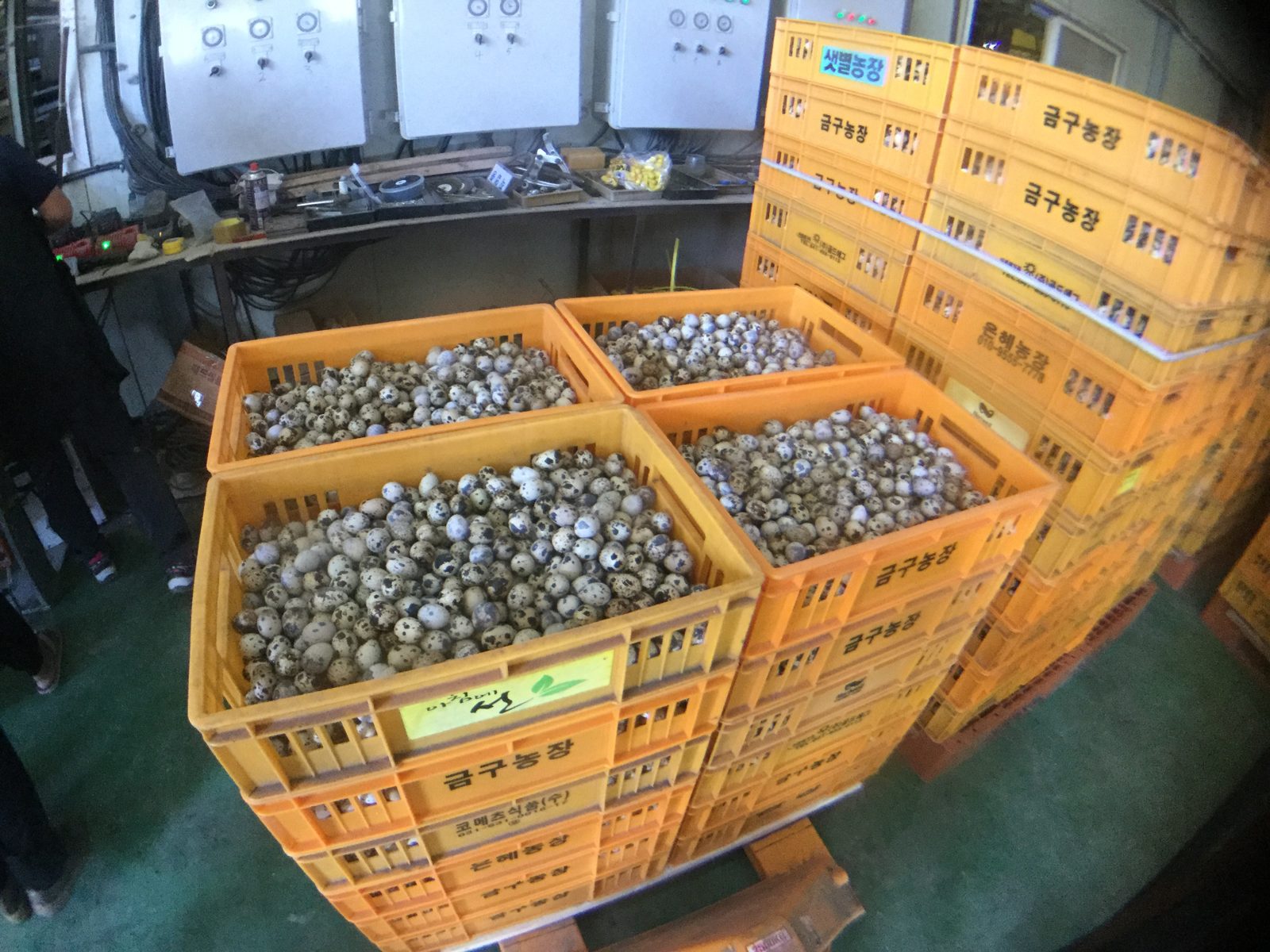
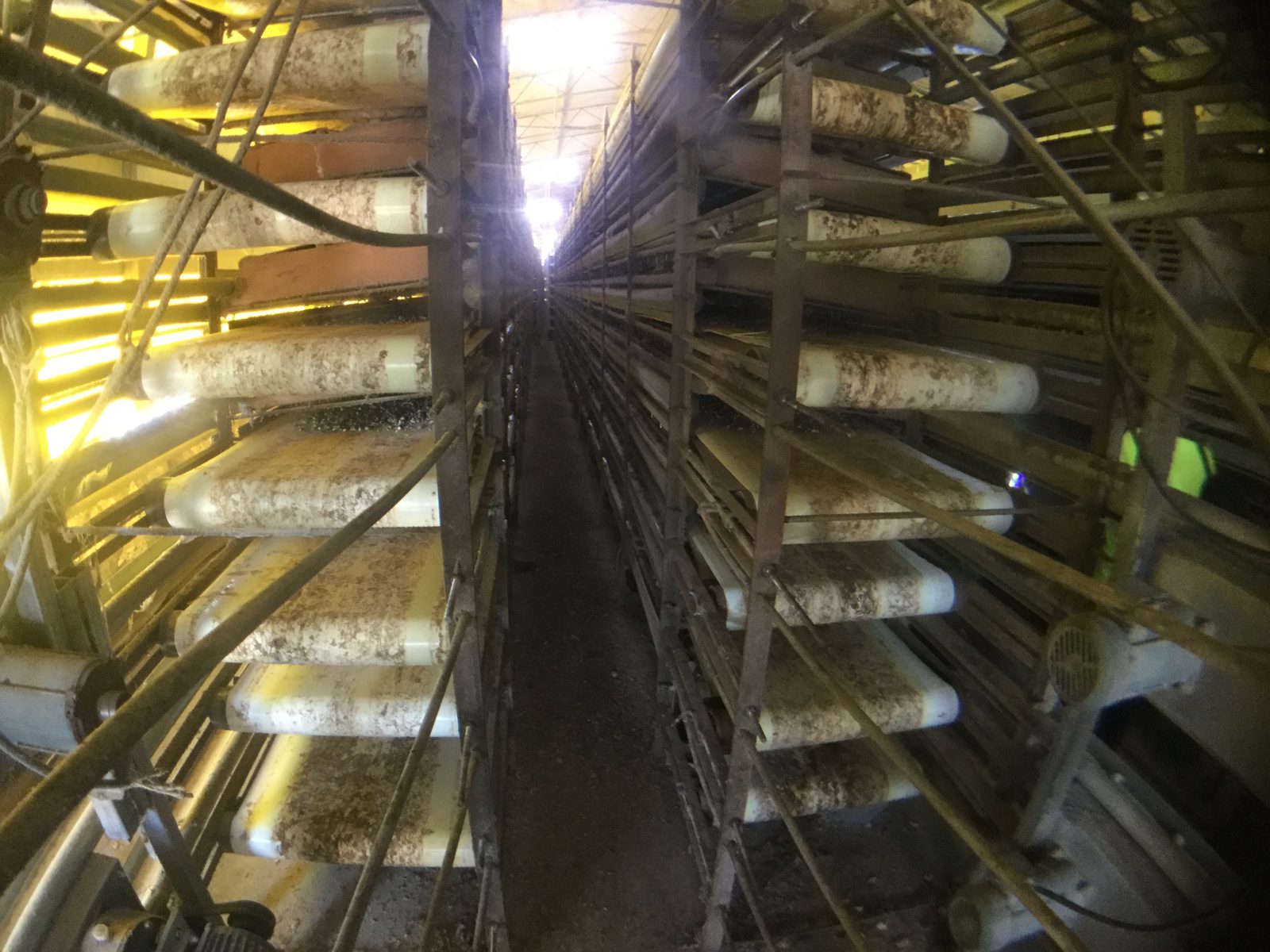
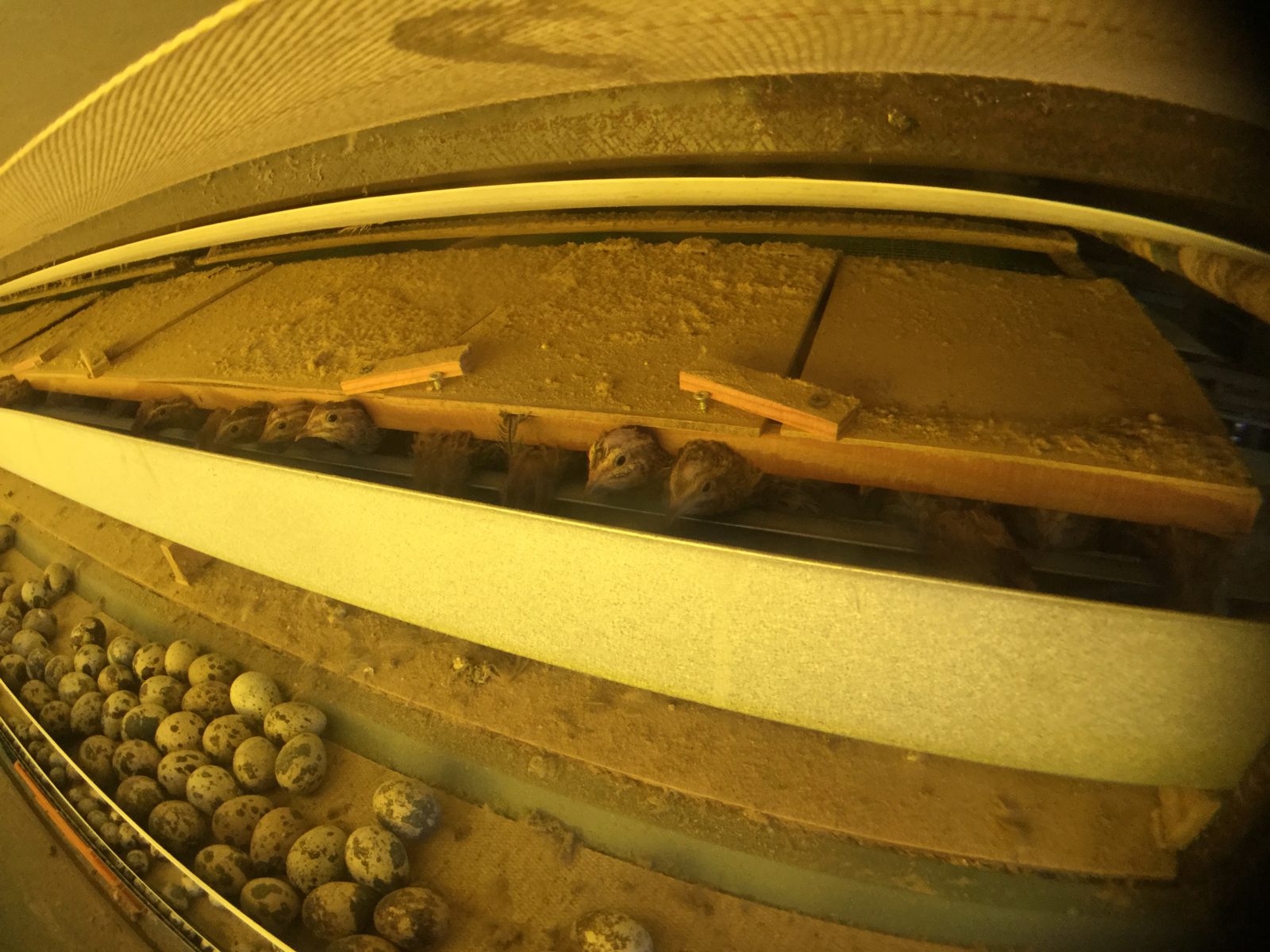
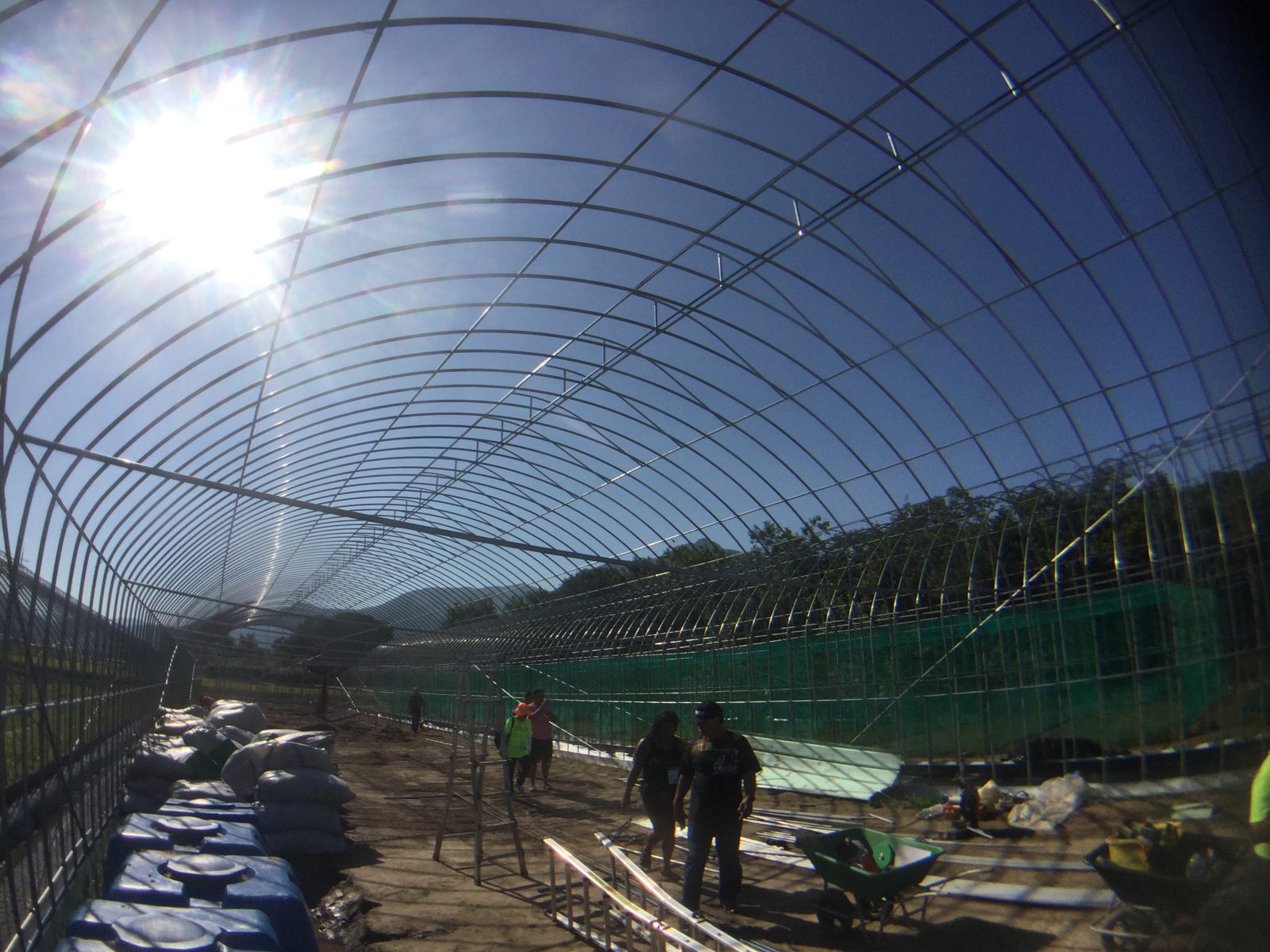
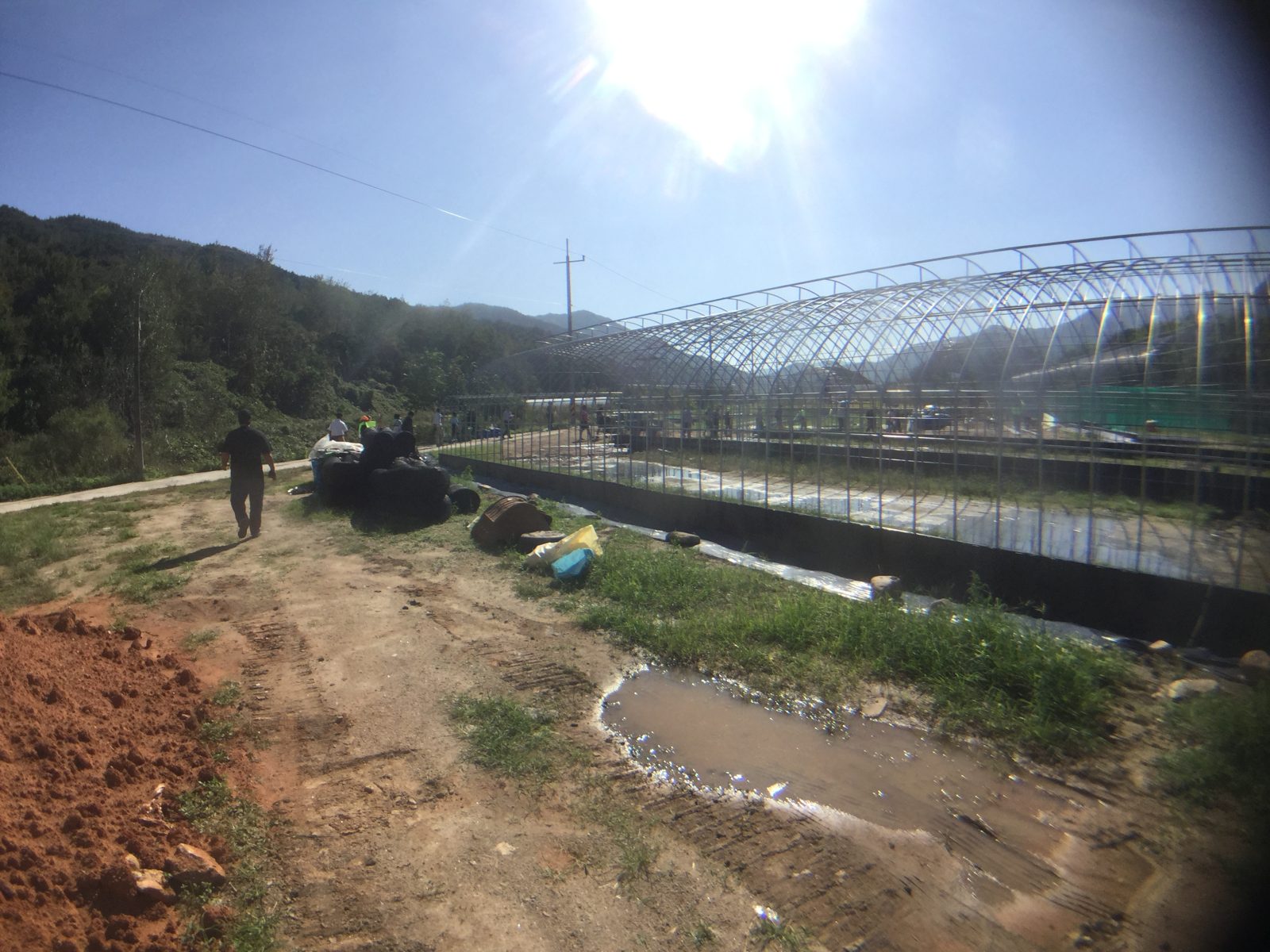
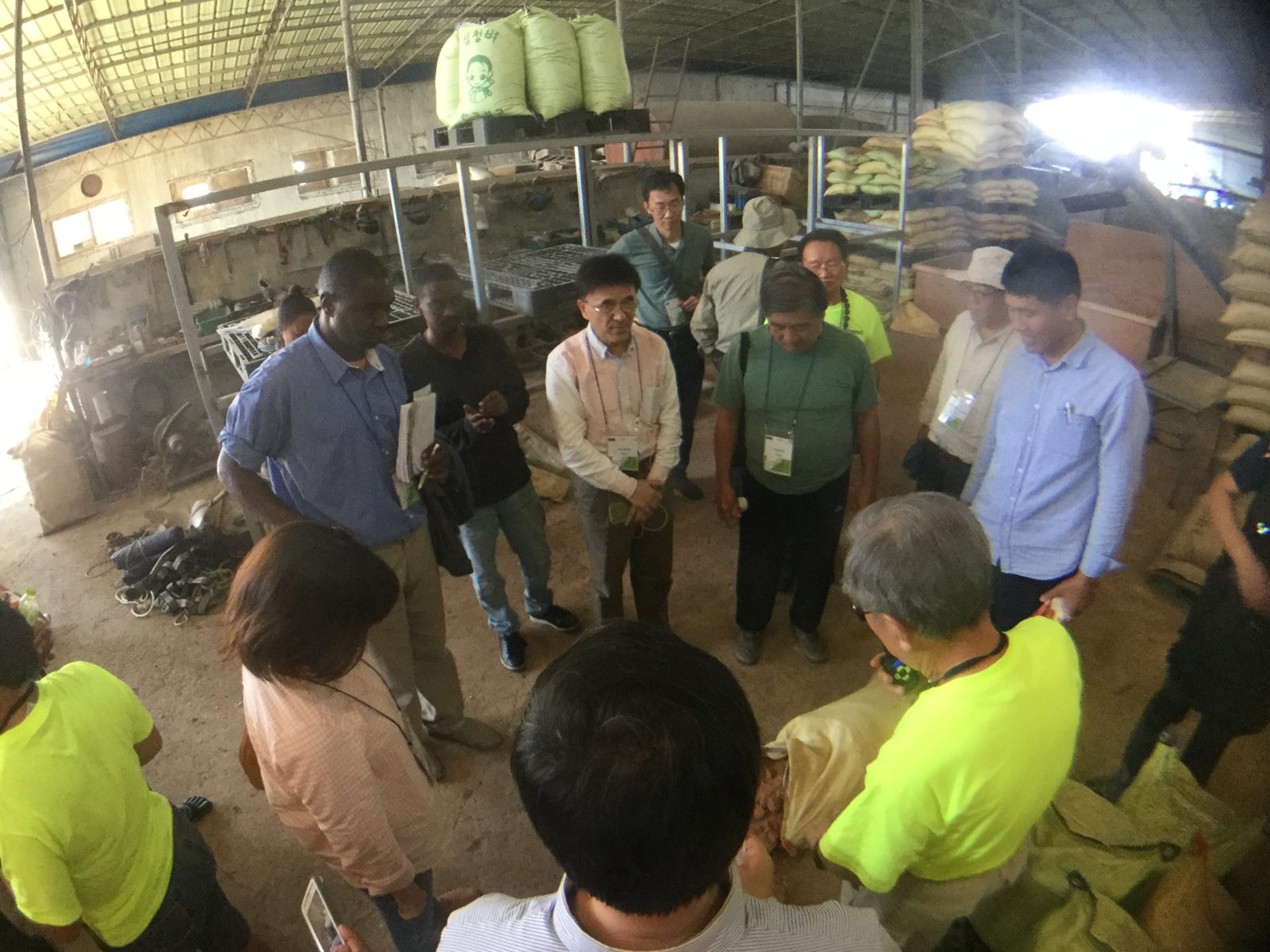
A quail egg farm in Gokseong County, South Jeolla, visited the afternoon of October 6, 2016 (stop photos 14:08–15:00). About half a million quail (spoken at 1359 s; at 359 s 'half a million eggs'), producing about 8 tons of manure a day. Beside the quail houses, the owner (named in the interpretation as Mr. Lee Chang-hyun) and Gokseong County were building a demonstration farm: greenhouse-frame pens for pigs, hens and cows, with sawdust floors laid but no animals yet. Planned: a restaurant and lodging so visitors can train there. The farm has its own feed workshop with a mixer. How long the farm has used natural farming, its area and its egg output per day: not stated.
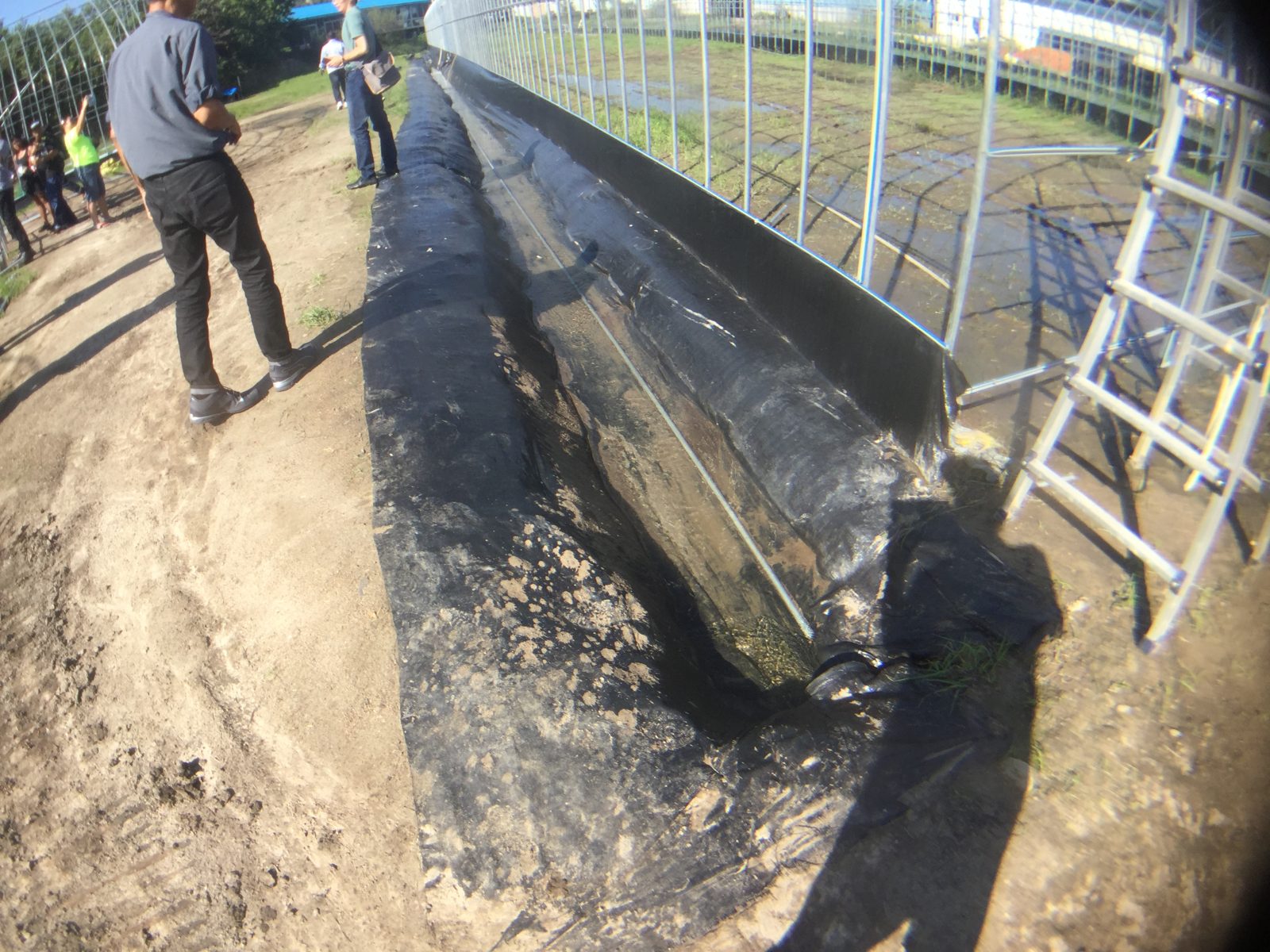
- Pig-house floor — Sow house: floor 1 m deep; grower house: 1.5 m. Half soil, half sawdust, with salt at 2% of the sawdust to bring the acid sawdust toward neutral so microbes grow; some logs at the bottom. For moisture, use undiluted sea water, but count its salt (about 3%): too much salt kills pigs. The pigs eat the floor; Master Cho: 'this is their own feed too.'
- Wood for sawdust — Any tree except one toxic kind (interpreted as 'redwood, a type of pine'; the Korean name is unclear) and thorny trees, which can poke the pigs.
- Ventilation roof — A naturally ventilated roof that sets up convection, credited to Master Cho's research center as a special design (heard 'pattern'; the Korean says patented invention).
- Breeding plan — Units of three sows and one boar; about 20 piglets per sow a year (about ten every six months); 60 pigs a year to market.
- Hens with cows — 130 hens and three cows, with a passage so the hens can walk into the cow barn; the cattle's waste becomes the hens' feed.
- Home-made feed — Feed for laying hens, pigs and cattle is all made on the farm. A fermented mix is fed at about 10% of the daily ration with regular feed. Quail manure (high in protein) goes into pig and chicken feed. Pigs also get Protectors (LAB, lactic acid bacteria) in their drinking water, and leftover vegetables now and then.
- Corn stalk ensilage — Not the ears: the stalks are cut up, mixed and fermented; sugar cane added for sweetness makes 'a very excellent feed'. Piece size not stated.
- Food waste — Spray household food waste lightly (with what is not stated) and it ferments instead of rotting, then it can feed chickens, pigs or cattle.
- Ginseng — Seven-year-old ginseng in a shade house (70% shade) on soil prepared with Microbes (IMO), drip lines visible, no pesticide; tops dying back for winter.
-
Natural ventilation keeps the pens from getting too hot
Claimed by the interpreter on a hot afternoon; not measured.
▶ 3:56 As spoken
-
A demonstration farm can get the permits a private livestock farm struggles to get
The interpreter says big chicken or cattle farms are very hard to permit in Korea; a county demonstration farm shows the way for commercial farms.
▶ 5:06 As spoken
-
Half a million eggs, all supplied to the school lunch program
Only the second transcript has the school lunch part; the farm's daily egg count was not otherwise stated.
▶ 5:59 As spoken
-
Sow-house floor is 1 m of bedding; grower house 1.5 m
Spoken in Korean and English inside the new pens.
▶ 7:31 Said and shown on the slides
-
Bedding: half soil, half sawdust, salt at 2% of the sawdust
The Korean gives 톱밥 50 흙 50; the salt figure was first said as 3%, then corrected to 2%.
▶ 11:05 As spoken
-
Three sows should send 60 pigs a year to market
About 20 piglets per sow a year.
▶ 15:23 As spoken
-
130 hens share space with three cows and eat their waste
A passage lets hens walk into the cow barn.
▶ 16:10 As spoken
-
All feed for hens, pigs and cattle is made on the farm
Said in Korean by the host and repeated by the interpreter.
▶ 18:59 As spoken
-
Quail manure is very high in protein, fine for pig feed
Host's claim; no analysis shown.
▶ 19:58 As spoken
-
About 10 tons of feed gives about 8 tons of manure; 8 tons a day now
'Because it gets mixed with water.' The farm had no pigs yet to feed it to.
▶ 21:20 As spoken
-
Seven-year-old ginseng grown without pesticide
The guests say six years is usually the most; the grower hopes to reach 15 years, which they value at $10,000 a plant (and $50,000 is also said).
▶ 26:16 As spoken
- A short visit to a farm under construction: the pig, hen and cow plans were described, not shown working.
- Every figure (eggs, manure, piglets, salt, feed shares) is a spoken claim; nothing was measured or documented.
- The feed exchange at 1266–1340 s was confused in the room (10%, 80%, 90% all said), so the exact ration is unclear.
- Much of the hosts' Korean was not captured; most of the record rests on the English interpreter.
- The ginseng values are guesses relayed second-hand.
- One animal's waste can be another's feed: quail manure for pigs and hens, cattle waste for hens.
- A deep floor of soil and sawdust, balanced with a little salt or sea water, lets microbes break down manure where it falls.
- Count the salt in sea water before adding more; too much salt can kill pigs.
- Skip thorny or toxic wood when making sawdust for bedding.
- Corn stalks, cut and fermented, are feed; a little sugar cane sweetens it.
Next to Master Cho's teaching
-
Differs
Floor of sawdust, soil and salt Same ingredients as Cho's floor, but in his 2017 course the mix is 10 parts sawdust to 1 of soil with 0.3% sea salt; here it is half and half with salt at 2%.
2017/Advanced Cho/swine/IMG_1462 @ 0:03:31 (translated)
-
Agrees
Deep floor with logs at the bottom Cho digs about 90 cm and puts tree logs under the sawdust because sawdust is costly. The 1 m sow floor and 'logs on the bottom' here match.
Cho - DVD rips/NAT_FARM_15 @ 0:28:07 (translated)
-
Agrees
Quail droppings carry protein In the 2017 swine course Cho notes that quail droppings spread on a field still contain undigested protein.
2017/Advanced Cho/swine/IMG_1490 @ 0:00:00 (translated)
-
Agrees
Lactic acid bacteria for pigs Cho's recipe book gives LAB (1:500) with FPJ (1:300) as drinking water for livestock. No rate was given here.
Cho, Natural Farming Agricultural Materials (Recipe), p. 56–57
-
Agrees
Corn stalks as feed Cho uses corn stalks instead of the grain as pig feed and says better-digested feed means less smell.
2017/Advanced Cho/swine/IMG_1457 @ 0:01:50 (translated)
“And Master Cho said, this is their own feed too.”
▶ 8:55
“This will be the center for global natural farming: training center, model center.”
▶ 14:08
“Then food waste can become food for animals like chicken, pigs, or even cattle.”
▶ 20:52
In this talk
- 0:00Bus into the farm
- 1:50In the quail house
- 3:00Cages and egg belts
- 3:56The expansion: a county model farm
- 5:06Why a demonstration farm
- 5:59Half a million eggs
- 7:07Sow and grower houses
- 7:49Cho's ventilation roof
- 8:42The floor is feed; which wood
- 10:50Salt for acid sawdust
- 12:32Sea water for moisture
- 13:26A global training center
- 15:01Three sows, sixty pigs
- 16:10Hens and cows together
- 18:11The feed workshop
- 19:21Quail waste as feed
- 21:06Ten tons in, eight out
- 23:04What the pigs get
- 24:16Corn stalk and sugar cane
- 25:25Seven-year ginseng
Transcript
English translation, checked against the English as spoken.
0:00 I don't know where we were at.
0:58 It's like, just easy. Hey, small girl. I was waiting for the song to come on. See you in a bit.
2:02 It's good for men, and all kinds of nutrients that otherwise you would not have. You can even smell the scent. You know it has coffee inside? Oh. And I don't drink coffee. Oh, yeah. I didn't know it has coffee inside. I enjoy it. It's very good.
3:56 Even if you come here hot weather like this, just natural ventilation will happen there. So you don't feel too hot. So that when you come here you can see everything about natural farming, we are joining with Gokseong County to make a center here. So, this is another center for the county, so that you can see animal husbandry. There is a pig, the mother pig farm, there; their building.
그래서 여기만 오면 자연농업의 모든 걸 다 볼 수 있도록 곡성군하고 여기 연대해서 센터를 만드는 거예요.
4:43 There are different kinds of pigs and chickens as well as cows. So you can see next time maybe you come here then there are animals here. Same thing operated together with the owner of this farm and also the county together. So, the purpose of this demonstration farm is that in our country, Korea, if someone
5:29 wants to have their own big farm, chicken farm or cow farm, it's very hard to get the permit. So they're going to have a demonstration farm. If you want to start a commercial farm just like this, then government say, okay, you can do that. So this is a demonstration farm in the future of the Korean animal farm. All right, okay, come on this side. I told you, half a million eggs; they are all supplied to the school lunch program.
6:29 It's not that hot here. I would like to ask what is the name of the farm. It's a chicken farm. This is the sow house, and that one is the grower pig house. They made this extra high. This is a mother pig [house].
여기가 모돈사고 저기가 육성돈사
7:18 But the other one is just for regular pigs, for the meat. It's about one meter. This is sawdust, one meter high. That regular pig [house], the bottom is one and a half meters. This is only one meter. This is natural ventilation roof. The convection that happens here is a patented invention. This is a special pattern [patent].
여기 대류가 일어나는 것은 발명특허품입니다.
8:12 Master Cho's research center's special pattern [patent], to make this type of natural environment, I mean the ventilation roof system. This is a mother pig farm. He was asking, how come you have such a high, one meter? And Master Cho said,
9:00 this is their own feed too. They eat this bottom part of this bottom farm. It doesn't matter what kind of sawdust, what kind of... I don't know how to interpret it in English. Any tree is fine except one [named tree; the name is unclear]. ... Not that one, the one in the mountains. There's one tree you cannot use as sawdust. Redwood. Redwood?
[…]나무 외에는 다 괜찮아요. … 아니, 그 나무 말고 산에 있는 […]나무
9:46 Yeah, redwood. Yeah, redwood. Yeah, a type of pine. Redwood. They have a toxin, so they cannot use it as sawdust. Other than that, any kind of tree, you can make this sawdust and then use it. Ask him if it's because it stops the microbes from growing. It's redwood. That's right. Redwood. That's a redwood. Redwood should not be made into sawdust to use for this kind, because the microbes die. otherwise any kind of tree you can use for the sawdust.
10:34 If you have a spine in the tree, a tree that you cannot use. Thorn. Then it can poke the pigs. Trees, or sawdust, are acid. Therefore, you have to add some salt so that the microorganism can grow. So when you put it in here, it's 50 sawdust, 50 soil. When they put this sawdust, it's not 100% sawdust. It's half soil, half sawdust, with some salt.
그러면 여기다 집어넣을 때, 톱밥 50 흙 50이에요.
11:32 Yes, you have to put some logs on the bottom of this one meter height. The amount of salt you add is 2% of the sawdust. So the salt will neutralize it: not acid, not too much alkaline,
12:18 a middle acidity, so that microorganisms can grow. So if you want to have a right kind of moisture content, then you can use this original sea water. Sea water is 3% salt, so calculate the salt you add. Don't put in too much. If you put in too much salt, the pigs get salt poisoning and die. So the ocean water usually has a salt concentration of about 3%. So you have to calculate, because you don't want to have a 3% salt.
바닷물을 넣을 때 소금이 3%니까, 계산해서 소금을 넣어야 돼요. 너무 많이 넣지 마세요. 소금을 너무 많이 넣으면 돼지가 염중독에 걸려서 죽어요.
13:06 If you put too much salt, the pigs will die. So this is the place of the model farm that not only just plants but also all kinds of but also all kinds of animals, plants, everything, here in Gokseong County. So, I'm planning to have a center for natural farming throughout the world.
13:55 By coming here: Gokseong County and Mr. Lee Chang-hyun, he and Gokseong County joined together. This will be the center for global natural farming: training center, model center. They will build everything here, from a restaurant to lodging. You can come here in the future and be trained. So in the future they are planning to build some of the restaurant and the lodging facilities so you can come in here and then you can sleep and you can eat around here and get the training.
이곳에는 식당부터 숙소까지 다 만들 것입니다. 여러분들이 앞으로 여기 와서 훈련 받을 수도 있습니다.
14:47 So, joyful future! Fighting! Close the door Here, one female each. One mother pig. Over there is for the male. So then, in one year, 60 pigs go to market. From this grower house, 60 pigs a year are shipped.
여기는 암놈 한 마리씩 그렇게 되면 이제 1년이면 60마리가 출하되는 거죠. 이 육성돈사에서 1년에 여기서 60마리가 돼지 출하됩니다.
15:35 So these three mother pigs can generate 60 piglets. So one mother pig can make 20 baby pigs a year. So every six months they have about ten babies. So you have three for the three females and one male? One male. One male. Okay, four in a unit. A passage in the middle, so the chickens can go back and forth between the henhouse and the cow barn.
닭장에서 닭이 우사를 왔다 갔다 할 수 있도록 중간에 통과
16:21 Cow farm. Chicken. Chicken. The chickens can go back and forth into the cow barn. 130 chickens and then three cows. How big is the area? The size? The cow dung is 100% chicken feed. Okay. All the waste from the three cattle will be the feed for the chickens. Yes. That is why they allowed the chicken to go and pay a visit. What did the chicken say when he crossed the road, right?
17:09 Holy shit. Really natural, right?
18:11 So this you can use for the feed for the animals as well as you use this when you have a soil preparation. When you feed it every day, what percent? About 10%. The rest is regular feed. Mixed into various feeds, this is about 10%. Sometimes he makes other parts of the animal feed, but they sell [it] from the store.
매일 먹일 때 몇 %? 10% 정도 다른 것은 일반 사료이고요 여러 가지 사료에다가 이것은 10% 정도
18:59 For laying hens, the feed is 100% our own. I made the pig feed: 100% our own feed. The cattle feed is also 100% our own. This is the chicken [feed]. He makes it 100% himself. The pig and the cow [feed], he makes it 100%, his feed. The waste from the quail, the bird quail, they use for the chicken feed as well as the pig feed. Is there any other element they add from the quail manure to feed the chicken?
산란계 사료 같은 경우는 100% 자가 사료. 돼지 사료를 제가 만들었습니다. 돼지 사료 100% 자가 사료입니다. 소 사료도 100% 자가 사료입니다.
19:52 Is there any other important nutrients in the quail's poop? It has high protein. High protein. Very high protein. Quail's poop has high protein. If the quail's poop has protein, there is no problem with the pig's food. If you have quail waste, pig feed is no problem. They have a high content of the protein.
20:37 So if you have your house food waste, just spray it just a little bit. Then you don't have to worry about any decaying or rotting because they are fermented. Then food waste can become food for animals like chicken, pigs, or even cattle. 10% IMO4: how much quail waste, and what else is added in the pig feed? So he's asking: if they eat this at 10%, how much manure comes out? When the quail eat about 10 tons, about 8 tons come out, because it gets mixed with water.
그러면 이거를 10%에서 하면은 똥을 얼마나 싸냐고 하는 거예요? 메추리가 10톤 정도 먹었을 때 8톤 정도 나오더라고요. 물하고 같이 섞어지니까.
21:26 So if you feed the quail, 10 tons of feed make about 8 tons out of the 10 tons. So that's another animal feed for the pigs and chickens. They're recycling. So there's IMO4, quail waste Plus the other 90% is you get another feed for the quail This is only 10% And then they go into the quail and they make this 80% out of the 10 tons
22:11 To feed other... Then they can feed other animals like chicken, pig So you don't need to buy food? Ten tons a day comes out? No, the amount that comes out here a day is about 8 tons right now. Okay, right now he has about eight tons every day out of these quail, half a million quail. So that eight ton can be fed if he started, I don't see any pigs now. So when they have a pig, chickens, and cattle, cows, then they can feed that one.
하루에 10톤이 나와요? 아니요, 하루에 저희가 여기서 나오는 양이 현재 8톤 정도 나와요.
22:57 They don't need to go and buy now. So they just feed them the straight quail manure and IMO4 to the pig, nothing else? Only 10%? No, get other stuff. No, what is the other stuff? To feed the pig. What else can you feed the pig? For the pigs, the rest is the drink: we make lactic acid bacteria and give it. So, when you have pig raising, lactic acid bacteria is very very important. So that's the only one that they added.
돼지는 이제 나머지는 음료예요. 유산균을 만들어서 먹이기.
23:48 And LAB That's it, LAB 100% of the ration. That's 100%. Do you have any other ingredients? Like vegetables or meat? In the middle, when there are vegetables I can feed them So when you have once in a while It's okay if you don't feed them at all But it would be better if you feed them a little You don't have to add it vegetable left over then you can add it on. Not picking the corn ears: take the stalks, cut them up, mix them in and ferment them too. Okay, so when you have a vegetable not just regular leaf vegetable. When you have a corn stalk.
옥수수 따는 게 아니라 대를 갖다 잘라 가지고 그것도 섞어서 발효시켜요.
24:35 Ensilage. Ensilage. They cut it and mix it, fermented corn stalk, then you can feed them. That would be excellent. If you happen to have sugar cane, you can add the sugar cane plus corn stalk, and because of the sweetness in the sugar cane, that's a very excellent feed.
엔실리지, 엔실리지
25:25 I asked if he had started his ginseng, because I remembered from last time he was here. And he asked Master Cho if they could show everybody. And he's like, no. But then he's going to show us something I'm pretty interested in. My camera died, so I'd like to see that. All the leaves are gone. Is this the one? Yes, it's the one. Because all the leaves are gone this year.
26:16 Seven years. Yeah, seven years. Usually six years is the maximum. Yeah, that is seven years old. And this has died, or what? Oh, dormant. Yeah, they're dormant for winter, because it's starting to get closer. Usually it's much bigger than this one. Yeah, the regular ones, very well [grown]. But natural farming is like mountain ginseng. Like this, mountain ginseng is 100 years old. They're not big, they're very small. But they're special. Very very special. Wow. That's natural mountain [ginseng]. Did he tell you anything about the soil preparation? Oh, same. I think it's all, you know, IMO.
26:56 He found everything the same. So there's drip irrigation? No. Difficult in Hawaii but you can if you have highly fungal IMO. And so look at the roof. This is 70% shade. Yeah, this is the same for all ginseng. Only difference is the soil. The soil is the IMO. And what is the regular nutrition applied? Other people, just fertilizers. Like nutrient cycle? Nutrient cycle. But maybe it's a little bit different from others.
27:42 Did he say it's going well? Yeah, he said it's going very well. It's very good. Seven years old. Without pesticide, even six years is very [hard]. But it's seven years. So at 15 years, it's going to be like $10,000. Yeah, one plant, ten thousand dollars; at 15 years old, one plant, ten thousand dollars. $50,000.