One IMO4, Three IMO5s: Match the Plant's Stage
Master Cho Han-kyu (interpreted by Dr. Hoon Park), Cho Global Natural Farming (CGNF); Dr. Park calls him 'our Chairman Cho'. Evening lecture to the field-trip group; the room is not named in the audio. · South Korea
Spoken in Korean. Translated to English and checked line by line.
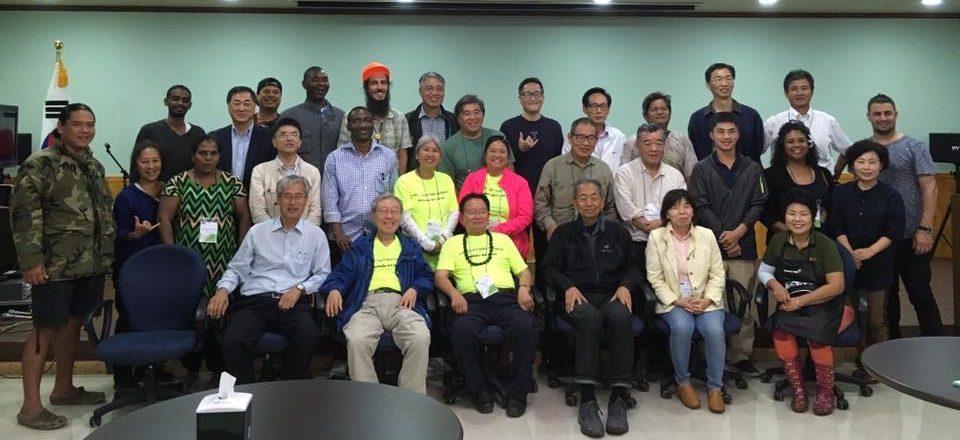
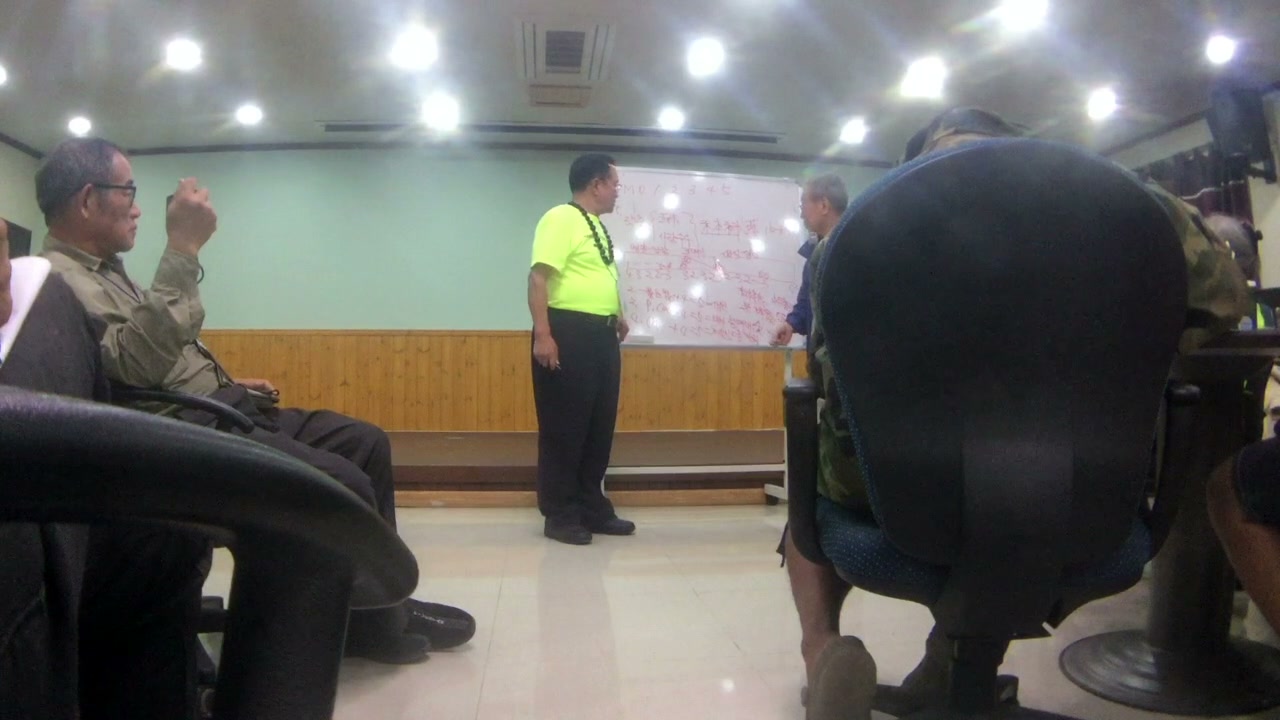
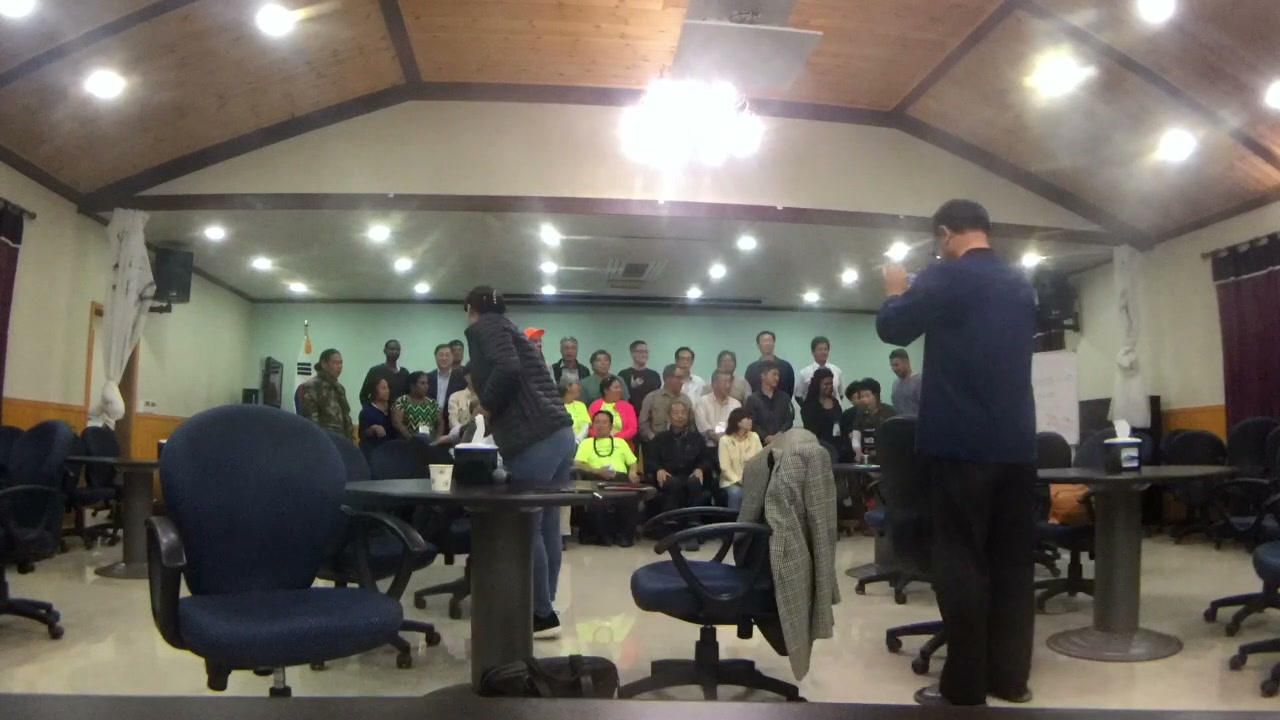
Video of this visit will be added to the members' archive. The transcript times below match that recording.
After the farm visits of October 6, 2016, Master Cho Han-kyu gave the field-trip group an evening lecture, interpreted by Dr. Hoon Park, on one idea: IMO5 is not one recipe. The IMO4 base stays the same, and what goes in depends on the crop's stage: fish protein for early growth, calcium phosphate from charred bone for the changeover, calcium from charred shell for maturing. He worked it through with corn (calcium phosphate about a week before the changeover, day 58 of 180), then covered seawater at 1:30, a vinegar, LAB and yeast tonic, and an alcohol, mugwort and dropwort recovery mix with doses for pigs.
What they found
Master Cho's main claim for the evening: Microbes (IMO5) should change with the crop's growth stage, so a farmer has to know the stage, above all the start of the changeover, before deciding what to add to IMO4 and when to give it.
Evening of October 6, 2016, the second field-trip day, after the visit to Lee Eun-ha's missionary farm (record 27) and dinner. A meeting room with a Korean flag, green walls and a whiteboard; the venue is not named in the audio. Master Cho speaks Korean at the whiteboard; Dr. Hoon Park interprets into English and relays questions both ways. About 85 minutes: some 19 minutes before dinner, when Cho is mostly off-mic, and the rest after. The audience is the Hawaiʻi group and Korean participants. Nothing is examined or measured: the examples are corn, sugarcane, tomato, pepper, eggplant, hens and sows, plus the ten-ear corn shown at the symposium. Rates for most mixes are not stated.
- IMO5 for early growth (nutritive stage, 'type 2') — IMO4 plus protein: fresh (not cooked) fish flesh. In corn, give it at 2–3 leaf layers rather than 5–6. If fish is short or costly, perilla (rich in omega-3). Salted anchovy (the Korean fish sauce) is also good; mixing sugar with the salt beats pure salt. No amounts given.
- IMO5 for the changeover ('type 3') — IMO4 plus calcium phosphate, Structure (WCP): bone charred to remove the organic matter, then put in brown rice vinegar so it becomes water-soluble. Best bone: large ocean fish; sesame is also named. In the Q&A Cho put brown rice vinegar into IMO4 and mixed in burnt bone ground to a fine powder. No ratios given.
- IMO5 for maturing ('type 4') — IMO4 plus calcium, Reproduction (WCA): eggshell or oyster shell burned to charcoal, then dissolved in brown rice vinegar. No ratios given.
- Calcium phosphate timing — Spray about 7 days before the changeover starts. Cho's corn example: a 180-day crop read as three 60-day periods, changeover from day 65, so spray on day 58. For tomato, at the seedling stage in the pot, not after transplant; the same for bell pepper, paprika and eggplant.
- Sow after farrowing — Calcium phosphate for milk and for coming back into heat. No meat or extra protein, no raw eggs, dead chickens or live animals as feed, and no rats around her.
- Daily tonic (people, plants, animals) — Brown rice vinegar, Cleanser (BRV), plus lactic acid bacteria, Protectors (LAB), plus yeast, taken every day. In a hot, rainy year, add seawater as a fourth. No rates for the mix.
- Minerals (seawater) — Seawater diluted 1:30, bringing about 3% salt down to about 0.1%.
- Recovery formula — Alcohol (vodka, 35–40%, or Korean soju, 'about 35 degrees', the same alcohol used for Medicine (OHN)) with mugwort Food (FPJ) and dropwort Food (FPJ), seawater 1:30, and seaweed (miyeok or dashima). For flowering crops, with calcium phosphate. Also given as Cho's way to soften old hen meat. Mixing ratios not given.
- Recovery formula dose (pigs) — About 1 liter for a big pig, 50 cc for a piglet, as a drink (not an injection), every three days. If they won't drink it, mix it into the feed, ferment it and feed that.
-
Corn, sugarcane and rice, the grass family, carry about 15–16 leaf layers
Cho used corn as the worked example because the Hawaiʻi group named sugarcane and corn. Cho's own Korean here is mostly off-mic.
▶ 2:13 As spoken
-
Crop stages likened to a human life: nutritive growth 1–15, changeover 20–45, reproductive 45–60
As interpreted. The gap between 15 and 20 was not explained.
▶ 3:29 As spoken
-
IMO5 is IMO4 plus one addition by stage: protein, calcium phosphate, or calcium
Type 2 needs protein, type 3 phosphorus and calcium, type 4 calcium; each plus IMO4 'becomes number 5'. Written on the whiteboard, which is not readable in the video.
▶ 13:05 As spoken
-
Charred bone (and sesame) in brown rice vinegar gives water-soluble calcium phosphate; charred eggshell or oyster shell gives calcium
Burning removes the organic matter; the alkaline remainder reacts with the vinegar's acid and dissolves.
▶ 17:16 As spoken
-
An overfed plant does not flower
Cho's parallel: an overfed hen lays down body fat instead of developing her ovary, and a woman who is too fat at that age cannot get pregnant.
▶ 23:37 As spoken
-
Give fish protein at 2–3 leaf layers; the corn changeover comes at about 5–6
He likened 5–6 leaf layers to girls of 15–17 and said that, when the plant is ready to flower, it is time for calcium phosphate.
▶ 30:45 As spoken
-
A sow fed meat after farrowing may eat her piglets; give calcium phosphate for milk instead
Raised for David Wong, who has 1,000 pigs. No live animals, raw eggs or chickens as feed.
▶ 36:16 As spoken
-
No two IMO5s are the same; the IMO4 base is
'If you don't know how to use it properly, then that's useless,' even with all the materials prepared. He credits the theory to Japan's Oinoue Yasushi.
▶ 39:26 As spoken
-
Corn: 180 days, three 60-day periods, changeover from day 65
A teaching example at the whiteboard, not a measurement.
▶ 53:20 As spoken
-
Spray calcium phosphate about 7 days before the changeover: day 58 for corn
His 'home run': before the plant 'gets pregnant', not after. The audience said seven days; the interpreter gave day 58. For tomato, pepper, paprika and eggplant: at the seedling stage, not after transplant.
▶ 55:18 As spoken
-
A 'pregnant' plant gives off a faint sour smell that draws soil microbes; calcium phosphate makes it stronger and carry farther
Cho's picture: a woman's scent turns sour in pregnancy; a tomcat smells a female in heat from 30 ri (about 12 km). He says the result is many flowers, and that this is known by feel, not by analysis.
▶ 1:01:02 As spoken
-
Vinegar, LAB and yeast every day keep people healthy, and plants and animals the same way
He said 30% of the body's microbes are lactic acid bacteria. In a hot, rainy year like 2016, add seawater.
▶ 1:06:27 As spoken
-
Seawater is about 3% salt; at 1:30 it is about 0.1%, the salt level he gives for a plant's 'green blood'
He compared a 1:30 seawater spray to a Ringer's drip in hospital.
▶ 1:08:39 As spoken
-
Alcohol given to an old hen softens her meat
His answer to the opening promise that old hen meat can turn tender in three days (t 319). He pairs the alcohol with mugwort and dropwort Food (FPJ): iron to make blood, manganese to speed cell division and healing.
▶ 1:15:21 As spoken
-
Mugwort and dropwort Food (FPJ), seawater 1:30, seaweed and calcium phosphate: one formula for recovery and for flowering
Tied to the Korean custom of mugwort water and seaweed soup (iodine) after childbirth; he says sprouting and giving birth mean the same thing to a plant.
▶ 1:20:35 As spoken
-
Dose for pigs: about 1 liter for a big pig, 50 cc for a piglet, every three days
As a drink, or mixed into feed and fermented. Cho said pigs, chickens and crops then don't get sick (the interpreter said cows). Not measured.
▶ 1:23:02 As spoken
- A lecture, not data. Nothing was tested or measured in the room, and no records were shown.
- The day counts (180, 65, 58), the 15–16 leaf layers and the pig doses are Cho's teaching examples, not results. Corn's changeover is given two ways (5–6 leaf layers, and day 65 of 180), and the two were not reconciled.
- Cho's Korean is only partly clear, and before dinner he is mostly off-mic. Most numbers rest on Dr. Park's English interpretation; where Cho's Korean was garbled (day 65 and day 58, for example), we followed the interpreter.
- The whiteboard can't be read in the video, so the stage formulas come only from speech.
- Most mixes come without rates: how much bone goes into IMO4, the vinegar, LAB and yeast tonic, and the parts of the recovery formula.
- The hen, cat and pregnancy pictures are analogies. Cho says himself that the sour-smell idea comes from feel, not analysis.
- No still photos were taken during the lecture.
- Know your crop's stage before you make IMO5. Keep the IMO4 base; change only what you add.
- Start with one crop and find the start of its changeover: note when flowers and fruit begin to set, then look back.
- Give calcium phosphate, Structure (WCP), about a week before the changeover, so it is there when the plant needs it.
- Make it from bone charred to remove the organic matter, then soaked in brown rice vinegar. For calcium, Reproduction (WCA), use eggshell or oyster shell the same way.
- Go easy on protein and heavy feeding as flowering nears. Cho's rule: too fat, no flowers.
- Dilute seawater about 1:30, which takes 3% salt down to about 0.1%.
- After farrowing, back a sow with calcium phosphate, not extra meat.
- Then practice. Cho: study is only study if you put it to use.
Next to Master Cho's teaching
-
Agrees
IMO5 is IMO4 plus a stage addition In 2018 Cho again described number five as burned cow, pig or fish bone mixed into IMO4 for heavy flowering, and said IMO5 'is made according to your needs', with fats for vegetative growth. Here the early-growth addition is fish protein.
2018/Cho - advanced hawaii/cho advanced 2018 3-3 @ 0:50:35 (translated)
-
Agrees
Calcium phosphate a week before the changeover Cho's printed nutritive-cycle pages give 'a week before floral differentiation (a week is needed for absorption)' and name sesame or soybean stem ash. The day-58 corn example is the same rule.
Natural-Farming-Nutritional, p. 29–32
-
Agrees
Calcium phosphate from charred bone in brown rice vinegar CGNF's WCP sheet: cow, pig or fish bone burned at low temperature to remove organic substances, then put into BRV to extract calcium phosphate.
Water-soluble-Calcium-PhosphateWCP, p. 1–6
-
Goes further
A pregnant plant's sour smell draws microbes His book says plants get 'morning sickness' at floral differentiation, sour things help, and calcium phosphate is the remedy. That the sour smell calls soil microbes is not on the cited page.
Cho, Cho Han-Kyu's Natural Farming (Theory), p. 88
-
Agrees
Sow: calcium phosphate for milk In the 2017 swine sessions Cho adds WCP to the drinking water so the mother makes richer milk.
2017/Advanced Cho/swine/IMG_1462 @ 0:22:02 (translated)
-
Agrees
Mugwort iron, dropwort manganese, recovery after birth Same story in his book: mugwort's iron for a woman who has just given birth (bathed in mugwort broth), and dropwort's manganese to stimulate the peripheral nerves and speed healing.
Cho, Janong Natural Farming (2003), p. 105
“If you understand, what must you do? You have to practice it.”
▶ 24:22
“IMO number five is not all the same. It depends upon what growth cycle.”
▶ 39:26
“If you can translate that particular book into English, then I will adopt you as my son.”
▶ 42:38
“You love each other by the feeling, not the theory or data.”
▶ 1:02:08
“Analyzing data is very good, important. But fact is more important than just the data of the report.”
▶ 1:13:20
In this talk
- 0:00Why IMO5 starts with the crop
- 2:43Three stages, three ages of a life
- 4:14Tough old hens and pigs
- 6:22Nutritive cycle types on the board
- 7:35A woman's life as a crop's life
- 12:34IMO5 by stage
- 14:10Fish, bone, sesame and shells
- 19:17Dinner break
- 19:59Study means practice
- 21:16Ten-ear corn and the changeover
- 24:54Fish early, calcium phosphate at flowering
- 28:23Perilla and salted anchovy
- 32:26Flowers make the next generation
- 34:53Sows, milk and calcium phosphate
- 39:18No two IMO5s alike
- 40:58Oinoue's theory and the hard book
- 43:18Q&A: bone powder in IMO5
- 44:45A participant explains the stages
- 52:14Corn: 180 days, changeover at day 65
- 53:49Calcium phosphate on day 58: the home run
- 58:16Pregnancy, sour smell and soil microbes
- 1:04:45Vinegar, LAB, yeast and seawater
- 1:08:55Seawater 1:30 as a plant's drip
- 1:12:40Ten ears of corn: fact over data
- 1:14:12Alcohol, mugwort and dropwort for recovery
- 1:22:42How much to give pigs
Transcript
English translation, checked against the Korean as spoken.
0:15 Okay, you have to understand why we're making IMO number five: so you know what the purpose of IMO number five is, so you can understand why we're doing this. First, what you have to pay attention to is what crop it is. First of all, what kind of crops do you want to grow? So what do you have? What kind of special crops do you want to discuss? Sugarcane. Huh? Sugarcane. Sugarcane? Corn. The corn. Good. So let's talk about the corn.
먼저 주의해야 될 것이 작물이 무슨 작물인지
1:27 Rice? Rice. Yes, rice. So when the leaves, the branches, are pretty strong, that's the category of the corn and the sugarcane. [unclear] the grass family [unclear]. [unclear] crops [unclear] to bring forth offspring [unclear] [unclear] that is the grass family. In the grass family, [unclear] here, 15 or 16.
그는 화본과의 [unclear] 역시 작물이 [unclear] 자식을 [unclear] 위함으로 [unclear] 하는 것이 화본과입니다 화본과는 [unclear] 여기 15, 16입니다.
2:13 This particular kind, the leaves have about 15 or 16 layers. The life cycle of this crop: the first one is the nutritional cycle, nutritional growth cycle.
3:00 This is the... What's the...? Changeover cycle. Transition. Transition or changeover. And then the... Reproductive... ...reproductive cycle. Here, in a person, [unclear] about fifteen years old. So the nutritional growth period is, if it's a human being, between 1 and 15 years old.
생식 그런데 여기는 사람이 [unclear] 열다섯 살 정도
3:45 The changeover period is between 20 and 45 years old, if you compare with a human being. The reproductive period is between 45 and 60 years old. As I said earlier, old [hen] meat, you know: it's too tough. So we talked about this old, tough skin of the chicken. And it's very, very tough, very hard to bite.
그래서 아까 이야기했지만, 늙은 고기 있잖아. 너무 질겨.
4:32 But the taste is very good. And so it's hard to bite; it's not easy to bite. If you look at what the people who eat it hope for, they think it would be nice if it tasted good and [unclear]. So what is that hope? They think it would be nice if the hen's meat were like a virgin hen's: soft. The idea of the people who want to eat it: they want a soft and better taste. Their wish, or hope, is just like the soft skin, the soft meat, of the virgin. In three days [unclear].
먹는 사람들의 희망사항을 보면, [unclear] 맛이 좋고 좋겠다 이렇게 생각합니다. 그래서 그 희망이 뭐냐면, 닭살이 처녀 닭살이면 부드러워서 좋겠다 이렇게 생각합니다. 3일만에 [unclear]
5:19 It takes only three days to make old chicken meat into the young virgin's meat. Three days. So what do you have to feed, or how do you make the old chicken meat into young chicken meat? Pigs are the same: [unclear] pork. It tastes good, but it's tough. Same thing with the pig. Old pig meat has a very good taste, but it's very tough. But [unclear] this is also good for the taste of the meat.
돼지도 마찬가지로 [unclear] 돼지고기, 이건 맛은 좋은데 질겨.
6:07 Same thing: he can make all the tough skin, all the tough meat, into soft, very tasty meat in the pig, too. So, if you have heard about the nutritive cycle here, but what is this here? It starts from type 4, type 3, type 2, type 2, type 3, goes here to type 3, here to type 2, type 3, type 2, here it's type 2, type 2, type 3, type 2, type 3,
그래서 혹시 여기서 영양주기에 대해서 들어보셨다면 근데 여기는 뭐냐 그러면 4형에서 시작을 해가지고 3형, 2형, 2형, 3형 여기 가서 3형, 여기 가서 2형, 3형, 2형 여기가 2형, 2형, 3형, 2형, 3형
6:56 and here it ends at type 4. So those are the people who learned this life cycling of this nutritional fertilization process. This is type 4, 3, 2, 2, 2, 3. I cannot explain all this now. But there are different kinds of nutritional fertilizer techniques. Have you heard this one? Yes. Okay. So if we explain this in terms of a person: a newborn baby, a just-born baby, is nothing but bones and skin.
여기가 4형에서 끝이 납니다 그래서 이것을 사람으로 풀어내면 갓난 애기, 막난 애기는 뼈하고 가죽밖에 없는 거지.
7:48 So a brand-new newborn baby only has skin and bone. Then, when it drinks its mother's milk, it puts on flesh. When the newborn baby sucks the mother's milk, they start building up the meat. So after drinking the mother's milk it gets chubby and very pretty. So when the baby is born, bones and skin only: that is type 4. So after the newborn baby sucks the milk from the mom, they become a little chubby. So the brand-new newborn baby, we call type 4.
거기서 엄마 젖을 먹으면 살이 오르지. 그래서 엄마 젖을 먹고 난 다음에 [unclear] 통통해서 아주 예뻐지지 그래서 애기가 낳았을 때 뼈하고 가죽뿐인 게 4형이고
8:36 So when they get a little chubby after some milk, we call it type 3. So the chubbier and prettier, then we call it type 2. But it can't stay a little baby forever; it has to grow, right? So at five years old [unclear]. [unclear] when it grows [unclear] When they grow taller, the chubby, fat look becomes thin: skinnier, but taller. They become like 5 or 6 years old, and become type 3. And then she reaches the age to marry.
그런데 계속 어린 아기로 있으면 안 되기 때문에 자라야 되잖아요. 그래서 5살 [unclear] 자란 [unclear] 그래서 이것이 시집갈 나이가 된다.
9:25 At marrying age the body becomes firm and [unclear] fat. When they are ready to get married, then you cannot be too heavy, fat, so you become stronger, or tough, so you become number 3. After getting married, the lady, the girl, gets love from the husband, and they become a little bit more [unclear]. But why are you laughing like that? You laugh like a goat. So this [unclear] has to [unclear] again.
시집갈 나이가 되면 몸이 탄탄해지고 [unclear] 그래서 이것이 [unclear] 다시 [unclear] 되어야 돼요
10:22 They have to become a little bit skinnier, thinner, after that. Otherwise you cannot get pregnant. If you're too fat, you cannot get pregnant. So you have to be a little skinnier. So if you become pregnant, after five or six months you become a little bit chubbier again. Ready to deliver the baby, they have to become a little bit skinnier, thinner.
11:08 That will make it so she can have more milk, and then a little chubby, fat. So when the baby is delivered and tries to feed on its mama's milk, the mom also becomes a little bit chubby. So the baby [unclear], the mother [unclear], and when she gets pregnant again she has another baby. So she becomes thinner again after the baby is grown and done.
그래서 아기가 [unclear] 엄마가 [unclear] 다시 임신을 하면 아기가 다시 낳습니다.
12:02 After the baby is born, time flies, time passes, and she becomes thinner again to get another baby. So [unclear], then her flesh comes back, she gets pregnant and has the next baby. So: chubby, thinner, chubby, thinner, like a cycle. So [unclear] she becomes a grandmother, and [unclear]. So they become grandma, and then ready to go out there. So then: when we make this here, at which stage do we make [unclear]? When we are talking about this IMO number five, we have to think about what time in the life cycle we have to make it.
그래서 [unclear] 다시 살이 올라야 임신을 해가지고 그 다음 아기를 낳습니다. 그래서 [unclear] 할머니가 되어서 이제 [unclear] 그러면 여기서 우리가 이것을 만드는 것에 어느 시기에 [unclear] 만드냐?
13:05 Type 2 needs protein. Type 3 needs phosphorus and calcium. Type 4 requires calcium. Like this, onto number 4, protein plus IMO number 4. That's for type 2. And type 3 needs phosphorus and calcium plus number 4.
이렇게 4번에다
13:52 So type 4 needs calcium plus IMO number 4. So these all become number 5. So what kind of protein do we have to use? So, fish. The second one, number three, is bone.
14:44 And the sesame stuff: sesame, they make a type of the sesame stuff. For the calcium, you can use eggshell, oyster shell. You have to fire it; we have to burn
15:30 the eggshell and the oyster shell, things like that, to charcoal. It's like you have to burn it to make charcoal. Because [unclear] organic matter [unclear]. So when you burn, the organic matter is all gone. So when the organic matter goes away, inorganic material is left over. Inorganic is alkaline. So when this alkali meets acid, it reacts and dissolves.
왜냐하면, [unclear] 유기질이 [unclear] 그래서 이 알칼리가 산하고 만나면 반응을 일으켜서 녹아납니다.
16:19 So when the alkaline meets the acid, It neutralizes. It reacts. A reaction happens. It's water-soluble. It becomes water-soluble. So it becomes water-soluble calcium phosphate. So [unclear] [unclear] put in bone and sesame [unclear] and burn it, put it in here and ferment it,
그리고 중화된다. 반응된다. 그래서 저쪽에 [unclear] [unclear] 뼈와 참깨[unclear] 이걸 넣어서 태워서 여기다 집어넣어서 발효시키면
17:04 and it turns into water-soluble calcium phosphate. So number 3 is bone and sesame [unclear]. So the phosphorus-calcium is bone and sesame. They burn it to make a charcoal form, which makes it alkaline. The burnt material: you put acid in here. Brown rice vinegar: you mix it, and then it becomes water-soluble. So you put this into indigenous [microorganisms] number 4, with [brown rice vinegar], and [unclear].
이게 수용성 인산칼슘으로 바뀌는 거예요 그래서 [unclear] 3번이 뼈와 참깨 [unclear] 그래서 이것을 토착[미생물] 4번에다가 현미식초 [unclear] 넣어서 [unclear]
17:51 So IMO 4 plus brown rice vinegar, it's mixed together and then becomes water-[unclear]. Then the bone dissolves in the water and is absorbed very quickly. [Is it] fermentation? Why would bone be [unclear]? So the bone will be dissolved into the water. Bone becomes a water-soluble solution: they burn it to charcoal, the charcoal bone, and then they put it into the brown rice vinegar, and they get this water-soluble calcium.
그러면 이 뼈가 물에 녹아가지고 흡수가 굉장히 빨라져요 [unclear] 뼈가 왜 [unclear]?
18:59 So, if you want to make it: IMO number five [unclear]. Let's eat and then carry on. We're going to eat dinner first, and then we'll continue.
식사하고 하죠
19:59 I'm sure you're tired after eating dinner, but since we have not finished this one, I want you to really be alert and listen carefully, with very open eyes and open ears. If you have come this time and you go home having mastered this study here, that is a very big thing. If you come at this time to understand what we are talking about tonight, it will be very, very beneficial for you in the future. When we say we study, it is study only if we can try it out and put it to use;
여러분이 이번에 오셔서, 여기 이 공부를 갖다 숙지하고 간다면, 굉장히 큰 거예요. 우리가 공부를 한다고 하는 것은 바로 써보고서 활용할 수 있어야 공부이지
20:48 if you only remember it and keep it today, that is not study. Now then, I'll carry on and finish this. So when you learn something, if you just put it into the brain and never use it, then there's nothing to learn. So I'm going to continue on. Yesterday, you saw this presentation. On one corn plant, how many [ears] were on that one plant? One of the corn: how many corn fruit? 14, 15? Yes, 10.
기억만 해서 오늘 가지고 있을 때도 공부가 아니라는 거예요 자 그러면 이어서 이걸 마저 할게요 이 옥수수 한 대에, 그 한 대에 [unclear] 몇 개가 되었냐?
21:33 Then, what form does it take? That time, if we speak of people, is when women So that kind, the 10, the corn fruit bearing, is this type. Equivalent to this type. begin to get ready and have the possibility of getting pregnant: [unclear]. This time, if it's compared to human nature, the female human, that's about the adolescent, adolescent period, when they have menstruation, starting to be ready to have a baby. But at this time, if [unclear],
그러면은 형태가 어떻게 되냐면은 그 때가 사람으로 말하면은 여자들이 준비가 시작되어 가지고 임신을 할 수 있는 가능성을 가진 때가 [unclear] 그런데 이때 [unclear]
22:20 the periods become irregular. So if you eat too much, eat the meat, and then you get too fat, then you cannot have a baby, get pregnant. If you are too obese, then you cannot have enough milk. So if you compare it to the chicken, the hen, the mama chicken: if it is too fat, they have too much fat in the [unclear]. Their ovary is not well developed.
생리가 불순해져요.
23:09 So the ovary is not matured nicely. Instead of nice development of the ovary, fat develops in the body. It's the same with crops: [unclear] flesh, but no flowers bloom. So, same thing with the plant: if it's too fat, they cannot make a flower. Do you understand? Yes.
마찬가지로 작물도 살이 [unclear] 꽃이 안 피어요
23:54 Understand? Then what is the meaning of 'understand'? Yes. Do you understand? (Arasseumnikka?) Yes. What is the Korean word for this? Do you understand? I understand. (Arasseumnida.) Do you understand? I understand. If you understand, what must you do? What can you do if you understand? You have to practice it. You have to practice. Do you understand? I understand.
알았습니까? 알았습니까? 알았습니다 알았습니까? 알았습니다 알았으면 어떻게 해야 돼? 실천을 해야지. 알았습니까? 알았습니다.
24:42 Then you have to practice it. So you practice. So type 2 is the same as this type 2. Number two is... So when you do have this type, you know, this period, you have to put in protein, so you use fish. Fish will have high protein.
그럼 실천을 해야지.
25:32 So when you make IMO number five, then you use fish. So then, this one [unclear]: how many? If you have corn or sugarcane, when the leaves, the layers, are five or six, five or six layers: that's the time. For the female human being, it's 15 to 17 years old. That's about the time these five, six leaf layers come out in the plant.
그럼 이것이 [unclear] 얼마야?
26:33 So when this is ready to flower, that's the time you give calcium phosphate. So to make this calcium phosphate, you have a bone, a big bone like that, you char it, the charcoal bone, and then you put it in this brown rice vinegar, and that solution becomes water-soluble calcium phosphate.
27:28 The best bone is the huge fish in the ocean. That huge bone in the ocean is the best bone. The bone is the material for calcium phosphate. Compared to the regular animal bone that we think about, a big bone or something like that, the ocean, big fish: big fish bone is the best. He saw that in Hawaiʻi the fish is almost as tall as he is.
28:16 That kind of fish bone is the best. And if it costs a lot, if fish is hard [to get], Here, they recommend this fish. If you cannot find the fish, then the sesame. It's not sesame... Professor, Yes? what is perilla (deulkkae) in English, and what is different in Spanish?
그리고 이 비용이 많다고 하는데 생선이 많이 어렵다고 하면은 교수님 네 들깨가 영어로는 스페인어는 뭐가 다릅니까?
29:02 Perilla. Huh? Perilla? Yes. P-E-R-I-L-L-A. Anyway, that leaf is an alternative to the fish. Perilla has a lot of omega-3, you see. Oh, there's a lot of omega-3 inside the perilla. So perilla is good because it has omega-3, but
그 들깨에 오메가3가 많거든요. 그래서 이 들깨에 오메가3가 있어서 좋았었는데,
29:48 [unclear] putting in perilla [unclear]. So the fish also has omega-3, but if you don't have enough fish, then you can use the perilla. This fish, it's the flesh, right? Yes, it's the flesh. That's right, meat of the fish. So when you mix with the number five and try to make a number five, if you use this fish meat portion, then that would be good.
들깨를 넣어서 [unclear] 이 생선은 고기죠? 네, 고기입니다.
30:43 [unclear] then it goes very well. So rather than at the fifth or sixth layer, at two or three layers, you give this fish, then they will grow. Teacher, when you use fish, is it raw fish? Is [unclear] also all right? No? Raw fish? Raw fish. When you talk about fish meat, you're talking about fresh fish meat. But over in Japan [unclear], there's fish sauce, you know, fish sauce. Mirin? Here there's that fish sauce for flavor, you know, made from anchovies and such.
[unclear] 지금 굉장히 잘 되는 거죠. 선생님, 생선 [unclear] 하실 때는 생 생선이에요? [unclear] 같은 것도 좋아요? 안돼요? 날 생선? 날 생선 근데 저기 일본은 [unclear] 액젓 있잖아 액젓. 미림? 여기 그 맛내는 액젓 있잖아. 그 멸치나 이런 거 가지고 만들고.
31:31 The one in Korea, right? The one used to make kimchi. Japan has it too, you know. There isn't much in Japan, though. [unclear] So if you use fish sauce, that's very good. So, we have a little bit of salt: you know, tiny fish with salt, salted anchovies. Salted anchovies, that's a very good one. Instead of pure salt, if you mix with sugar plus salt, that will be really good.
한국에 있는 거죠? 김치 만들 때 쓰는 거. 일본도 있잖아. 일본은 많지 않은데. [unclear] 그래서 액젓을 쓰게 되면 아주 좋은 거예요.
32:26 Now, number 3: if we speak of a person, it is securing the basic system that makes [unclear] possible. When you try number three, then in human nature, a human being is ready to be pregnant, prepared for pregnancy. Crops are the same: you plant a seed, it grows and flowers, right? Then it makes seed so the next generation can carry on: that's what it means. So in the plant, when you try to grow first and then become a flowering stage,
그러나 3번에서 [unclear] 그 사람으로 말하면 [unclear]를 할 수 있는 기초체계를 확보하는 것입니다. 그 작물도 마찬가지로 씨를 심으면 자라가지고 꽃을 피우잖아. 그러면 그것이 종자를 만들어가지고 그 다음 대가 이어지려고 하는 [unclear]라고 의미해.
33:18 that is the purpose: to produce a second, next generation. So flowering means it's not just to make it pretty, but they try to make the next-generation seed, or next-generation material. The aim is here, but people cut in and take it. So the purpose of the corn grain is not for the human being to eat; it's just to spread more corn, the next-generation corn, to grow. But the human being is catching and stealing that corn.
목표는 여기 있는데 사람이 새치기 해 온 거지
34:08 They cut in, and they even threaten while they do it. Not only stealing, but also they threaten. So that's not a nice human nature. It's not stealing with the plants; they try to recreate their next generation. But the human being is stealing, and not nicely: threatening first and then stealing. Do you understand? Yes. Wake-up call. Now David there also [unclear] a lot of pigs.
새치기 하는 주제에 협박까지 해가면서 새치기를 벌여요 지금 저 데이비드도 여기 [unclear] 돼지를 많이 [unclear]
34:57 But sometimes when a sow farrows, her milk doesn't come. David Wong has 1,000 pigs now. Sometimes the pig delivers the baby pigs, but not enough milk. To make this environment for the not-enough-milk mother pig, to make more milk come out, then you have to make a condition to have sexual intercourse.
그런데, 돼지가 새끼를 낳다가 젖이 안 나올 때가 있거든요.
35:45 So what's needed then is to feed the mother pig calcium phosphate; then the milk [unclear] and [unclear] increases. So, to make this mother pig ready to have sex, you try to feed calcium phosphate, and they become ready to have sex, and they make more milk. But [some people], because she has [given birth], feed her meat. 'She has to be given protein,' they say. If you feed her meat, she gets a taste for it, and [unclear]. If you think, oh, the mother has baby pigs,
그래서 그때 필요한 것은 돼지 엄마한테 인산칼슘을 먹여줘야 젖이 [unclear] 많아지는 것입니다. 그런데 [unclear] 시켜놨다고 고기를 먹인다. 단백질을 줘야 된다고요. 고기를 먹인다고 하면, 그걸 갖다가 입맛을 들여서 [unclear]
36:34 so let's give the mother more protein, then make it more tasty to eat more, then they will eat the baby pig. Instead of making more milk, they eat their own baby pig. So it depends upon what they are eating; their [unclear] will become different. So you must never give a mother pig live animals. So do not give any live animals as feed.
그래서 엄마 돼지에게는 절대로 살아있는 동물을 주면 안 돼요.
37:22 You should not surround the mama pig with live, moving animals, because they are going to eat that. For example, raw egg, or bringing her dead chickens, or chicken as a feed to the pig, the mama pig, or the rat around that mama pig, then they will eat their own baby pig. If that kind of animal is around and they cannot catch it, they eat this baby pig.
또 닭 죽은 것 [unclear] 준다거나
38:14 Do you understand? So what lets her make milk and give love, too, is [unclear]. So when you try to make more milk to feed the baby, and [for it to be] loved, you have to provide calcium phosphate at that time. Now [unclear] has passed and she has farrowed, right? Once the piglets are born they have to be weaned, don't they? At weaning the piglets must be very [unclear]; or, with corn, at the fifth or sixth [node] the ears [unclear].
알았습니까? 그래서 그런 [unclear] 젖도 나고 사랑도 베풀 수 있게 하는 것이 [unclear]입니다. 그런데 이제 [unclear] 지나가서 새끼를 낳았잖아요. 새끼를 낳아서 새끼가 [unclear] 젖을 떼워야 될 것 아니에요. 젖을 뗄 때 그 돼지 새끼가 아주 [unclear] 아니면 옥수수가 다섯 마디 여섯 마디에서 열매가 잘 [unclear]
39:00 Following that stage, after they are pregnant, after having more flowering, they have to make growth big and mature. That's calcium: the following nutrient you have to provide. So, when making [unclear], what I should give it, when I should give it, So when you make IMO number five, IMO number five is not all the same. It depends upon what growth cycle.
그래서, [unclear] 만드는데, 내가 무엇을 줘야 되겠다, 언제 줘야 되겠다,
39:47 If it is the nutritive growth cycle period, then you've got to have more fish, or the protein. If it is the changeover period, you've got to provide calcium phosphate to make IMO number five. If it is the maturing period, then you have to provide calcium. So not all IMO number five is the same material. IMO number four is the same material, but when you add it, that depends on what growth cycle you're giving it. You have to think about these factors.
40:37 So even if you prepare everything — like today we saw, you know, all the material [unclear] County prepared — if you don't know how to use it properly, then that's useless. So this theory is from the Japanese Oinoue [Yasushi]. I don't know how to read it in Japanese, but this man is his mentor who taught this theory. So, among those books, there is one called 'New Cultivation Technology: Its Theoretical System.'
그래서 그 책 중에서 신재배기술의 이론체계라는 책이 있어요.
41:34 He has a book, wrote it down, the title: 'Sin Jaebae Gisul-ui Iron Chegye' [New Cultivation Technology: Its Theoretical System]. It's a very difficult book. But if you read the book with love, [you'll understand it]. That's the kind of book it is, so if you feel you need to know this, read that book. So if [Chris] Trump [translated] that book into English, that would be good.
굉장히 어려운 책이야. 그런데 사랑으로 책을 읽으면 [이해가 돼요]. 그런 책이니까 혹시 여러분들이 알아야 되겠다[면] 그 책을 읽어봐요. 그래서 [크리스] 트럼프가 그 책을 영어로 [번역]한다면 좋지.
42:22 If Chris Trump translates it into English, it will be good. Then everybody can understand what they are talking about. If you can translate that particular book into English, then I will adopt you as my son. So if you master what's here and can use it freely, you become a real talent in natural farming.
그래서 여기 내용을 갖다가 숙지해가지고 이걸 마음대로 활용할 수 있다고 생각하면 자연농업의 아주 인재가 되는 거예요.
43:08 If you understand all these theories in practical natural farming practice, then you will be the top-notch natural farming farmer. Now, ask questions about this. [Participant:] Yes. In number 3 here, the bone and so on — do you first make a [water-soluble calcium] liquid and then mix that liquid in? [Cho:] No, no. [Participant:] The bone itself? [Cho:] For this one, you put brown rice vinegar into IMO 4, and for this one, you burn the bones and make them into powder. [Participant:] Ground fine? [Cho:] Yes, you grind it fine and mix it in.
지금 요거에 대해서 질문하세요. 네. 지금 3번에서 뼈하고 그거는 먼저 [수용성 칼슘] 액제를 만들어가지고 그 액제를 섞어서 하는 거예요? 아니요. 아니요. 뼈 자체요? 이건 토착미생물 4번에 현미식초 넣어 놓고 그리고 이거는 태워서 뼈하고 가루로 만들어 그 잘게 해서? 응, 그걸 갖다가 잘게 만들어가지고 섞는 거지
43:55 Then IMO 4 has brown rice vinegar in it, right? So then, when it goes into the soil, the breakdown — [unclear] absorption [unclear]. [Cho:] Ah, that friend there has been listening, and I'm not sure [how much he follows] —
그러면 토착미생물 4번에 현미식초 들어가 있잖아 그러니까 이제 땅속에 들어가서 그 분해가 [불명확] 흡수가 [불명확] 아, 저 친구가 지금 듣고 있는데 잘 모르겠는데,
44:41 let him explain what he has understood. Okay, come. He's going to explain how he understands. [Participant:] So, one of the first necessary things for you to access this for your farm is to first find these places in your crop. Could you interpret that into Korean, please?
자기가 이해한 것을 자기가 설명해 주세요. 한국말로 좀 통역해 주시면
45:32 Oh, oh, okay. [Park:] So if you understand the whole theory... No, no, no — Korean! — Oh, my goodness. [Park:] First, if we want to properly understand this complicated theory, we have to work out where exactly we are — in the crop, in our farming — are we talking about here, or here, or here? We have to judge that first. [Participant:] First you have to know where the beginning is,
이거를, 먼저 이 복잡한 이론을 우리가 이걸 제대로 알려고 하면, 이게 도대체 어디를, 우리가 지금 작물 중에서, 농사짓는 중에서, 우리가 지금 여기를 얘기하는가, 여기를 얘기하는가, 여기를 얘기하는가 그거를 먼저 판단을 해야 돼요.
46:17 where the changeover is, and ends, and where the reproductive [stage is], so that — [Park:] So if I grow corn, or grow sugarcane, then for the crop I am growing now, [I need to know] when — whether it is in the nutritional growth period, the changeover period, or the reproductive growth period; but first you have to know which of these is the beginning and which the end. That's what he's saying. [Participant:] So Master Cho has this for many crops, just in him. He already knows it because he talks to plants. [Park:] Master Cho already knows all these crops, many kinds of crops, so
그러니까 만약에 내가 옥수수를 기른다, 또는 사탕수수를 기른다 그러면 언제가, 내가 지금 기르는 그 작물의 이 영양생장기냐, 교대기냐, 생식생장기냐 하는 것을 알아야 되지만 이 중에서 어디가 처음이냐, 끝이냐 이런 것을 먼저 알아야 된다 이 말입니다. 조 선생님은 이 작물을, 이미 여러 가지 종류의 작물을 다 알기 때문에
47:11 it's all in here, he says. [Participant:] But I encourage you to start with the one thing you farm and come to observe the places. [Park:] So don't try to learn all of this at once. Of the crops you grow, take one — even just one — say it's the corn you're growing now: 'ah, this is early nutritional growth', 'this is mid nutritional growth', 'ah, now it's the changeover.' You need to know all of that. [Participant:] This is a very difficult thing to know on first observation,
모든 것이 여기 다 있단 말이에요 그러니까 내가 이것을 다 한꺼번에 알려고 하지 말고 여러분이 기르는 작물 중에 한 가지, 한 가지만이라도 이것은 내가 지금 기르는 옥수수라고 하면, 옥수수의 영양생장기의 초기로구나, 또 영양생장기의 중기로구나, 아 지금 교대기구나 이런 것을 다 알아야 된다 이거예요.
48:06 this thing. But if you come to know when the fruit production begins, you know that there is a period of time — it's somewhat invisible — where it is getting ready for fruit production. [Park:] He says it isn't so easy to judge what the start of the changeover looks like. Doing it here is not easy, but seeing the fruit begin to set is fairly easy. Then, how things change from here to here — [Park:] Being able to sense [how it changes from here to here] is very important.
여기 교대기가 시작하는 그 모양을 내가 판단하는 것은 그렇게 쉽지 않대요. 그러니까 여기다가 하는 것은 쉽지 않은데 지금 열매가 맺기 시작하는 것은 좀 쉽단 말이에요. 그러면 여기서부터 여기까지 어떻게 달라지는가 하는 것을 [그러면 여기서부터 여기까지 어떻게 달라지는가 하는 것을] 우리가 느낄 수 있는 게 굉장히 중요하다.
48:51 [Participant:] So by knowing when your plant begins to flower, you, as a farmer of that crop, all you have to do is look back before that to know that — before it started flowering — it was in changeover. And if you farm that crop regularly, you will come to know the time of year, or the period of time, without even having to really look for it. [Park:] So, looking at the changeover: that the fruit has started to set is easy to see. Then, thinking about the time the fruit begins,
그러니까 교대기에서 볼 때 열매가 열기 시작했다 그건 이해하기 쉽단 말이죠. 그러면 그 열매가 시작하는 그 때를 생각할 때
49:38 [ask yourself,] 'ah, what was it like before that?' If you think about that, later, on its own, [you'll think,] 'by such-and-such a date, this is already starting' — you come to feel it. That's the point. [Participant:] So, once... once you come to know your plant's cycle, then you can begin to apply things in those cycles. [Park:] So these — nutritional growth, changeover, reproductive growth — if you understand them all and know when and how each one comes,
아 그 전에가 어떻게 됐었던가 그런 생각을 해보면 나중에는 저절로 어 몇 월 며칠 되면 이게 벌써 시작하는 거구나 하는 걸 느끼게 된다 이거죠 그래서 이 영양생장기, 교대기, 생식생장기를 만약에 다 이해하고 언제 어떻게 생겼다는 걸 알면은
50:24 then 'ah, I should spray this then, there' — you can apply that, he says. [Participant:] And I would encourage you, if you are unsure but you want to begin, start with here. Try and figure out this line of the beginning of changeover, because it is a simple place to start, and very effective at giving increase in yield. So, calcium phosphate. Then — a place to begin, because this is very big — a place to begin is: find this line, and prepare calcium phosphate for application at that time.
아 이것을 언제 어디다 뿌려야 되겠구나 하는 것을 적용할 수가 있답니다.
51:26 [Park:] If you have the skill [to recognize this], then after that you can go slowly. Learn this first. [Participant:] Master Cho, this is — you have so much that sometimes it is hard to drink from a waterfall. So thank you for letting me [unclear]. [Park:] Our Chairman Cho does everything, so it's a great deal [unclear]; now that they understand this, he says, he respects him all the more.
[알 수 있는] 기술이 있다면 그 다음에는 천천히 가면 된단 말이에요. 이걸 먼저 배워봐요. 저희 조 회장님은 모든 걸 다 하시니까 상당히 [불명확] 그랬었는데 이걸 자기들이 이해를 하니까 얼마나 더 존경스러운지 모르겠다고.
52:14 [Cho:] So take corn as an example: from [sowing until you eat it], corn takes 180 days. So, we're talking about this corn. When you plant the seed of the corn, until the fruit comes out and you pick the corn, it takes 180 days. This is 60 days. The changeover — 60, 60, 60, three different 60-day periods. [Cho:] So [the first 60 days] is the nutritional growth period. So the first 60 days is the nutritional growth period.
그래서 옥수수 한 예를 들면 옥수수가 [씨 뿌려서 다 먹을 때까지] 180일 걸려요. 그래서 [처음 60일은] 영양생장기.
53:03 [Cho:] Now, after 60 days pass, here is 60 days, say, for example, it's 60 days, and as for when early pregnancy comes — we say that day 65 is early pregnancy. So after the nutritional growth period, 60 days over, the next six days is the change period. So the real start of this change period is day 65. [Cho:] [So day 65] [unclear] — that's when early pregnancy comes. So this 65th day will be the pregnancy, the starting.
이제 60일 지나가지고서 여기 60일인데 예를 들어서 60일이라고 생각하지만 [그리고] 임신 초기가 된다는 것은 65일이 됐을 때가 임신 초기라고 하는 말이죠. [그래서 65일] [불명확] 임신 초기가 된다는 말이죠.
53:49 [Cho:] Now, we said the nutrient needed in early pregnancy is calcium phosphate. So when should you give it? So this is the time you need the calcium phosphate. When do you give the spray of calcium phosphate? [Audience answers, unclear.] [Audience member, unclear: in the afternoon?] [Cho:] Not 'in the afternoon' — in baseball, you have to hit a home run to win, right? So shouldn't you give the thing that hits the home run? So do you give it after pregnancy, or before pregnancy?
그럼 임신 초기에 필요한 양분이 인산칼슘이라고 했는데 그럼 언제 줘야 되냐? 오후가 아니라 그 야구할 때 홈런을 쳐야 이기는 거 아니요? 홈런을 치는 걸 줘야 할 것 아니에요? 그럼 임신된 후에 줘야 돼, 임신되기 이전에 줘야 돼?
54:46 The best kind of fertilization, the best kind of nutrient — you have to spray it to hit the home run. So do you have to give it right after the pregnancy, or just before pregnancy? [Audience:] Before. — Before. How soon? How soon before it gets pregnant? [Audience:] Seven days. — Five days. — Seven days. So if it's 7 days before — the 65th day is the pregnancy day — then the very beginning is the 58th day, right? [Cho:] This goes for tomato, for corn, for piglets — [it's all the same].
이것은 토마토고 옥수수고 돼지 새끼고 [다 똑같습니다].
55:44 This is the same thing: tomato, corn, pig or chicken. Everything is the same principle. You saw that slide yesterday — the corn has 10 fruits, right? — 10 fruits, yeah. [Cho:] But that didn't happen only because it's corn; tomatoes, mangoes, [unclear] — they're all the same. That's not just because of the corn; it's universally applicable — tomato, corn, whatever, even animals, same thing. [Cho:] So, to get many of them, we said IMO number 5 was given, right?
그런데 그것은 옥수수 때문에만 그렇게 된 것이 아니라 모든 토마토도 있고, 망고고, [불명확] 다 똑같아요. 그래서 그걸 많이 만들기 위해서 토착미생물 5번을 줬다고 얘기했잖아요.
56:36 So to make more flowers, or more fruit, she said she has to give the IMO number 5, right? She emphasized — [Cho:] And in the case of tomato, [while it's in the pot]? Yes. For tomato, [at the seedling stage] [unclear]. So in the case of tomato, you have to give it when they are seedlings, not the transplant stage. [Cho:] So bell pepper, paprika, eggplant — all the same. So same thing as paprika, or bell pepper. Paprika and — what is that? — eggplant. Eggplant. They are all the same. Everybody was amazed when you saw that the corn had about ten [ears] on one stalk.
그러면 토마토의 경우는 [포트에 있을 때]? 네. 토마토 같으면 [육묘] [불명확] 그래서 피망이나 파프리카나 가지나 다 똑같아요.
57:49 [Cho:] So you have to sort that out crop by crop and hit the timing exactly. So if it's day 65, you give [it] on day 58 [unclear] — [that's the home run]. So if you know each plant — when is the time of the pregnancy — then you know when I have to spray this calcium phosphate. [Cho, to a participant:] Are you married? Are you married? — Yes. Do you have kids? How many? Three, [unclear]. [unclear] one is still a baby in the belly. When the baby was in her belly, did [your wife's] smell change or not?
그래서 그걸 갖다가 작물별로 다 구분을 해가지고 [때]에 딱 맞춰야 되는 거예요. 그래서 65일에 [불명확] 58일째 [불명확] 주어야 [홈런을 치는 거죠]. 장가 들었어? 애기 있어? 이제 하나는 뱃속에 있는 [불명확] 그 뱃속에 아기가 들었을 때 그 [아내] 냄새가 바뀌었어 안 바뀌었어?
58:43 When your wife got pregnant and had a baby inside her stomach, did you smell anything different from your wife? — [Participant:] I didn't pay attention. [Park:] He says she tried to keep him at a bit of a distance. Because of the smell, or you don't like it? No, no. I only asked to see whether you smelled something different — not the personal one. [Participant:] That's all I know: she's pregnant. She said, 'Get away from me.'
조금 이렇게 멀리 하려고 그랬대요.
59:30 [Park:] He says she kept pushing him away, and that's how he knew, 'ah, she's pregnant.' [Cho:] That's not it. When women get pregnant, their smell changes. What kind of smell? A sour smell. When the ladies get pregnant, if you smell very clearly and accurately, they have a little sour smell. That's the time the women become very excited.
그런데 나를 자꾸 밀어내니까 아 임신했구나 이렇게 알았대요 그게 아니고 그 엄마, 여자들이 임신하게 되면 냄새가 달라져요 어떤 냄새가 나냐면 신 냄새가 난다고
1:00:19 You made a baby without knowing that? [Cho:] Likewise, crops — corn, tomato, eggplant — when they come into heat and it's time to get pregnant, [unclear]. All plants, like eggplant, tomato, corn, things like that, when they have this, you know, the pregnant time, they have a little sour smell on their plants also. [Cho:] Then, among the microbes in the soil, the microbes that like the sour [smell] all [unclear]. If that happens, if the sour smell happens, then all the microorganisms that like the sour smell will come. They all gather and try to help these plants.
그래서 마찬가지로 이 작물도 옥수수나 토마토나 가지나 [발정이] 돼서 임신될 때가 되면 [불명확] 그럼 토양 속에 있는 미생물 중에서 신 [냄새를] 좋아하는 미생물은 다 [불명확]
1:01:10 [Cho:] That's why many flowers bloom. So the result is many flowers. But does that come out of analysis? It's a sense — a feeling. You do it by feel. When a young woman and a young man fall in love, do they analyze first? When you have dating, the female and male dating — are you dating because of your analyzed data?
그래서 꽃이 많이 피는 거예요. 그래서 그 결과는 꽃이 많이 피는 거예요. 그런데 그게 분석에서 나와[요]? 그것은 감이야, 느낌이야. 느낌으로 하는 거야. 여러분들은 처녀 총각이 연애할 때 분석해서 연애하나?
1:01:58 [No,] you fall in love [with the heart]. So you love each other by the feeling, not the theory or data. So, same thing for a plant as for a human being: it's a feeling they have. [Cho:] Tell me — do you know an animal where, when the female is in heat, the smell [carries far] and the male [comes]? Do you know what animal — they are ready to have a mate,
[마음으로] 사랑하는 게 되지. 혹시 말이야, 그 암놈이 발정이 났는데 그 냄새가 [멀리 가서] 수놈이 [찾아오는] 동물이 뭔지 알아?
1:02:44 and have some smell go spread far away, and the male comes to the female. Do you know what animal does that? — Dog. Dog. Cat. [Cho:] When a female cat comes into heat, a tomcat smells it from 30 ri away and comes chasing after her. So if the female cat is ready to have sex, and then the smell goes far away, [Park:] How many miles is 30 ri? — 20 km? — 12 km.
고양이 고양이가 암놈이 발정이 나면 30리 밖에서도 숫고양이가 그 냄새 맡고 쫓아오는 거예요 30리면 몇 마일인가? 20킬로, 12킬로.
1:03:31 12 km away, the male [can] come to this female because of the smell. [Cho:] Likewise, when a crop — tomato, eggplant — comes into heat, that heat [unclear], and because a smell comes from there, even the microbes in the soil come. So, same thing: this plant — tomato, eggplant, things like that — the secretion goes into the soil, and then the microorganisms smell the secretion of that material,
마찬가지로 작물이 토마토나 가지나 이것이 발정이 나게 되면 그 발정은 [불명확] 거기서 냄새가 나기 때문에 토양 속에 [있는] 미생물까지 온다고
1:04:25 then all the microorganisms come to the eggplant, or tomato plant, or whatever. [Cho:] And what you give to make more of that smell and call them in is calcium phosphate. So to make this smell go strong and far away, it's calcium phosphate. [Cho:] Do you know how many microbes you have in your own body? Do you know how many microorganisms you individually have? How many? [Audience:] Trillions. Trillions? [Park:] [Someone says] ten times the cells in our body. [Cho:] [unclear] Cells are 100 trillion; microbes are 100 trillion too. The same? Yes, the same. Of those,
그런데 그 냄새를 더 많이 내서 불러들이기 위해서 주는 게 인산칼슘입니다. 여러분들 자기 몸에 미생물이 몇 마리 있는지 알아요? 우리 몸에 있는 세포의 열 배라고요. [불명확] 세포가 100조, 미생물도 100조. 똑같아요? 네, 똑같아요. 그중에서
1:05:37 30% are lactic acid bacteria. 30% of the microorganisms are LAB, lactic acid bacteria. So if you don't have enough LAB in your body, then you get sick. [Cho:] So if you keep taking lactic acid bacteria, your health gets much better. So if you continue to take your LAB, lactobacillus bacterium, every day, then your body will become healthy. [Cho:] So if you take brown rice vinegar, lactic acid bacteria and yeast together, you can keep your health.
30%가 유산균입니다. 그래서 여러분들이 계속해서 유산균을 먹게 되면 건강이 아주 좋아지는 거예요. 그래서 현미식초, 유산균하고 효모 같이 먹게 되면 건강을 지킬 수 있는 거라고.
1:06:27 So if you continue to take brown rice vinegar, LAB — lactic acid bacterium — and yeast, yeast, three different materials together every day, then your health becomes very strong. [Cho:] Then, if that's so for people, what about plants and animals? If human health depends on those three things — LAB, yeast and BRV, brown rice vinegar — if you take the three materials every day, then your body becomes healthier, and the plant could happen the same way.
그러면 사람이 그렇다면 식물하고 동물은 어떻겠냐고
1:07:17 So like this year, we had very hot weather with a lot of rainfall. So if you have this kind of weather, with heavy rain and very hot temperature, then if you take three, plus one more — that's salt. Ocean water.
1:08:03 Ocean water, brown rice vinegar, lactic acid bacterium, and yeast. Amount? How many times is the seawater [diluted]? The ocean water is a 1 to 30 ratio. Ocean water — the salt concentration is 3%. [Cho:] Because it's 1 to 30, it comes to 0.1%. So a 1 to 30 ratio of the ocean water means the actual concentration, after it is diluted 1 to 30, is a 0.1% salt solution.
바닷물은 몇 배 [희석]? 1대 30을 했기 때문에 0.1%가 되겠지.
1:08:55 [Cho:] Do you think crops — plants — have blood, or not? Do you think there is a serum or blood content in the plants too? Like animals? Yes. So plant blood, or plant serum, is green blood. [Cho:] Animals have red blood. Animals have red blood, right? [Cho:] When a person's face looks red, that color [unclear].
그것이 작물에, 식물에 혈액이 있다고 생각해요? 없다고 생각해요? 동물은 적혈이요. 사람 얼굴이 붉은 [색으로] 보이는 것은 그 색깔이 [불명확]
1:09:40 So the human face looks reddish — that means there is red blood in our skin. Right? [Cho:] A healthy person's face is [ruddy]. The healthy person's face looks reddish. [Cho:] Sorry to say it, but some people have dark skin, so it's hard to talk in terms of color. But a person with a pale face — their blood isn't good. I'm sorry — some of the people who have blackish color of the skin, we cannot differentiate. Not very well, but, you know,
건강한 사람의 얼굴은 [붉죠]. 그런데 죄송한 말이지만 [얼굴이] 검은 사람도 [있어서] 색깔로 얘기하기는 어려운데, 그런데 얼굴이 하얀 사람은 피가 좋지 않은 거예요.
1:10:29 Normally it's a reddish color. So a whitish face color means it's not very reddish, healthy blood. [Cho:] And plant blood — green blood — its salt content is [unclear]. The plant's blood: the salt concentration is 0.1%. [Cho:] So if you [dilute] seawater 1 to 30 and give it [unclear] — in human terms, when you're sick, don't you get a Ringer's drip?
그런데 식물 혈액, 녹혈의 염분이 [불명확] 그래서 바닷물을 1대 30으로 [희석을 해서] [불명확] 해주면, 사람으로 말하면 몸이 아플 때 링거 주사 맞지 않아?
1:11:17 So if you mix ocean water at a 1 to 30 ratio and spread it to the plants, that is equal to when you go to the hospital after you get sick and they give the injection of the Ringer's lactate solution, yeah? And that's exactly the same thing that you're spreading to the plants. So when you spread this solution — 1 to 30, the ocean water — it's exactly the same as when you go to the emergency room when you are sick, and they put Ringer's lactate solution into your vein, into the blood. Did you understand?
1:12:09 Understood? — Yes. [Cho:] So when we make IMO number 5, if we adjust its moisture [with the seawater], [unclear]. So when you spray IMO number five, when you have a concentration of the liquid the same as this solution, that is equal to the Ringer's lactate solution. [Cho:] So you came here this time and held the symposium, right? And there — the corn with many ears on it — that's a very important key point.
알았습니까? 네. 그래서 우리가 토착미생물 5번을 만들 때 수분을 [바닷물로] 맞춰주게 되면 [불명확] 그래서 여러분들 이번에 오셔가지고 심포지엄을 했잖아요. 그런데 거기서 옥수수 여러 개 달린 것, [그게] 굉장히 중요한 핵심이에요.
1:12:56 So you came here for the first international symposium of natural farming — natural science farming — and you saw that the corn has ten fruits on that one [plant]. This is a very, very significant thing that you learn and observe. Analyzing data is very good, important. But when you have this practice, or fact — fact is more important than just the data of the report. [Cho:] So I've written out [IMO] number 5 for you; if you put this into practice, not just corn but other crops can all bear like that.
그래서 여러분들이 [토착미생물] 5번[을] [불명확] 여러분들에게 적어드렸는데, 이걸 갖다가 실천에 옮기게 되면 옥수수가 열린 것뿐 아니라 다른 작물들이 다 열릴 수 있습니다.
1:13:51 So we just gave one example, the corn, but it's the same principle. If you try to make number five to give, then this whole theory applies, no matter what kind of plants you're planting. It's not only just corn. Any questions? Yes. He was going to say how to turn old meat soft. [Park:] She says [you were going to] talk about how you made that tough meat tender.
아까 그 질긴 고기를 [어떻게] 부드럽게 했냐고 얘기한다고 그러시고
1:14:37 [Cho:] Have you ever given alcohol to a crop? Have you ever fed alcohol to the plants? Like you drink alcohol? [Participant:] Yeah, I got my grandma's orchid drunk [unclear]. [Park:] Her grandmother's [unclear] orchid — [she says] 'I gave the orchid alcohol and got it drunk.' So what happened to the orchid? [Cho:] [unclear] Likewise, if you give an old [unclear] a little alcohol, [unclear]. Same principle. If you have an old chicken and you feed it alcohol,
작물에게 술을 [먹여] 본 적 있어? 할머니가 [불명확] 난. 난을 내가 술을 먹여가지고 술 취하게 했다[고]. [불명확] 마찬가지로 늙은 [불명확] 술을 좀 먹이면 [불명확]
1:15:25 [Cho:] Then it gets softer. That means it's soft — softened. [Cho:] And what do you give with it? Mugwort and dropwort. Okay, so you added alcohol into the FPJ of the mugwort and the watercress — the dropwort. So two kinds of FPJ, mugwort and dropwort, the water plant, FPJ, in addition to the alcohol. [Cho:] Why mugwort and dropwort? They have a lot of iron and manganese.
그럼 부드러워진 거지. 거기에 무엇을 주느냐 하면, 쑥하고 미나리를 주는 것입니다. 그러면 그 쑥하고 미나리가 [왜 좋으냐면] 철분하고 망간이 많아.
1:16:13 So those two FPJs: mugwort has iron, and the other one, the watercress or dropwort, has manganese. [Cho:] So, as I said, mugwort has a lot of iron. The mugwort has more iron, and the dropwort has more manganese. So you add this iron plus manganese plus alcohol. [Cho:] So what is iron? It's the raw material for making blood. Iron is the source of making more blood, right? [Cho:] And manganese stimulates the peripheral nerves, speeds up cell division, and heals wounds.
그러니까 아까 쑥에 철분이 많죠. 그래서 철분은 뭐예요? 피를 만드는 원료지. 그리고 망간은 말초신경을 자극해가지고 세포 분열을 촉진시키면서 상처를 아물게 해.
1:17:07 Manganese will make this stimulation in the peripheral nerve system, and then they will promote more cell production. More cells will be produced. [Cho:] So in Korea, when a mother has had a baby, during postpartum care she always [has mugwort water] boiled and [unclear]. So after babies are born in Korea, the mother has had a lot of blood loss, so we give the mugwort soup and wash it out.
그래서 한국에서는 애기를 낳았을 때 엄마가 산후조리 하는데 꼭 [쑥물을] 끓여서 그걸 [불명확].
1:17:55 [Cho:] Then [unclear] the blood becomes clear, So they wash it out with a lot of iron resources, and then they become a clear blood system. [Cho:] And in Korea, when a mother [gives birth], we make her seaweed soup. Also, we give seaweed soup to the mother after the baby is delivered. [Cho:] What's in seaweed soup? Iodine, right? Iodine is in the seaweed soup. [Cho:] So these work together, and her health recovers quickly.
그렇게 되면 [불명확] 피가 맑아지고, 그리고 한국에서 엄마가 [애기 낳으면] 미역국을 끓여주거든요. 그 미역국에 뭐가 들어 있어? 옥소가 들어 있잖아. 그래서 그것이 조화가 이루어져가지고 건강이 빨리 회복이 되는 거예요.
1:18:40 So the mother's body will recover very fast if you feed this seaweed soup and wash with this mugwort soup. [Cho:] And a seed [sprouting], a mother giving birth — it's the same thing. Is it equal? The sprouting of the plant and having a baby are equal in meaning. [Cho:] There's a lot of wounding, and with the wound comes bleeding.
그리고 종자가 [발아하는] 거나 엄마가 아기 낳는구나 같은 맥락이지 상처가 많이 나거든 상처가 나면서 피를 흘리거든요.
1:19:27 So when a mother has given birth, if she takes mugwort and dropwort FPJ and seaweed soup, her body recovers right away. So after the baby is delivered, if you feed the mother seaweed soup plus FPJ of the mugwort and the dropwort, then you recover really fast, because you give material to rebuild. [Cho:] So when you grow crops, lots of flower buds means the plant came strongly into heat.
그래서 엄마가 아기 낳았을 때 쑥하고 미나리 천혜녹즙하고 미역국을 먹게 되면 몸이 바로 회복이 되는 거지. 그래서 여러분들이 작물을 키울 때 꽃눈이 많이 생긴다는 얘기는 발정을 세게 했다는 말이거든요.
1:20:15 So if you have a lot of flowering happening, that means a lot of exciting of the sexual intercourse, then they will have a real excitation of these plants, to have more fruit. [Cho:] So, together with the calcium phosphate, the FPJ made from mugwort and dropwort, So in addition to calcium phosphate, to make more flowering, then you have FPJ of mugwort and dropwort. [Cho:] On top of that, seawater 1 to 30. Ah — and calcium phosphate.
그래서 인산칼슘을 줌과 동시에 쑥, 미나리로 만든 천혜녹즙 거기다 바닷물 1대 30. 아, 인산칼슘.
1:21:06 In addition to that, the 1 to 30 ratio of the seawater, [Cho:] And on top of that, seaweed — miyeok or dashima [kelp]. [Participant:] What does he recommend for alcohol? [unclear] Oh — OHN. Oriental [herbal nutrient]: they have vodka, 40%; soju in Korea, about 35 degrees of alcohol.
거기다가 해초, 미역이나 다시마.
1:21:51 When we make OHN, you add alcohol — vodka, which is about 35 to 40%. Soju in Korea is a hot liquor, about 35 degrees of alcohol. [Cho:] Prescribe it that way, and recovery is very fast, and it costs [almost] nothing. So if you prescribe this formula — the ocean water, alcohol, the mugwort FPJ, things like that — their recovery speed is very fast. [Cho:] Having heard it, does the [theory] make sense to you? Does it make sense? Does it make sense, or does it not make sense at all?
그렇게 해서 그걸 처방해서 주면 아주 회복도 빠르고 비용도 안 [든다고]. 여러분들 듣고서 [이론이] 그럴싸해요?
1:22:38 [Participant:] It does make [serious] sense. Of the mixture, what ratio to the feed? How much do you give them? [Park:] Once it's all mixed in these ratios, how much do you give? [Cho:] For a big pig, about 1 liter. If it's a big pig, about 1 liter. [Cho:] And for a piglet, about 50 cc. The baby pig, 50 cc or 50 ml. Just, you know, a drinking solution. Not injection. Just drink. [Cho:] You make it into a drink. But if they won't drink it, put it in when you mix the feed, ferment it, and feed that — even better.
그거를 이런 비율로 다 섞었는데 그걸로 줄 때는 얼마만큼 주는지요? 큰 돼지라면 1리터 정도 그리고 새끼 돼지는 50cc 정도 음료수로 만들어주는데 그런데 그것이 만약에 먹지 않는다면 사료를 버무릴 때 그걸 넣어서 버무려가지고 발효시켜서 먹이면 더 좋지.
1:23:34 If they don't drink it by itself, you can mix it with their feed and then ferment it, and then feed it together. Every day? Yes. [Cho:] Every three days. Every three days. [Cho:] Then pigs, chickens, crops — they don't get sick. So all the animals — the pigs, the chickens, the cows — they don't get sick if you feed that way. [Cho:] Do you more or less understand this method? Do you understand? Yes. [Cho:] Well then, all that's left is [practice]. So you just need to practice. That's all.
3일 간격으로. 그러면 돼지고 닭이고 작물이고 병이 안 걸려요. 대충 이 방법 이해가 되시겠어요? 자, 그럼 [실천]만 남은 거예요.
1:24:21 Thank you. Thank you.
감사합니다. 감사합니다.